
The Hidden Architecture of Care™
How family caregiving actually works
Caregiving isn’t one role. It’s a system people are expected to run.
Most families are managing care across domains, people, time, and decisions—without a shared structure.
See how care becomes a system.
Watch
Why care demands a redesign
Families think they’re doing tasks—but they’re actually building care infrastructure on their own.
Here’s what’s actually happening
Caregiving isn’t just tasks or roles. It’s a system:
Work that must be carried
People who carry it
Decisions that shape it
Risks that build over time
Most families are running that system without ever seeing it.
See the system
You don’t need to understand everything at once. Start anywhere—this system is designed to be explored.
THE WORK
The Care Load™
What is actually required to support someone over time
Watch the Care Load video
THE PEOPLE
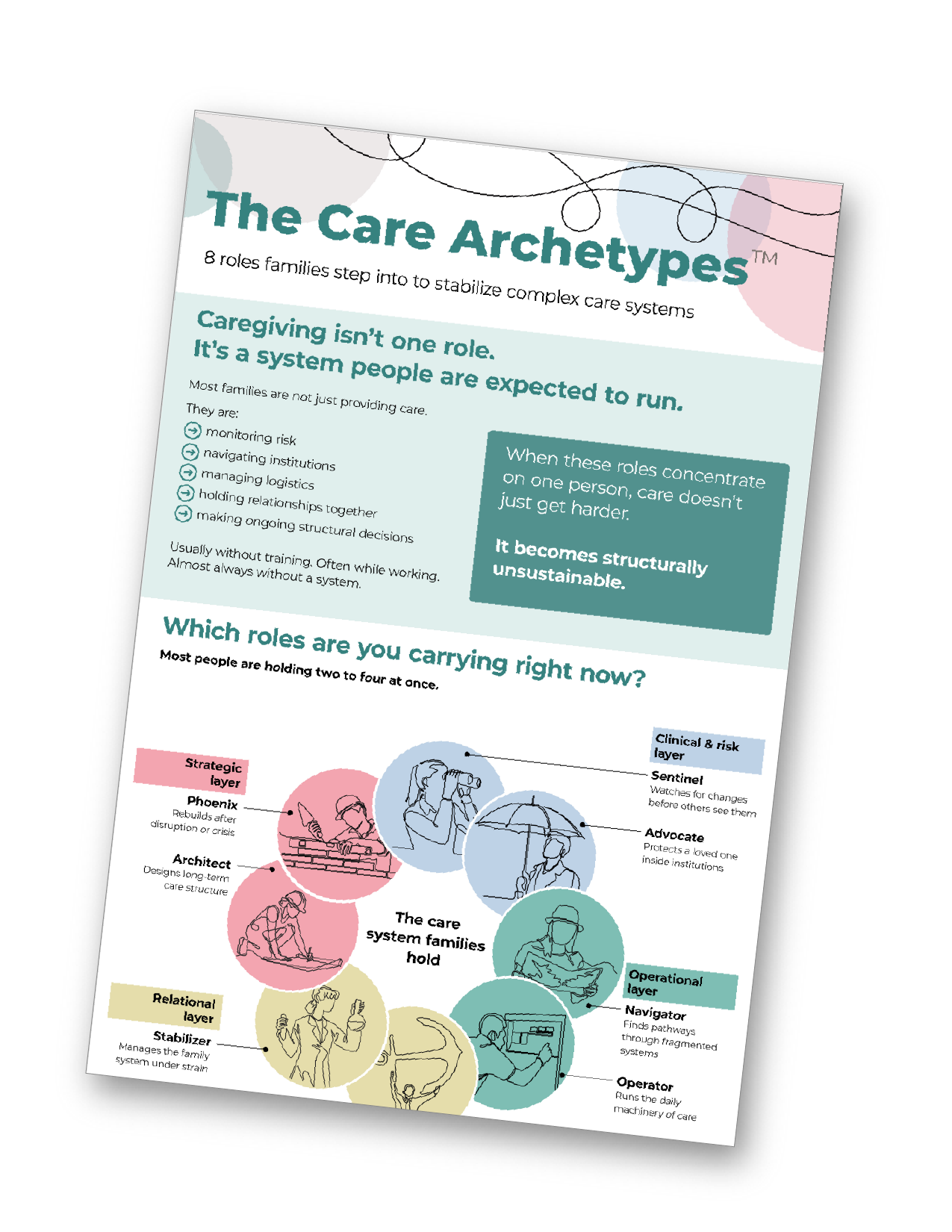
Care Archetypes™
The roles people step into—often all at once
THE INDIVIDUAL
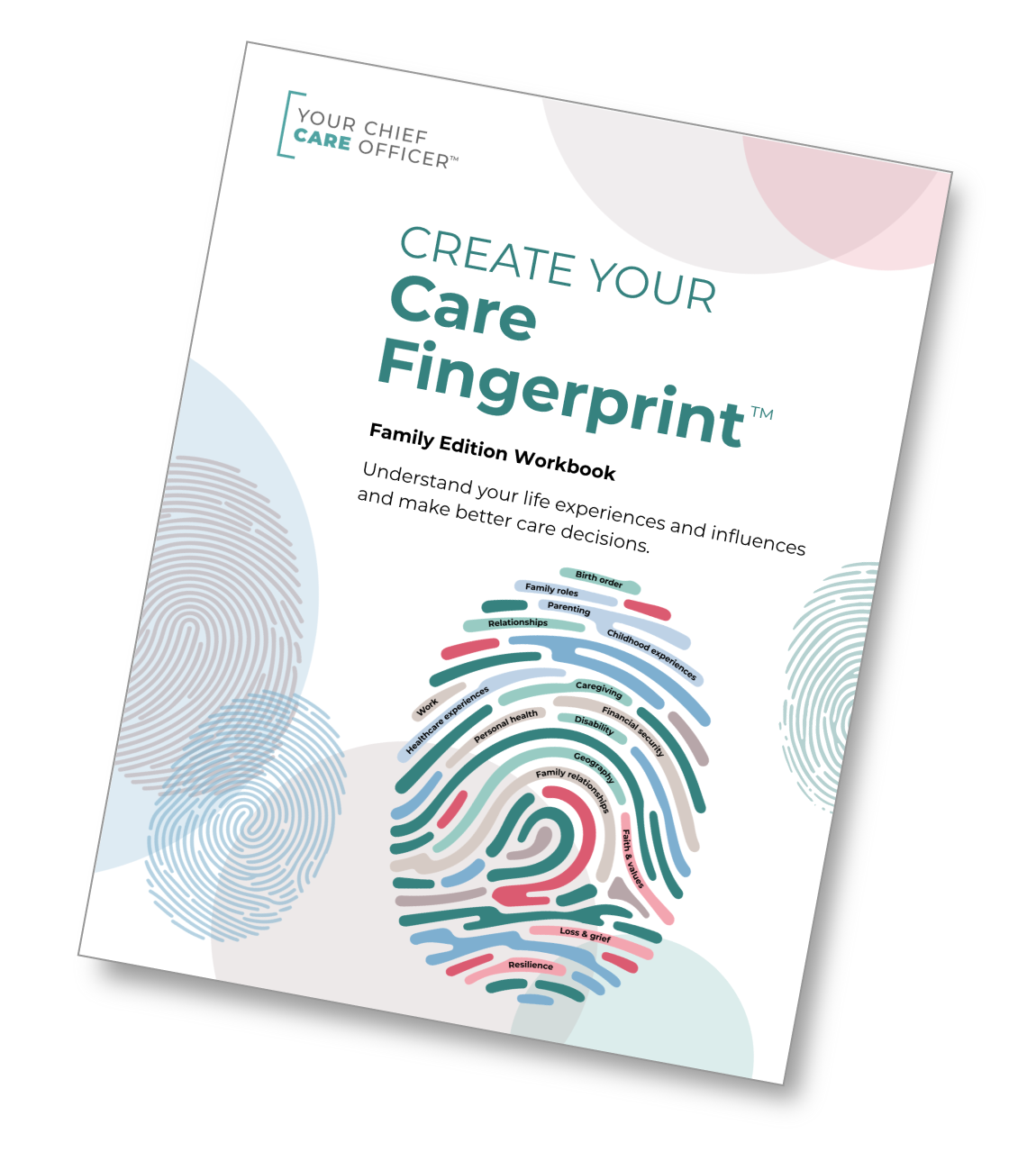
Care Fingerprint™
The values, preferences, relationships, resources, and circumstances that shape how someone wants to give and receive care.
THE RISK
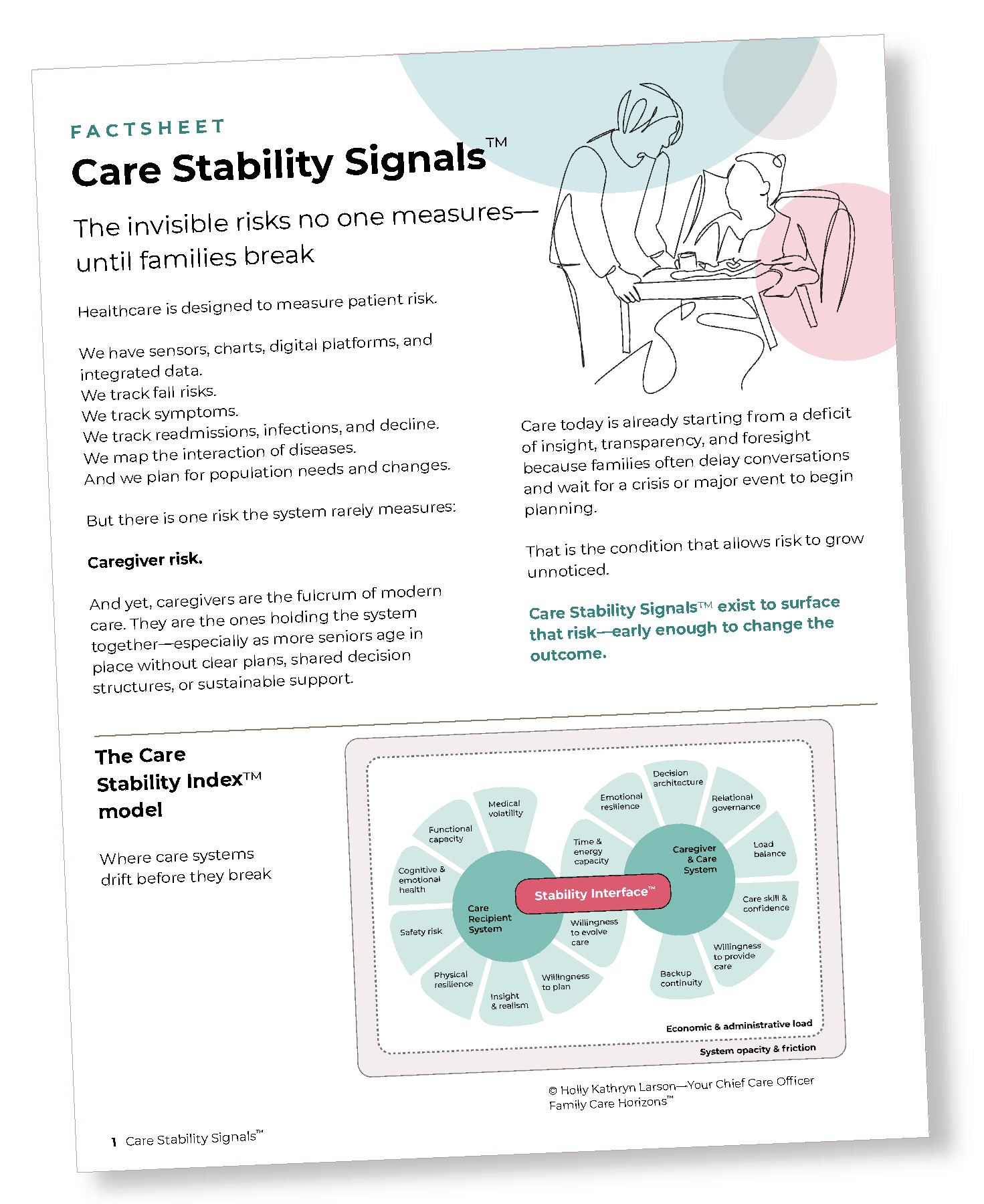
Care Stability Signals™
Early warning signs that your care system is under strain—before a crisis forces change.
THE JOURNEY
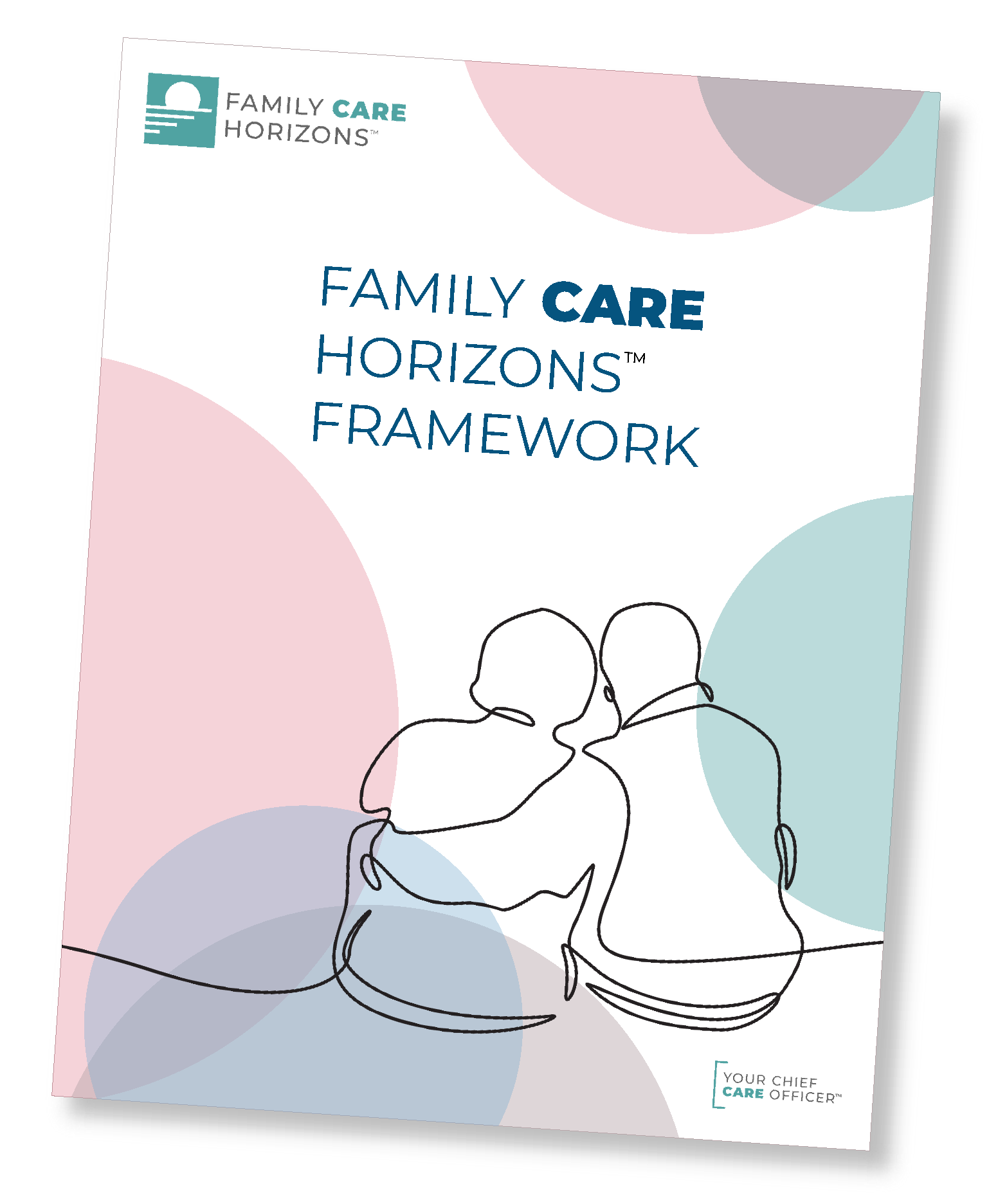
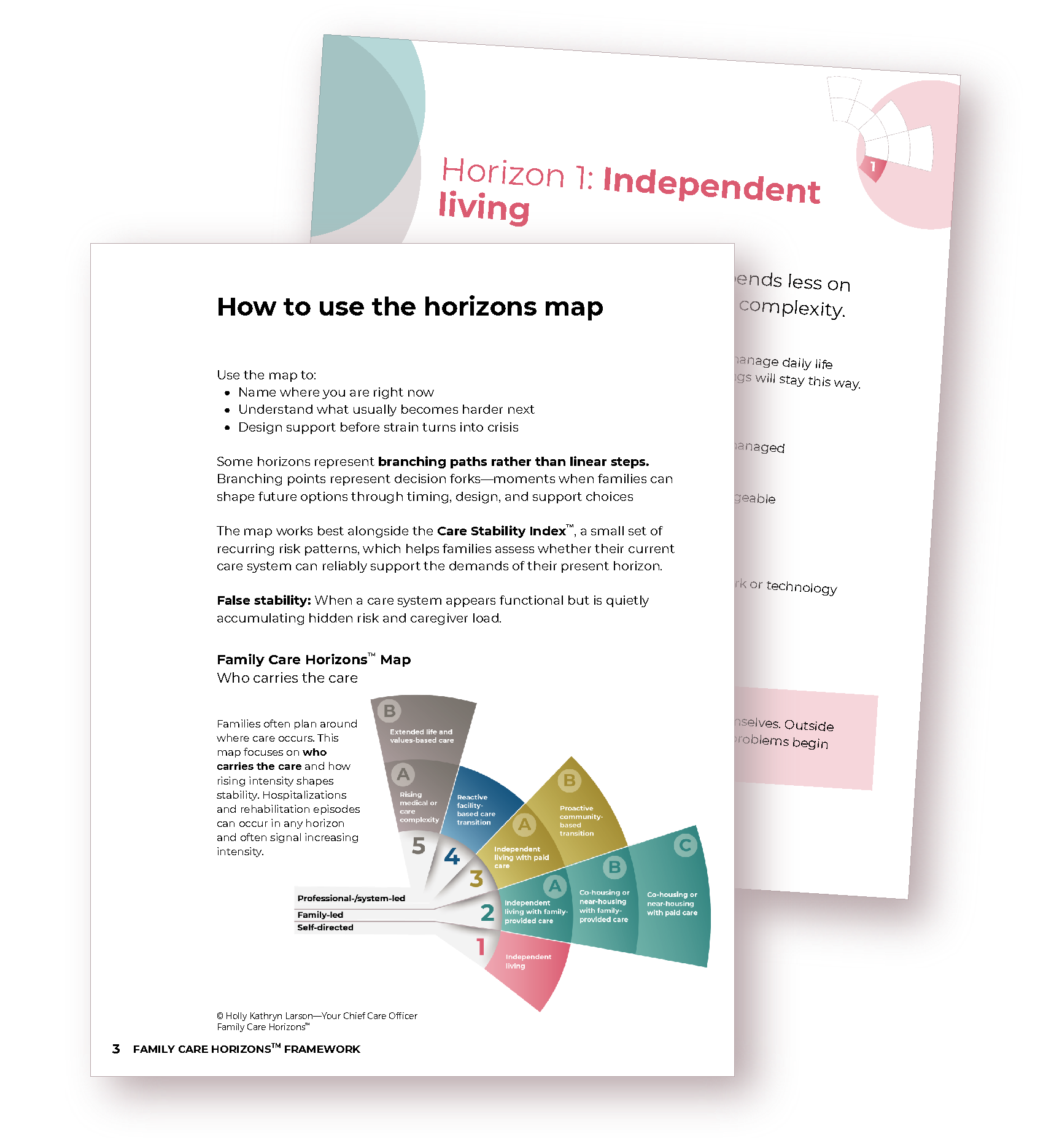
Care Horizons™
The stages care moves through over time—each with different demands, risks, and decisions.
THE SYSTEM
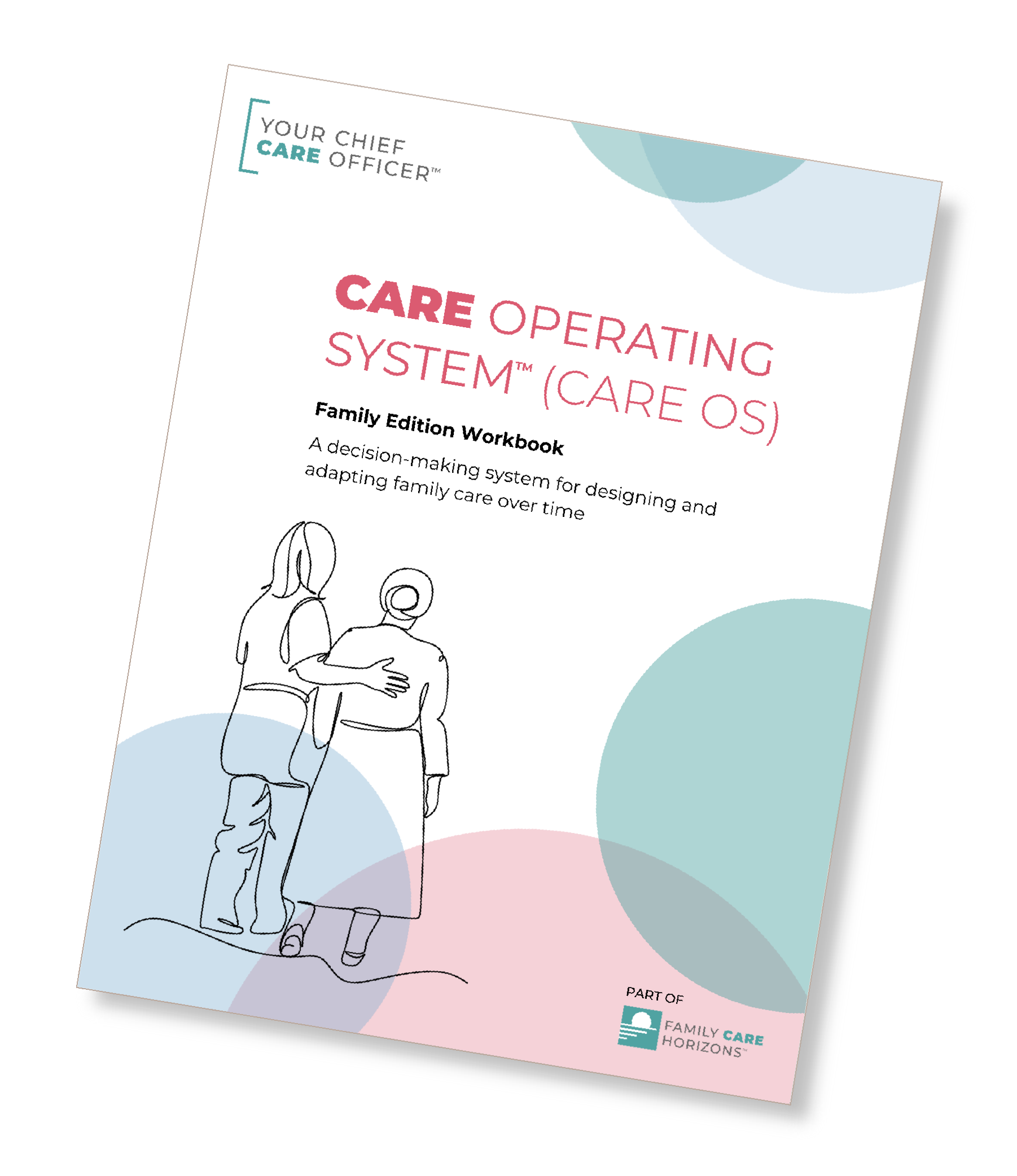
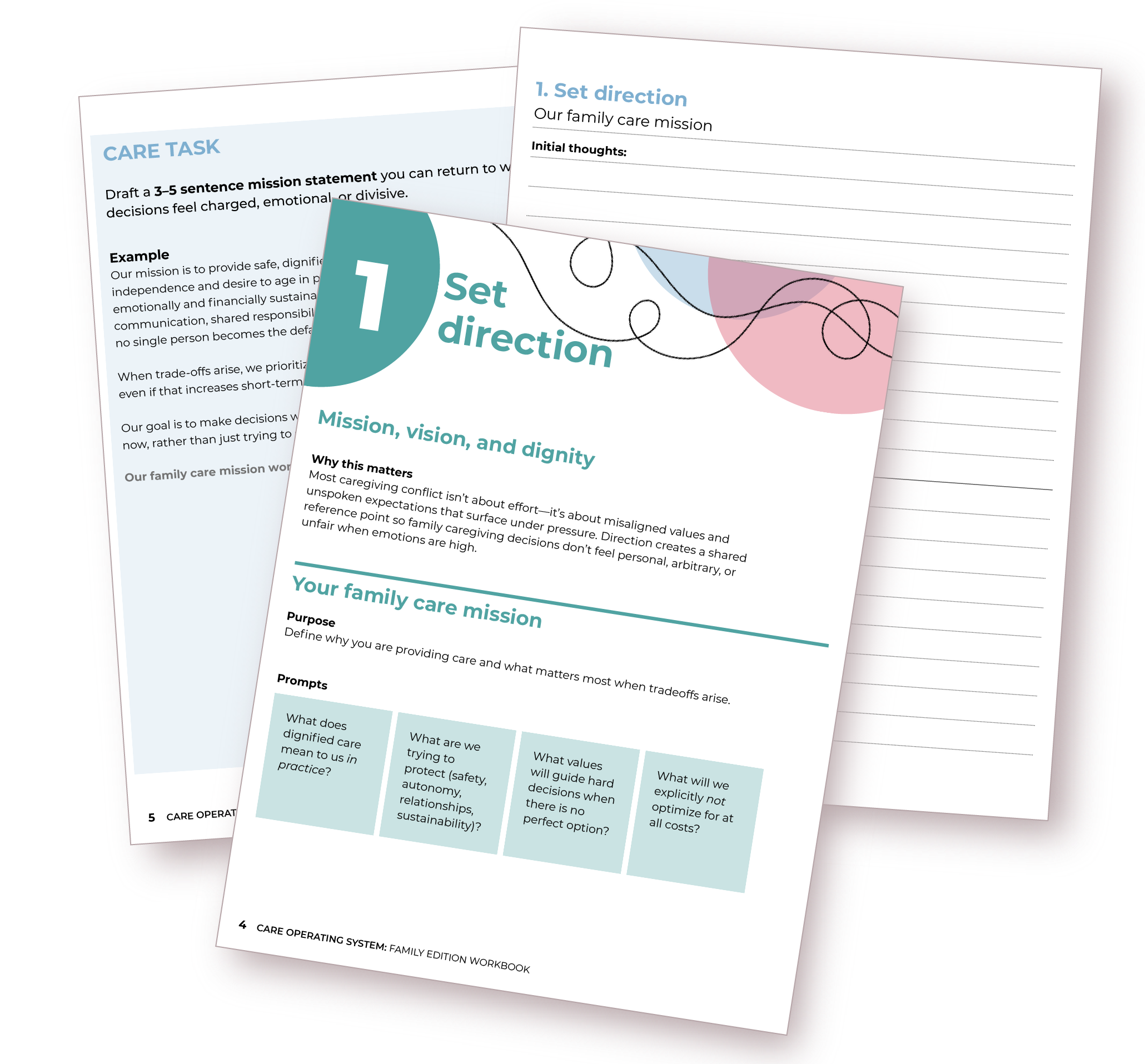
Care Operating System™
A way to plan, decide, and adapt care—so you’re not reacting under pressure.
THE PATH FORWARD
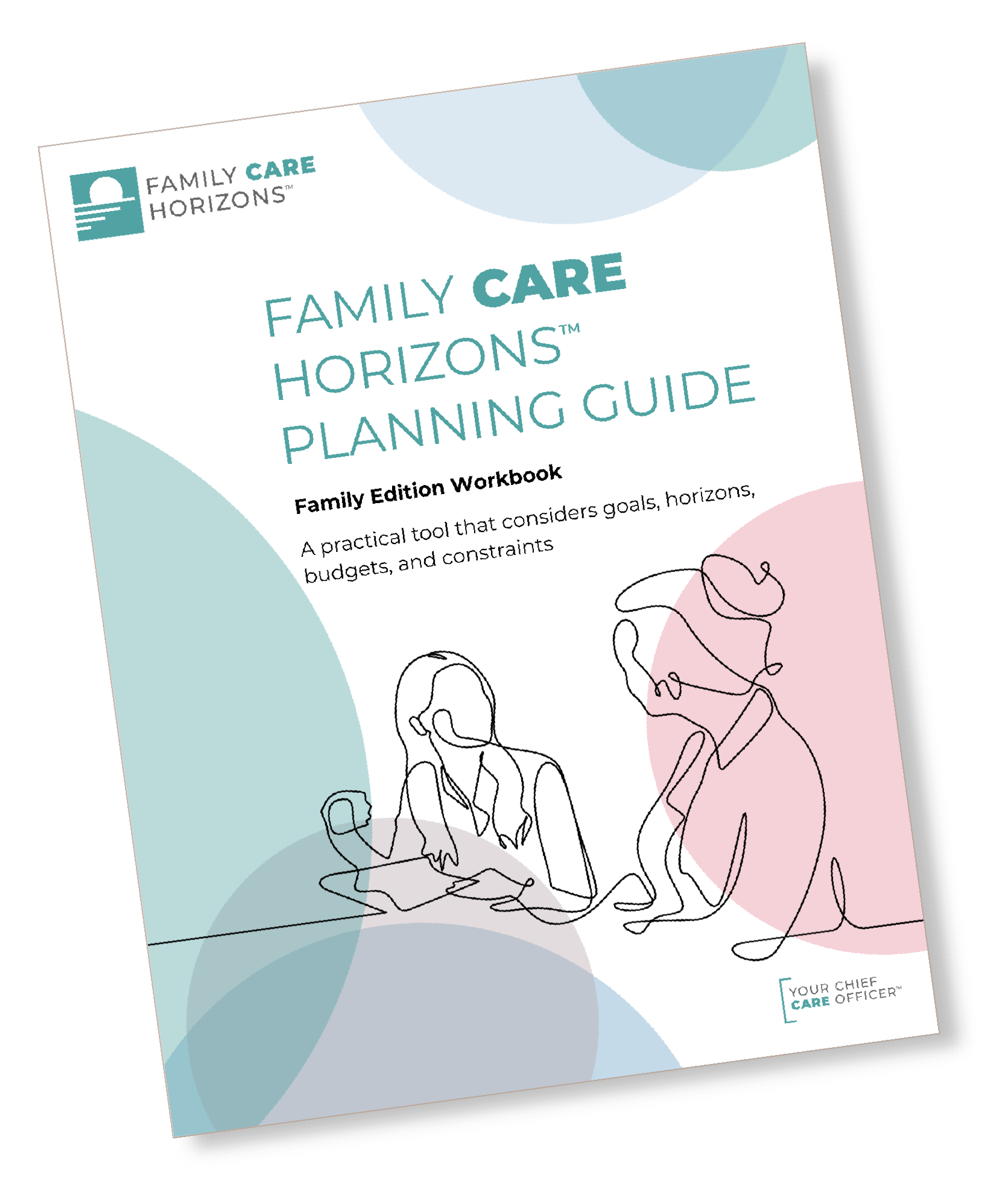
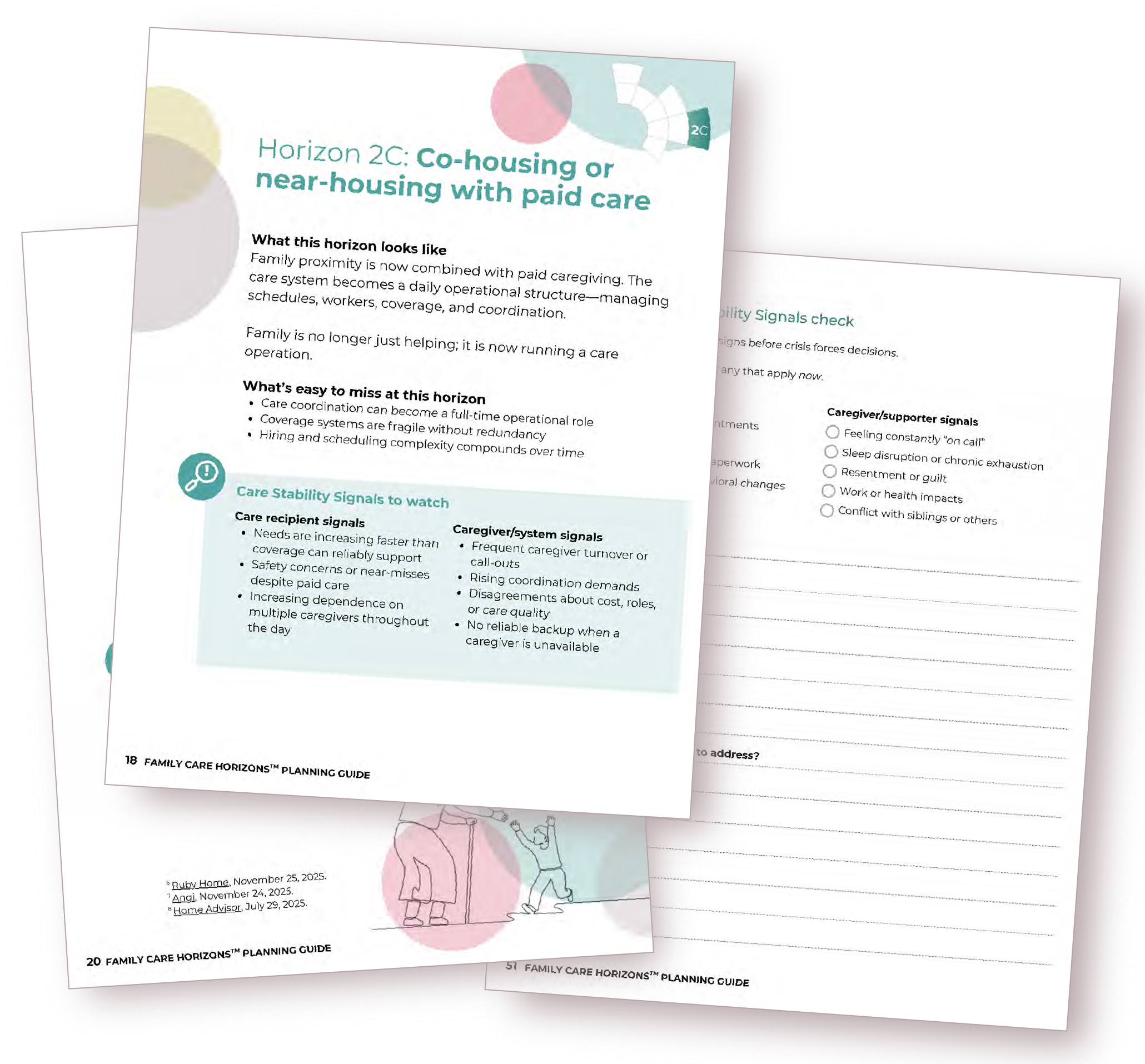
Family Care Horizons™ Planning Guide
A practical way to turn the system into real options, tradeoffs, and next steps.
THE LIFE AROUND CARE
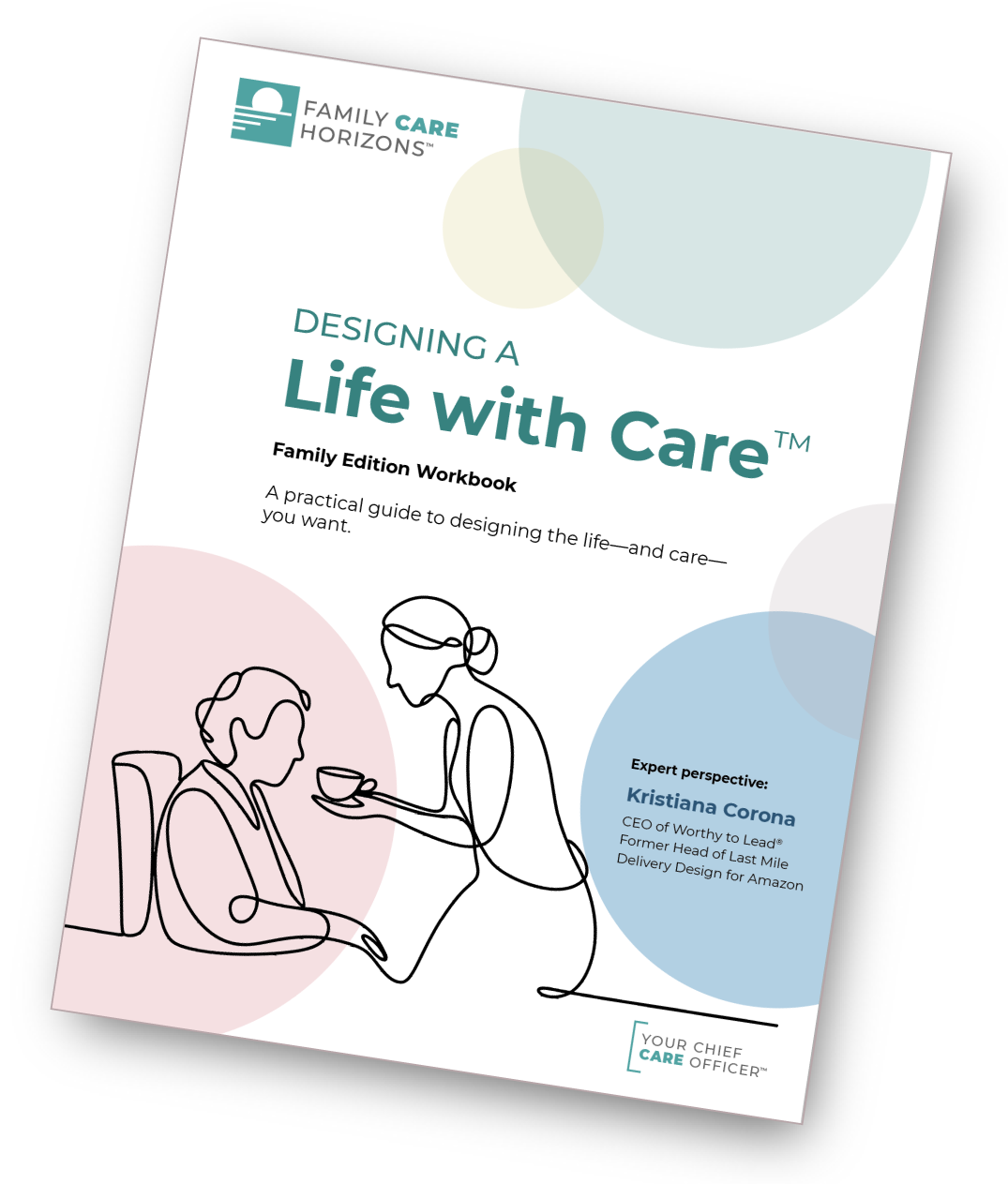
Designing a Life with Care™
Step back from today's demands and imagine the life you want care to fit within—not simply the care arrangement you need to make work.
What this looks like in real life
The Achenbach family supported their mother for more than 25 years after brain surgery left her with permanent cognitive impairment.
Over time, they navigated:
7 care facilities
20+ hospitalizations
decades of medical, financial, and logistical decisions
Responsibilities divided. Decisions accumulated. Continuity had to be held across providers, settings, and time. Not because the system was designed to do that—but because no one else could.
Read their stories below.
They didn’t start with a system. But they became one.
Rodney Achenbach:
The son who carried the care
Monte Achenbach:
A marathon of love

Chad Achenbach:
The doctor in the family
Why this feels harder than it should
The system is invisible
Roles are unclear
Load is uneven
Risk builds quietly
So, people compensate—without structure.
Care doesn’t strain because families don’t care enough. It strains because:
What becomes possible when you can see the system
• You understand what you’re actually managing
• You see who is carrying what
• You recognize strain earlier
• You make decisions with more clarity
• You design care—not just react to it
From understanding to action
The Care Operating System™ helps you:
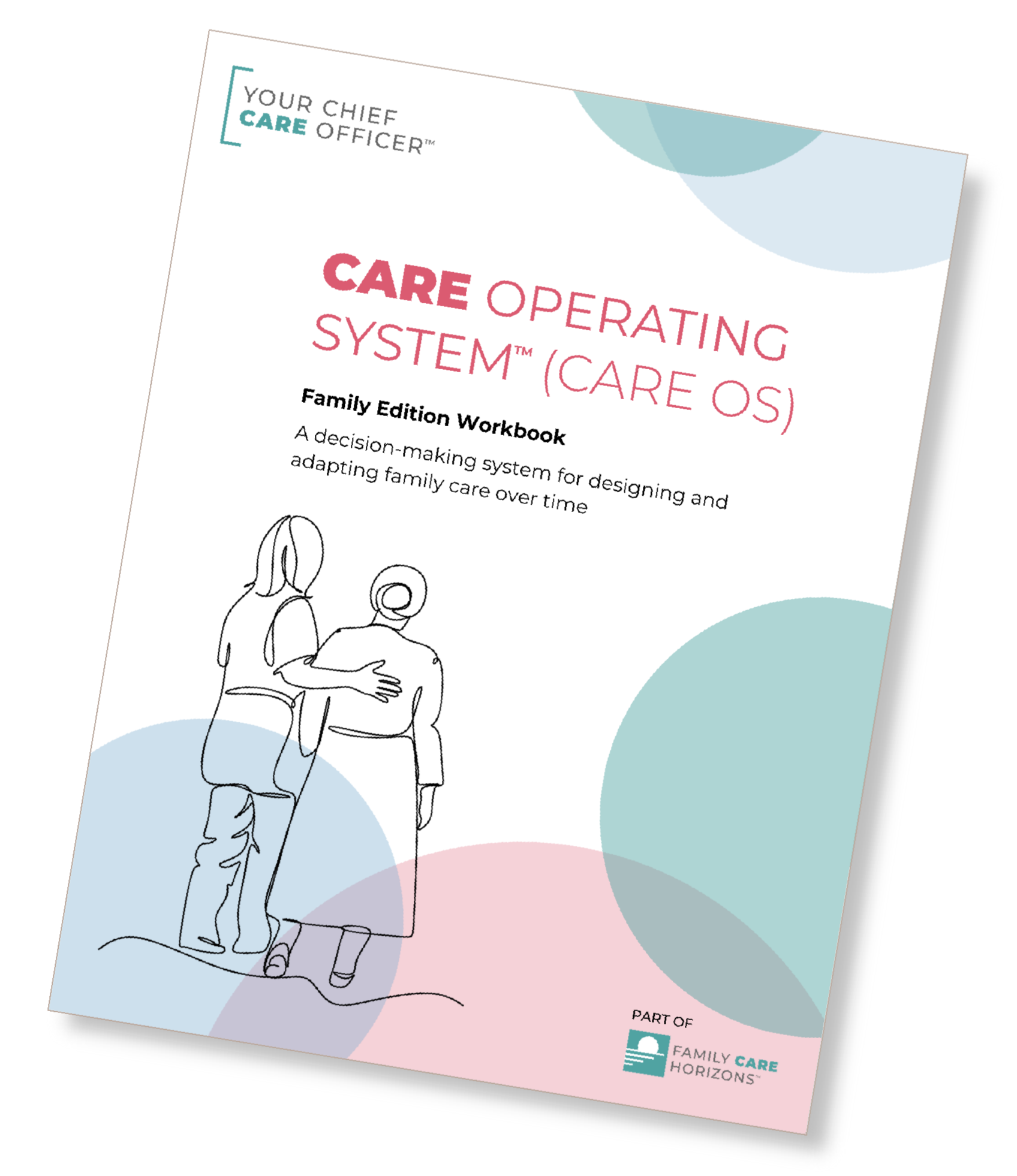
Set direction
Understand time
Assess capacity
Make decisions clearly
The Family Care Horizons™ Planning Guide translates that into:
Real options
Risks
Tradeoffs
Next steps across Care Horizons
What changes when care becomes visible
FROM
Care lives in your head
TO
The system is visible
FROM
One person becomes the default
TO
Responsibilities are more defined
FROM
Problems show up as crises
TO
Risks are easier to see early
FROM
Decisions feel urgent and unclear
TO
Decisions are more deliberate
You can't lead what you can't see.
Start by seeing care as a system. Then you can lead it with greater intention—and design what comes next.
Care Like a Leader™
Back to Your Chief Care Officer

Note: When we say family, we mean anyone involved in supporting someone’s care—including parents and adult children, partners, friends, neighbors, and community or faith-based supporters. Individuals planning for their own care can also use these tools.
Frequently Asked Questions
-
It is a framework for understanding how caregiving actually works behind the scenes.
Most people think caregiving is simply helping a loved one. In reality, families are often managing a complex system involving medical care, logistics, finances, emotional support, legal planning, transportation, housing, communication, and changing family roles.
The Hidden Architecture of Care™ helps families understand the invisible work that makes care possible—and why caregiving often feels harder than expected.
Rather than focusing only on tasks, it helps families see the structure underneath care so they can make better decisions and create more sustainable support systems.
-
Caregiving becomes overwhelming because families are often carrying far more than they realize. While families think they are doing tasks or helping out, they are actually carrying a care system.
Many families compensate for gaps without realizing how much invisible work is accumulating.
Overwhelm is not always a sign of failure. It often signals that the care system itself needs to evolve.
Our care frameworks help families identify where pressure is building so they can reduce strain before crisis occurs.
-
Care systems typically become unstable when care needs rise faster than caregiver capacity.
This may happen because of: a care recipient’s dementia or increasing medical complexity, caregiver burnout, geographic distance, family conflict, financial strain, fragmented services and growing risk, and poor coordination.
Families often stretch and adapt for months—or years—before something forces change.
Understanding these patterns early can help families create more resilient care plans.
-
Early warning signs often appear long before a crisis.
Examples may include caregivers feeling exhausted or resentful, missed appointments or medications, increasing falls or safety concerns, confusion around responsibilities, repeated hospital visits, communication breakdowns between family members, growing isolation or emotional stress, and constant “firefighting” and decision fatigue.
We call these changes Care Stability Signals™—patterns that may indicate a care plan is no longer keeping pace with reality.
Recognizing these signs early often gives families more options and lower-stress decisions.
-
Caregiving breakdowns are rarely caused by one event.
More often, they happen because pressure accumulates quietly over time.
A family may be managing increasing care needs (emotional, behavioral, physical), work responsibilities, financial stress, sibling tension, and emotional exhaustion
Eventually, the system becomes fragile.
A hospitalization, fall, diagnosis, or caregiver health issue may simply expose problems that were already building underneath.
The goal of our frameworks is to help families identify fragility sooner—before decisions become reactive.
-
A single caregiver often becomes the “default” person because of proximity, personality, family dynamics, expertise, flexibility, or circumstance. This may happen intentionally or gradually.
Over time, one person may quietly absorb coordination, emotional labor, logistics, medical communication, and decision-making without clear conversations about expectations.
The result can be resentment, burnout, or family tension.
The Care Operating System™ helps families make caregiving work more visible, clarify roles, and create more sustainable support structures. Caregivers can use it to renegotiate responsibilities to make them fairer to everyone.
-
No family can predict everything. New diagnoses and sudden changes are part of caregiving.
But families can prepare.
Planning may include discussing care preferences early (including options that are off the table entirely), understanding likely care transitions, clarifying family roles, identifying financial realities, exploring care options, creating contingency plans, and recognizing early warning signs.
Families who plan proactively often experience less chaos and greater confidence during difficult transitions.
The goal is not control. It is preparedness.
-
Because caregiving is often larger, longer, and more emotionally complex than families anticipate.
Many people expect caregiving to involve helping with appointments or errands.
Instead, they find themselves coordinating healthcare, managing uncertainty, navigating family relationships, balancing work, making difficult decisions, and carrying emotional responsibility over long periods of time.
Caregiving can be deeply meaningful—but also exhausting.
Understanding the Hidden Architecture of Care™ helps explain why so many families feel overwhelmed and why needing structure or support is normal.
-
Explore the Planning Guide, Care Operating System™, and free caregiving resources.