
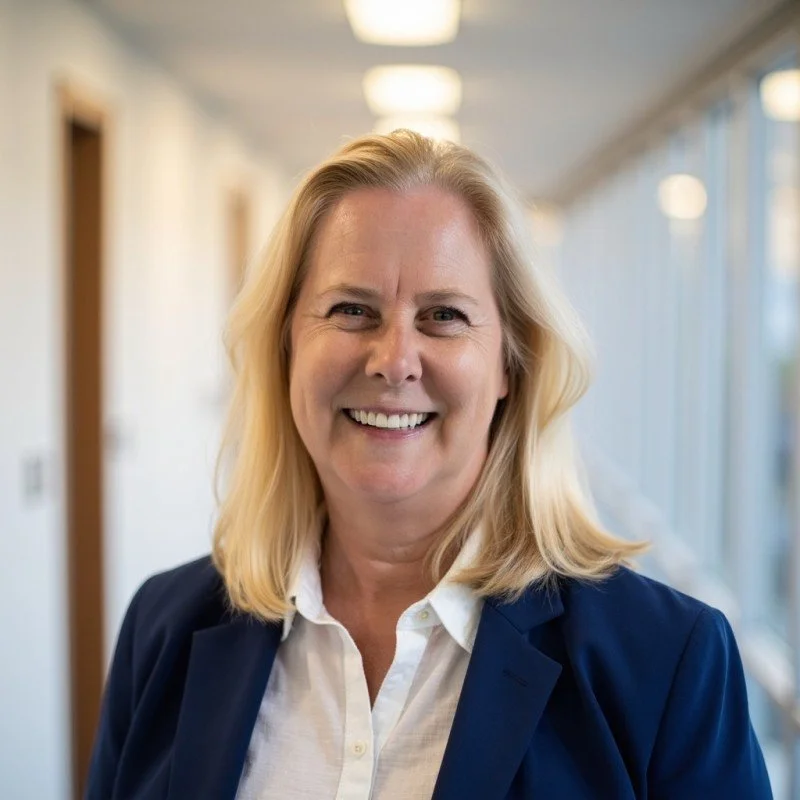
Hi, I’m Holly Larson. I help families, and the organizations that support them to Care Like a Leader™.
Families are already leading care systems—often without recognizing the role they're playing or having the visibility, tools, and support to do it well.
Your Chief Care Officer™ brings systems thinking to care so people can see the system, lead with greater intention, and design what comes next—without losing the human side of it.
Why Your Chief Care Officer™ (YCCO) exists
Families have become the operating system of care. Yet we still largely treat caregiving as a collection of tasks performed by individuals rather than a complex system someone has to lead. YCCO exists to make that system visible.
I share insights weekly on LinkedIn at @HollyKLarson. You can contact me there or here.
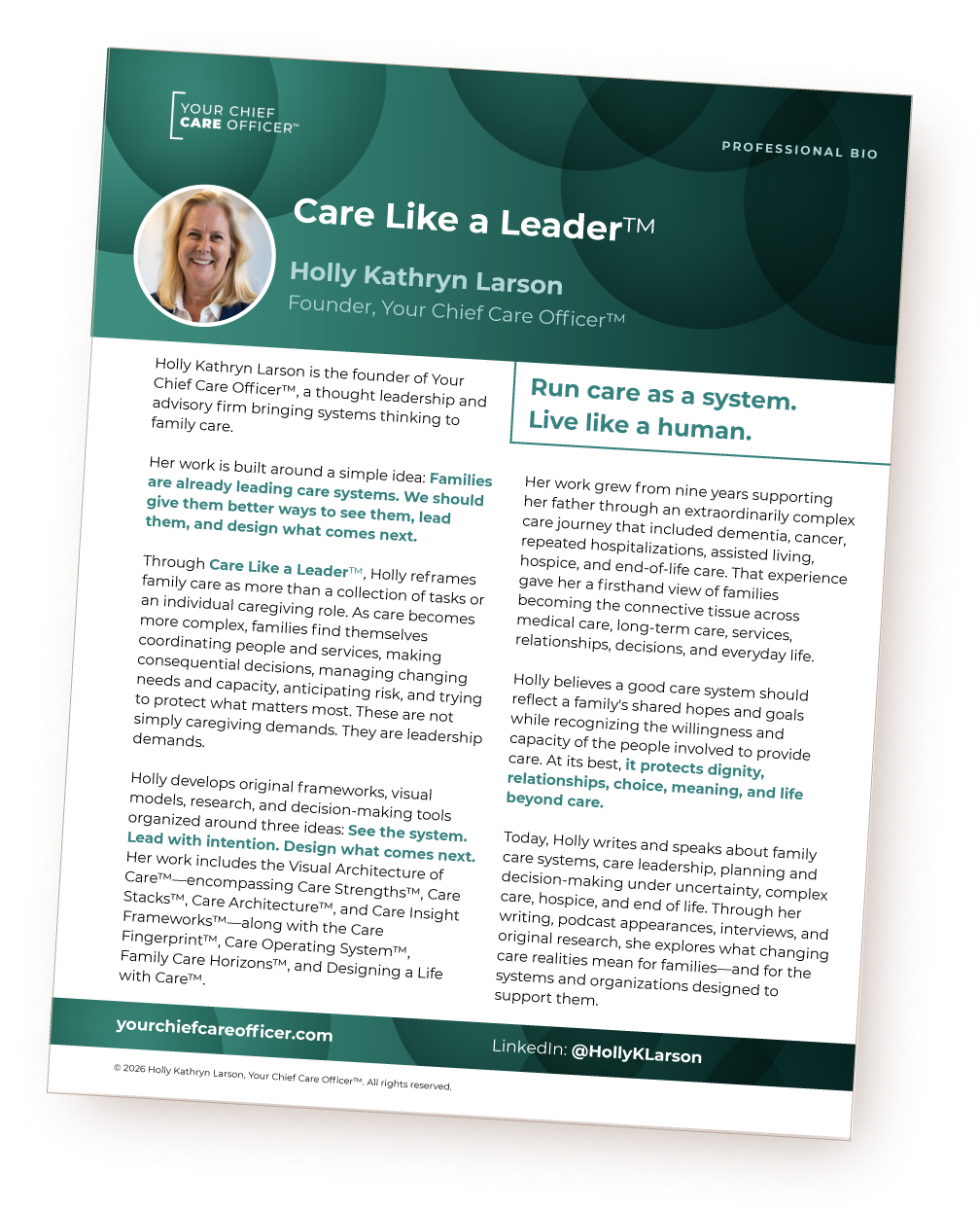
Download my professional bio
FAQs
What does it mean to Care Like a Leader™?
Caring like a leader doesn't mean making care corporate or rigid. It means recognizing that families are making important decisions, managing and coordinating care, responding to change, and trying to protect what matters.
Care Like a Leader™ gives people a way to see that role more clearly—and tools for leading care without having to carry everything themselves.
What is Your Chief Care Officer™?
Your Chief Care Officer™ is a thought leadership and advisory firm focused on family care systems, planning, and decision-making.
I started Your Chief Care Officer after years navigating an extraordinarily complex family care journey supporting my father through dementia, cancer, repeated hospitalizations, assisted living transitions, and end-of-life care.
Today, I develop original frameworks, strategic models, and thought leadership exploring how modern family care systems function—and why managing complex care becomes increasingly difficult over time.
What tools can help me Care Like a Leader™?
Family Care Horizons™ is a planning framework that helps families and individuals understand how caregiving changes over time. It provides shared language for different care stages and helps families notice early signs of instability before a crisis occurs.
Is Family Care Horizons™ a medical or diagnostic tool?
No. It is non-clinical and non-diagnostic. It does not predict outcomes or replace medical advice. It helps families think clearly about care as a system.
What are Care Stability Signals™?
Care Stability Signals™ are early warning patterns—such as caregiver exhaustion, rising coordination burden, or unclear decision rights—that suggest a care system may be under strain.
When can I use these resources?
You can use the Care OS and Planning Guide:
To create a proactive care plan before your loved ones need it
At the beginning of your care journey
To understand decisions and options in the middle of a crisis
To improve care processes throughout your loved ones’ care journey
How is the Care Operating System™ different from a checklist?
The Care OS is a decision system, not a task list. It helps families clarify strategy, roles, boundaries, and decision-making—not just track tasks.
How is the Planning Guide™ different from the Care Operating System™?
The Care OS focuses on how to think about care as a system and make decisions over time. The Planning Guide focuses on what options exist at each care horizon—including costs, tradeoffs, and real-world resources.
Families can use the Planning Guide to ground decisions and the Care OS to structure them.
Is this only for US-based families?
No. Family Care Horizons™ and the Care OS are globally applicable decision frameworks and are not tied to any single country’s care system.
The Planning Guide is designed for the US market but could be versioned to different countries.
Is this therapy or counseling?
No. This work is system-focused and practical. It can complement therapy, coaching, or clinical care, but it is not a substitute.
What if my family is complicated or not cooperative?
These tools are designed for real life—including solo caregivers, uneven sibling dynamics, cultural differences, and limited support.


Note: When we say family, we mean anyone involved in supporting someone’s care—including parents and adult children, partners, friends, neighbors, and community or faith-based supporters. Individuals planning for their own care can also use these tools.