

Does your family have a shared vision for care?
Most families don’t design a care system all at once. It grows one decision at a time.
Who helps. What matters most. What each person can realistically take on. How time, money, work, health, relationships, and care fit together.
Over time, those decisions become the way your family does care—whether you designed it intentionally or not.
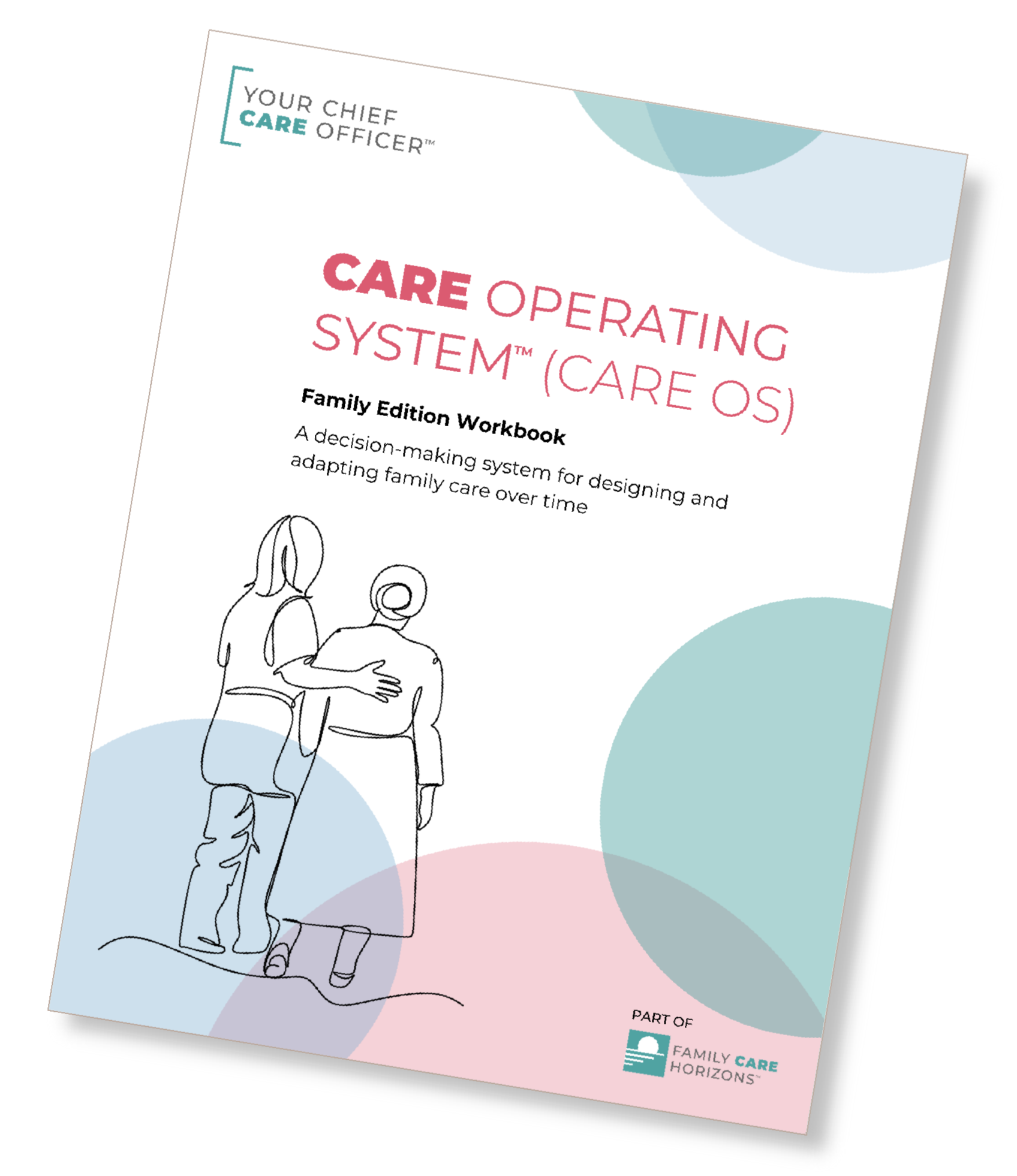
The Care Operating System™ gives your family a practical framework for leading care with greater clarity, shared responsibility, and the ability to adapt as life changes.
Care unfolds over time.
And over time, it becomes something much bigger.
A system that needs to be designed, not just managed.
Lead care with intention.
Care involves decisions without clear answers. Tradeoffs across time, money, and energy. Coordination across people who may see things differently. And constant change as needs evolve.
The Care Operating System™ helps your family create structure around all of it.
The Care Operating System™ helps your family create structure around all of it.
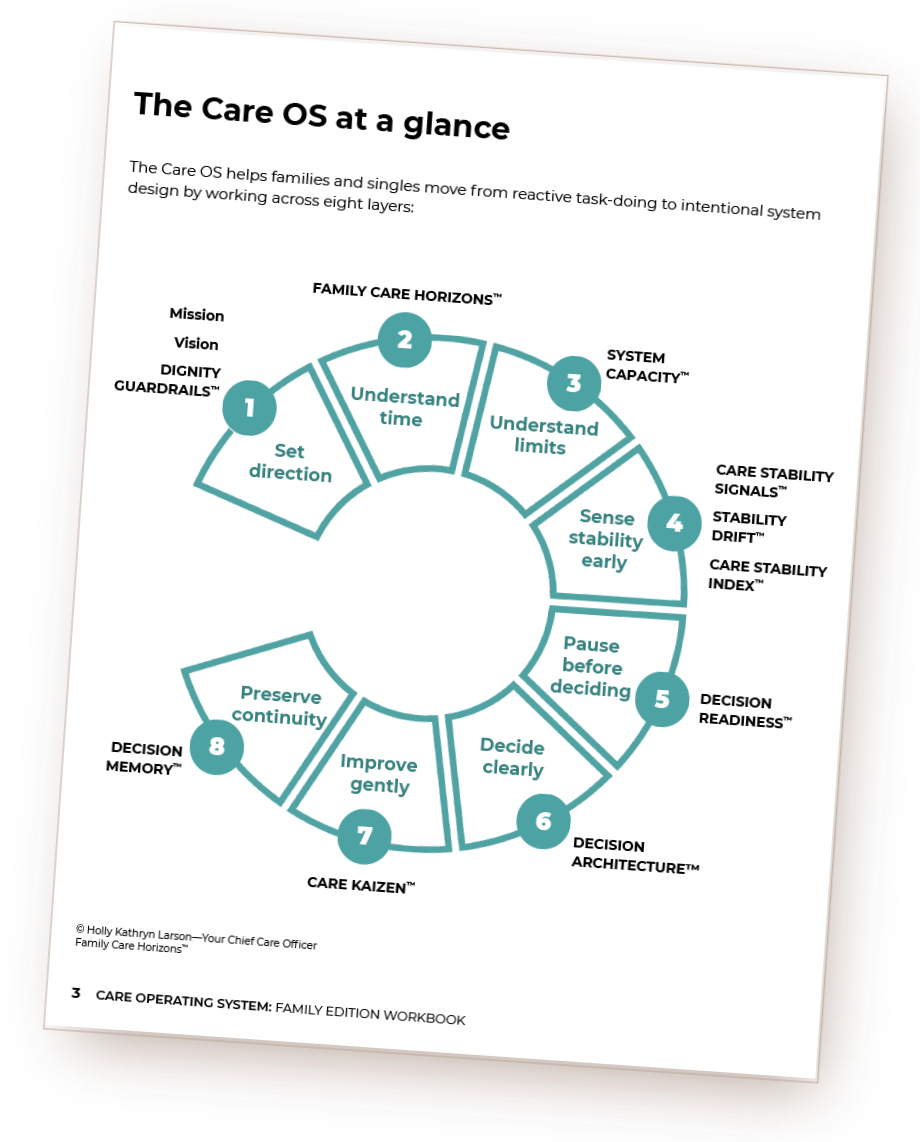
Use the Care OS to:
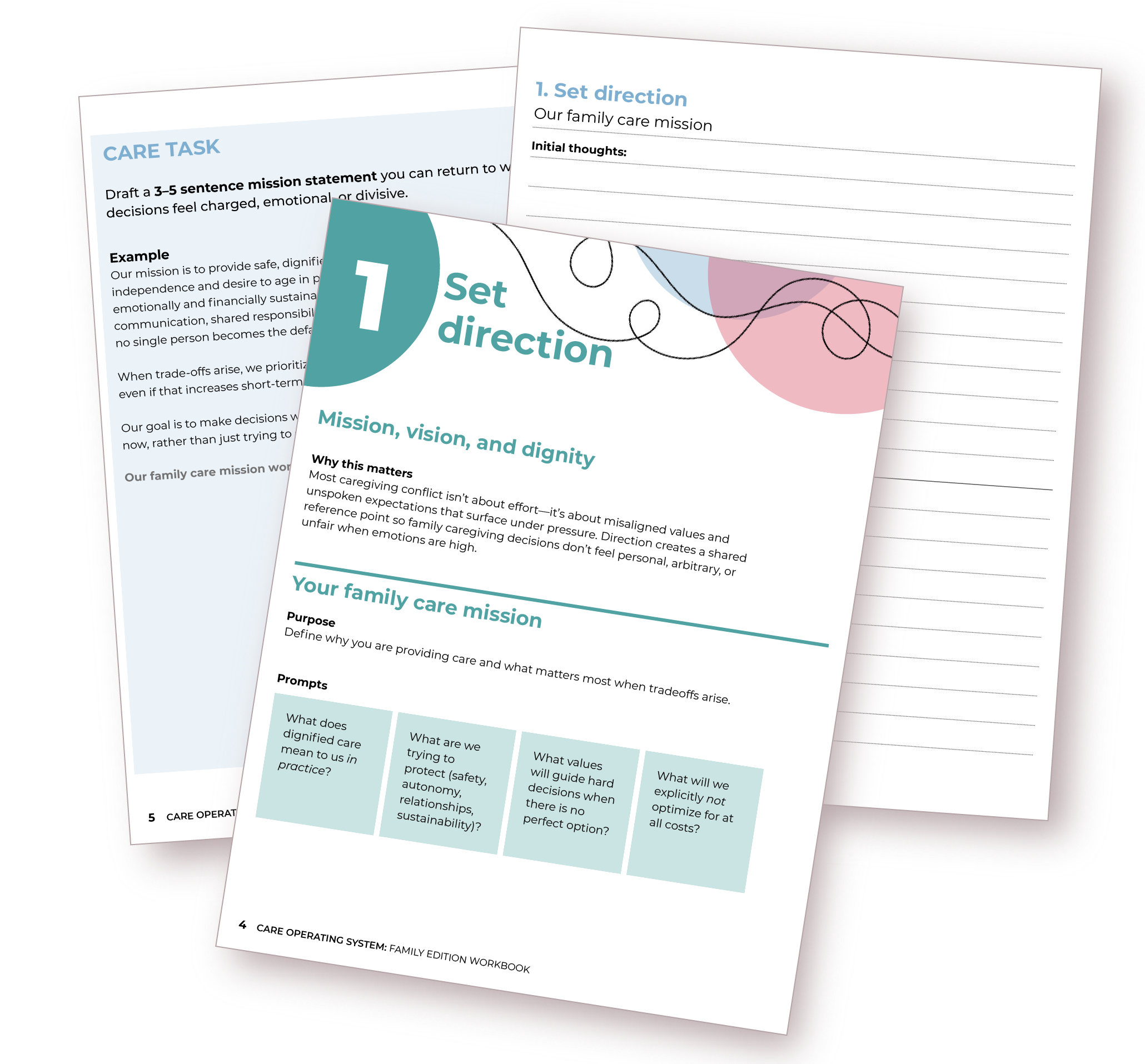
Set direction — define what matters most
Align people — clarify roles and responsibilities
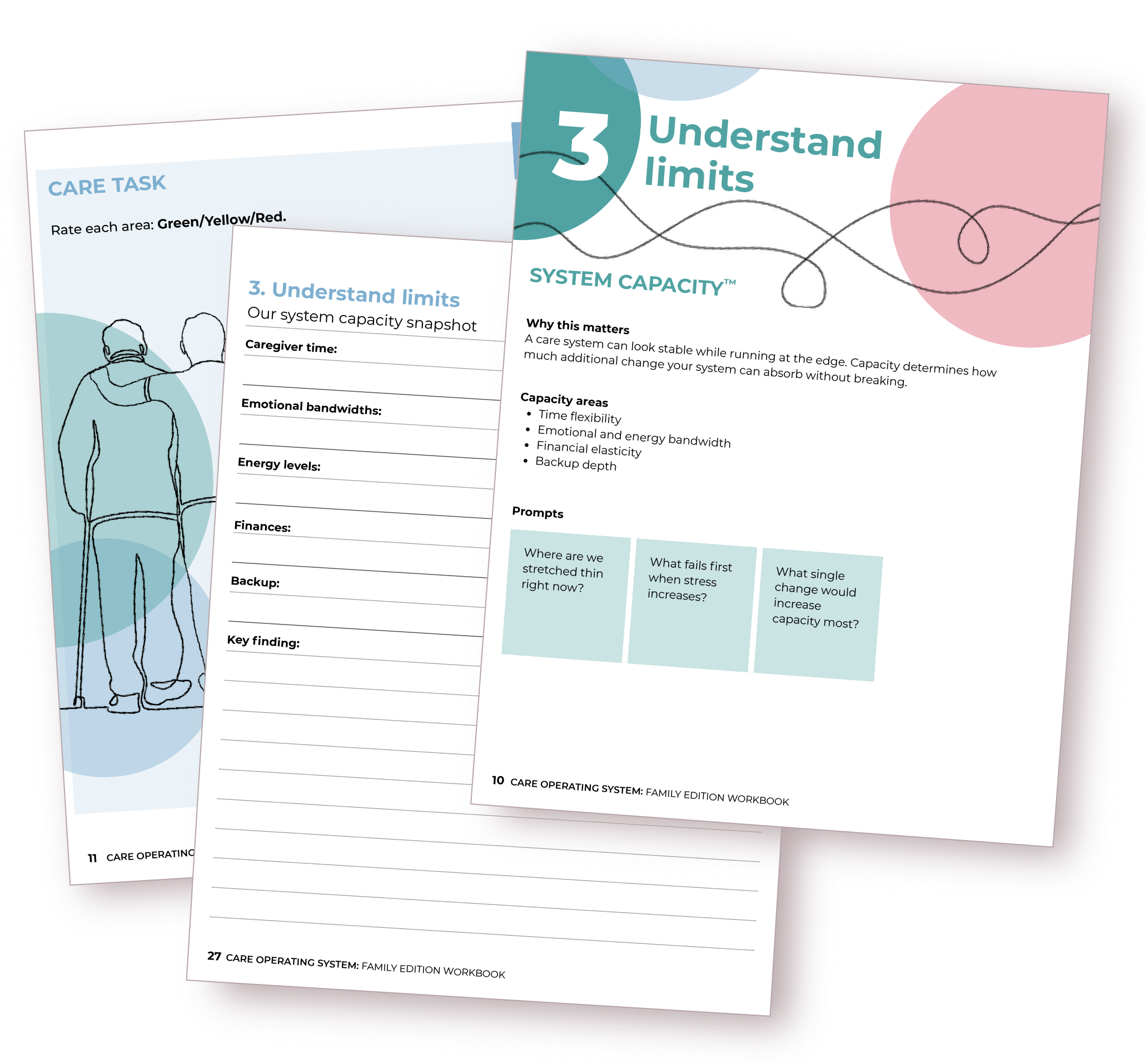
Understand capacity — recognize what your family can realistically sustain
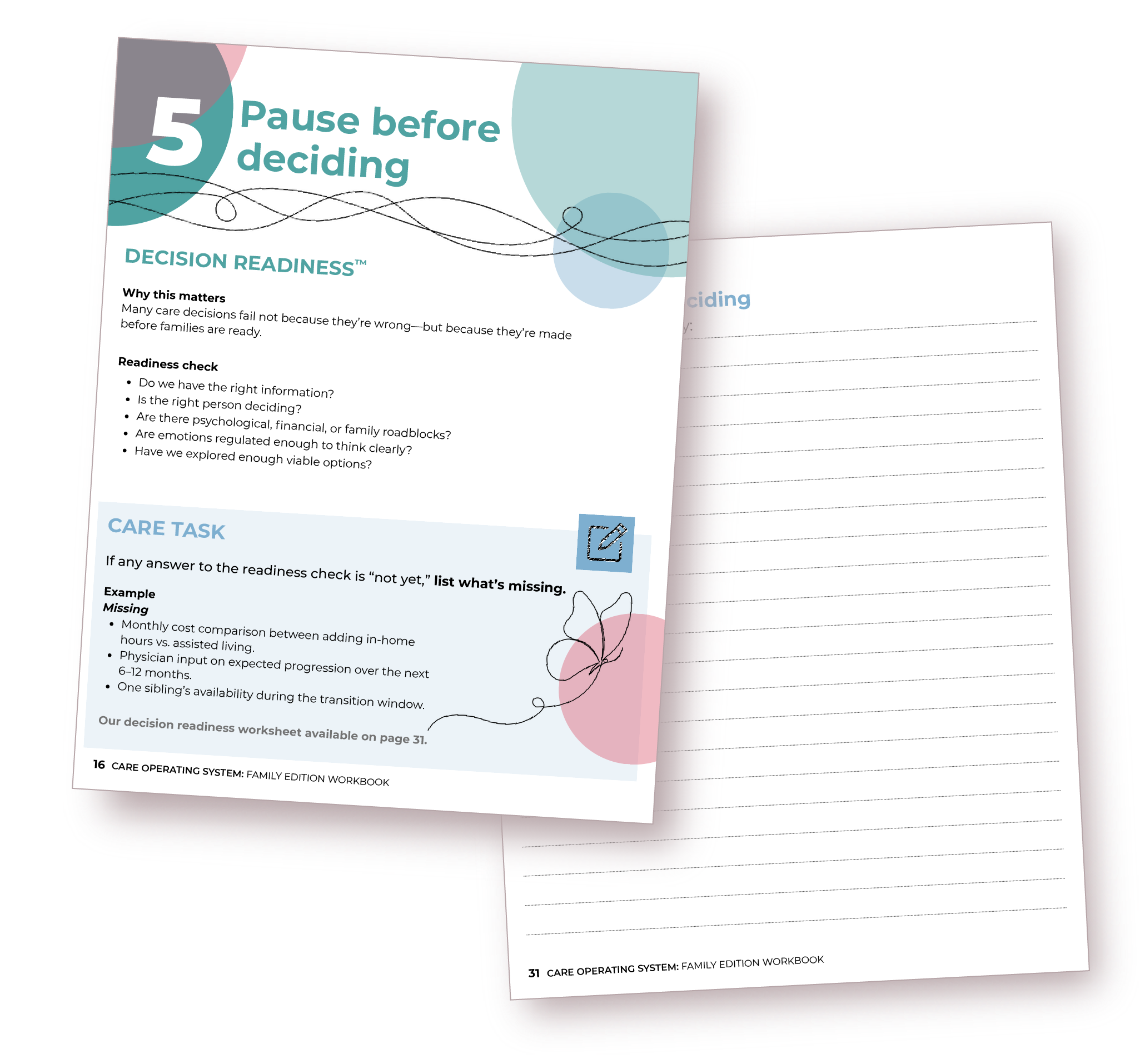
Make decisions — navigate choices and tradeoffs with greater clarity
Adapt as needs change — adjust the system without starting over
Care arrangements rarely stop working all at once.
More often, someone quietly takes on another responsibility. A workaround becomes routine. Decisions get harder. One person becomes increasingly essential.
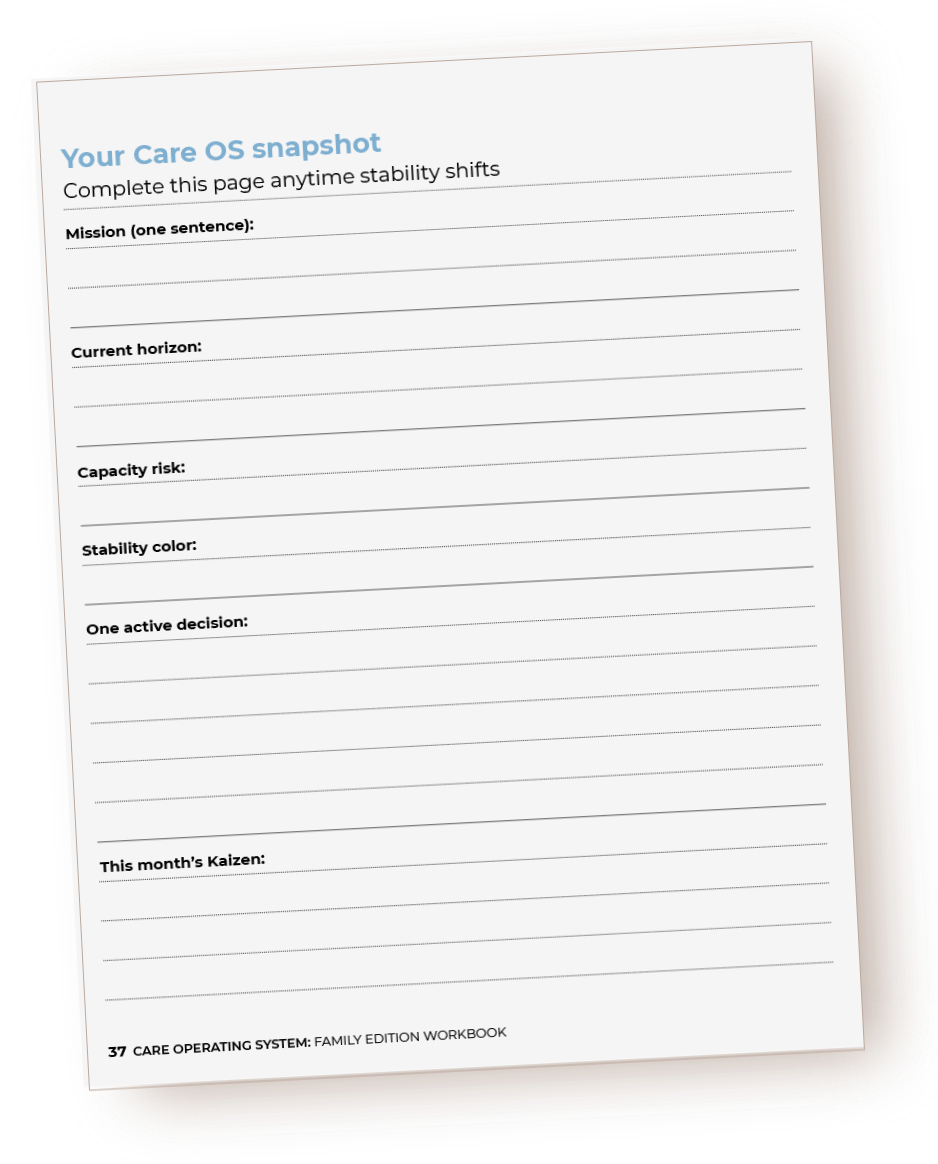
The Care OS includes Care Stability Signals™—early warning patterns that help you recognize when the way care is working may be under strain.
Is your care system working—or are you compensating for it?
Ask:
Is this still working—or are we compensating?
Are decisions getting harder or more emotional?
Is the system relying too heavily on one person?
Seeing those shifts earlier gives your family an opportunity to reconsider roles, supports, or expectations before a crisis forces the decision.
The goal isn’t to predict or control everything that comes next.
It’s to create enough shared direction and structure that your family can make decisions, share responsibility, understand its limits, recognize when something is changing, and adapt together.
Because a good care system isn't static.
It evolves with the people it supports.
Build a system that can change as care changes.
Part of Care Like a Leader™
Care is a system. Families are being asked to lead it.
Care Like a Leader™ helps families See the system, Lead with intention, and Design what comes next.
The Care Operating System™ helps you lead with intention—turning what matters to your family into a care system that can work in real life and evolve as circumstances change.
Run care as a system. Live like a human.
Care Operating System™
$79
41-page guided workbook
8.5 × 11 format
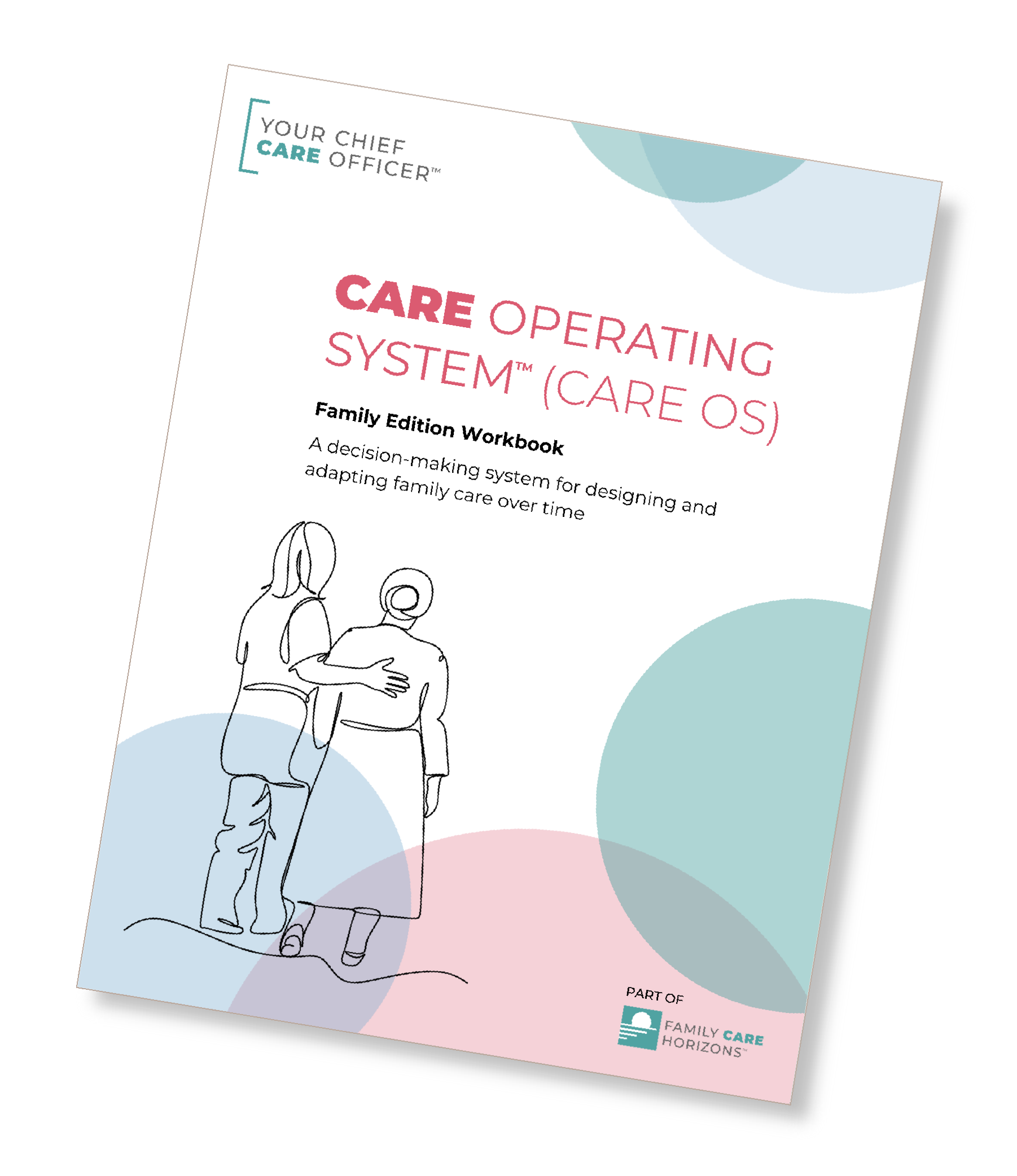
A practical framework for designing, managing, and adapting family care over time.
Create shared direction. Build a workable system. Adapt as care changes.


Note: When we say family, we mean anyone involved in supporting someone’s care—including parents and adult children, partners, friends, neighbors, and community or faith-based supporters. Individuals planning for their own care can also use these tools.