

Are you creating a care plan without understanding your options?
Many families begin care planning because something has changed—a fall, diagnosis, hospitalization, or growing need for help.
The pressure is to solve the immediate problem. But families may not know the full range of resources, services, living arrangements, technologies, and emerging care models available to them.
The Family Care Horizons™ Planning Guide helps you see the bigger landscape before you make the next decision.
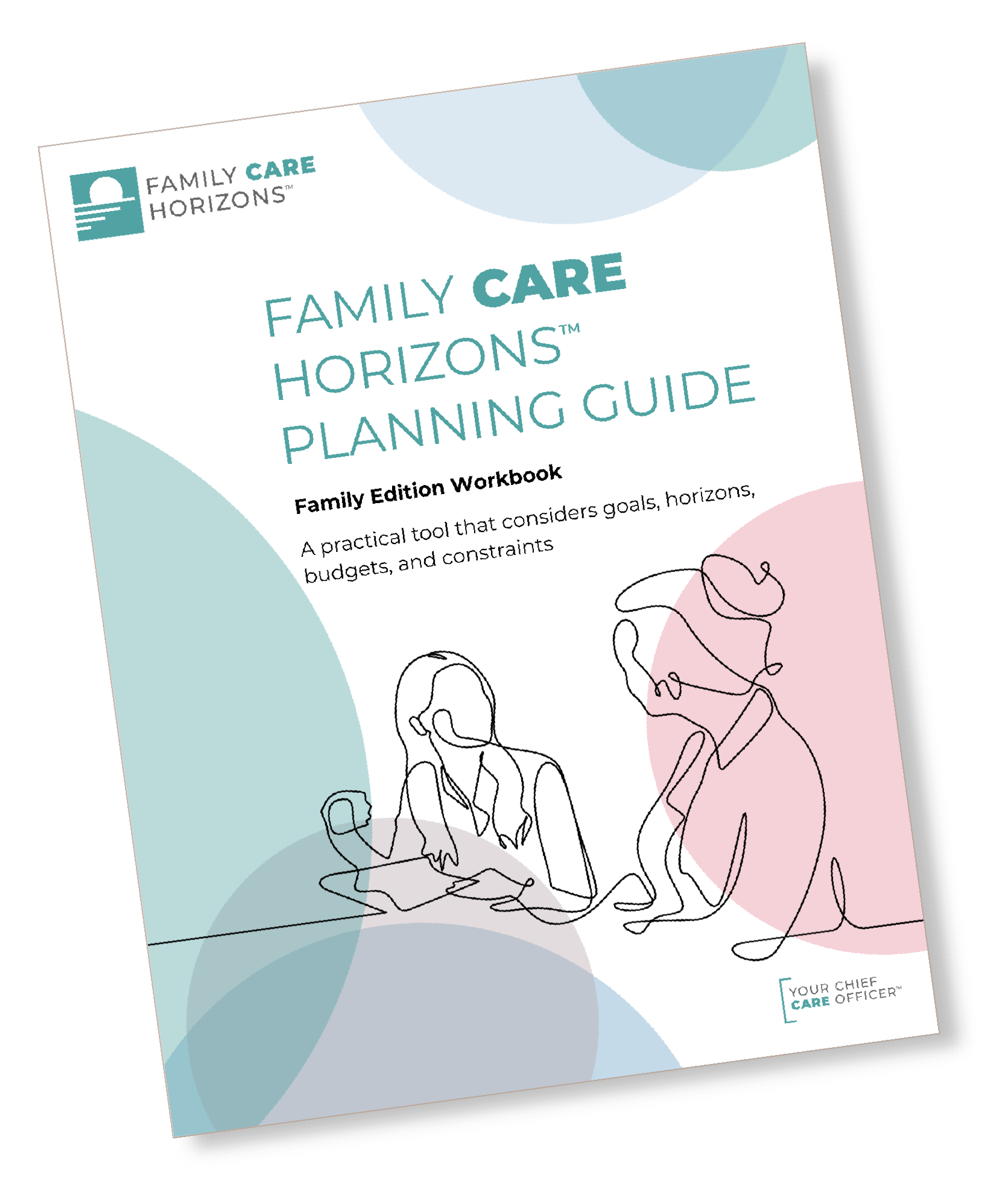
Explore care from independent living through end of life, understand the resources and design options available at different stages, see what different levels of care may cost, and use practical planning tools to decide what could work for your family.
Understand your options. Preserve your choices. Design what comes next.
See the care landscape more clearly.
Care changes over time.
The support that works today may not work six months or five years from now. Needs change. Family capacity changes. Costs change. New resources and options may become relevant.
Family Care Horizons™ gives you a way to understand care across different situations and stages—so you're not planning from a single snapshot in time.
Use the guide to:
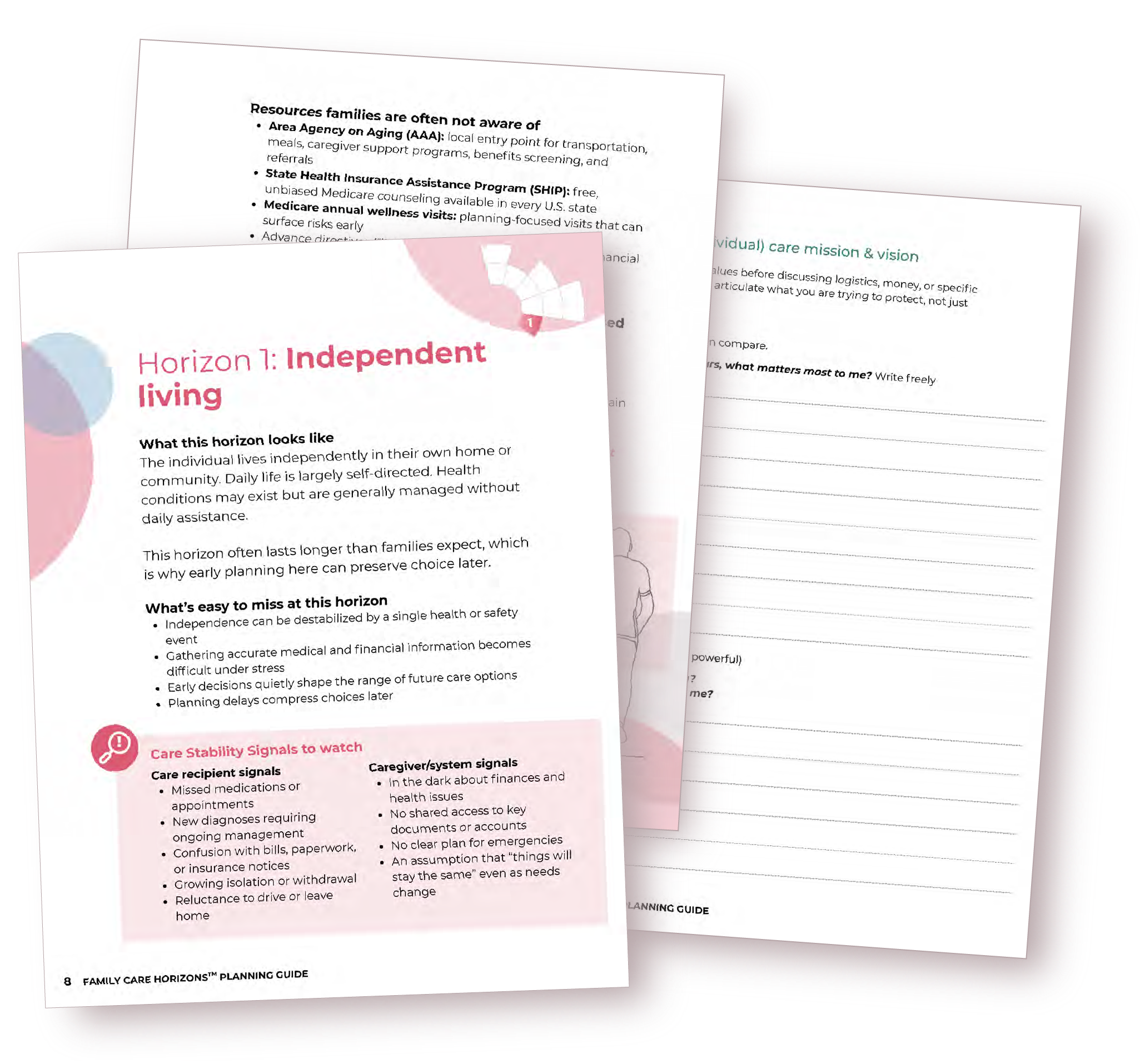
Understand common care situations families may encounter over time
See what support can look like as needs change
Understand real-world costs and tradeoffs
Recognize Care Stability Signals™ that may indicate an arrangement is becoming strained
Identify resources that fit your situation
Explore care design options you may not have known existed
See beyond the traditional care path.
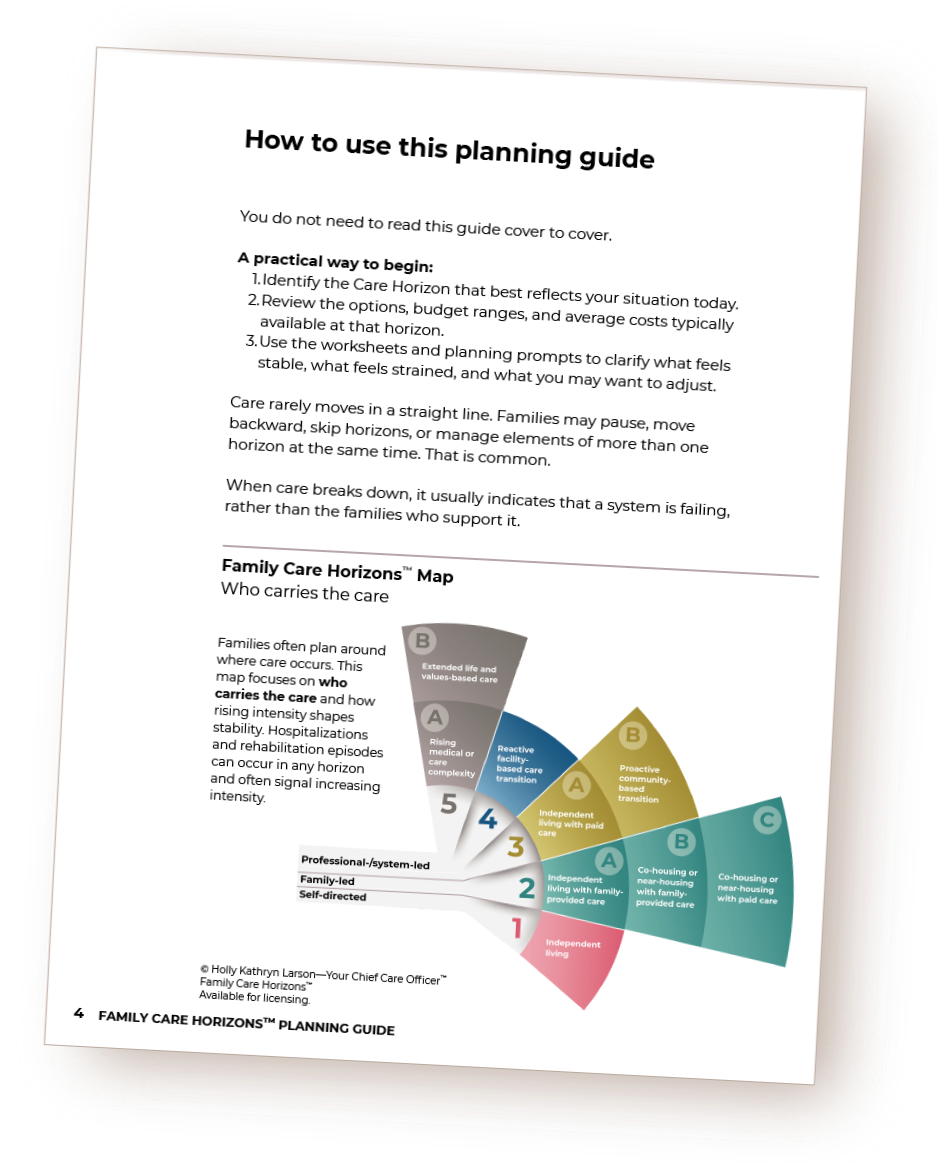
Care has often been framed as a progression from managing independently, to getting help at home, to eventually moving into a facility.
But the landscape is changing.
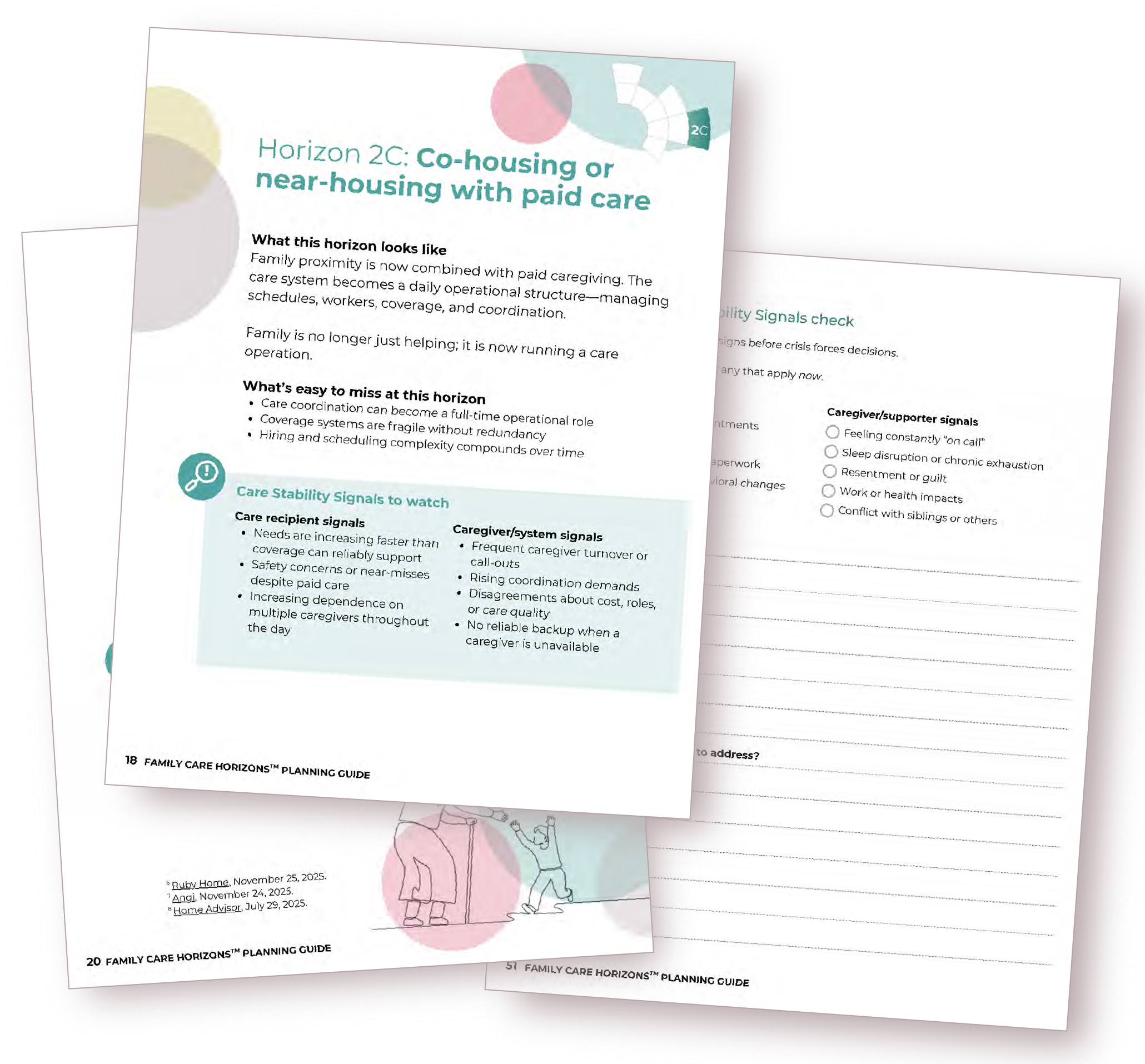
The Planning Guide explores 16 emerging care models that combine housing, healthcare, technology, community, and new approaches to coordination.
Explore possibilities such as village networks, location-based aging, predictive care intelligence, smart housing, care navigation and orchestration, home-based care command centers, health-and-housing models, hospital-at-home, neuro-responsive housing, and more.
The point isn't to pursue every option.
It's to know what's possible before narrowing the choices.
Understand what different choices may require.
Care decisions involve more than preferences.
They involve money, time, family capacity, housing, health needs, geography, and tradeoffs that can look very different from one family to another.
The Planning Guide brings those realities into the planning process with cost ranges and practical context across the Care Horizons.
Not to tell you what to choose. To help you understand what you're choosing between.
Turn what you learn into a plan.
Understanding the landscape is only the beginning.
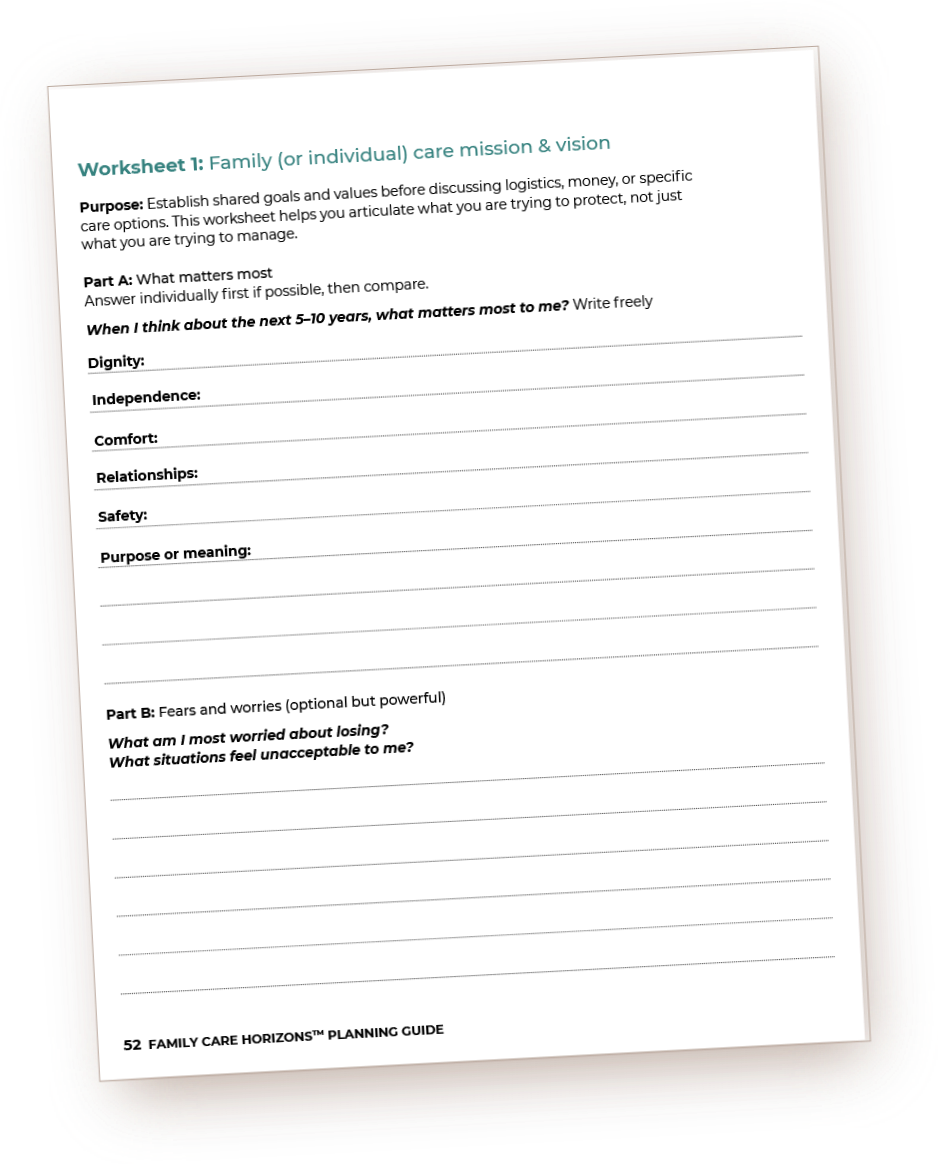
The guide includes 11 practical worksheets and planning tools to help you:
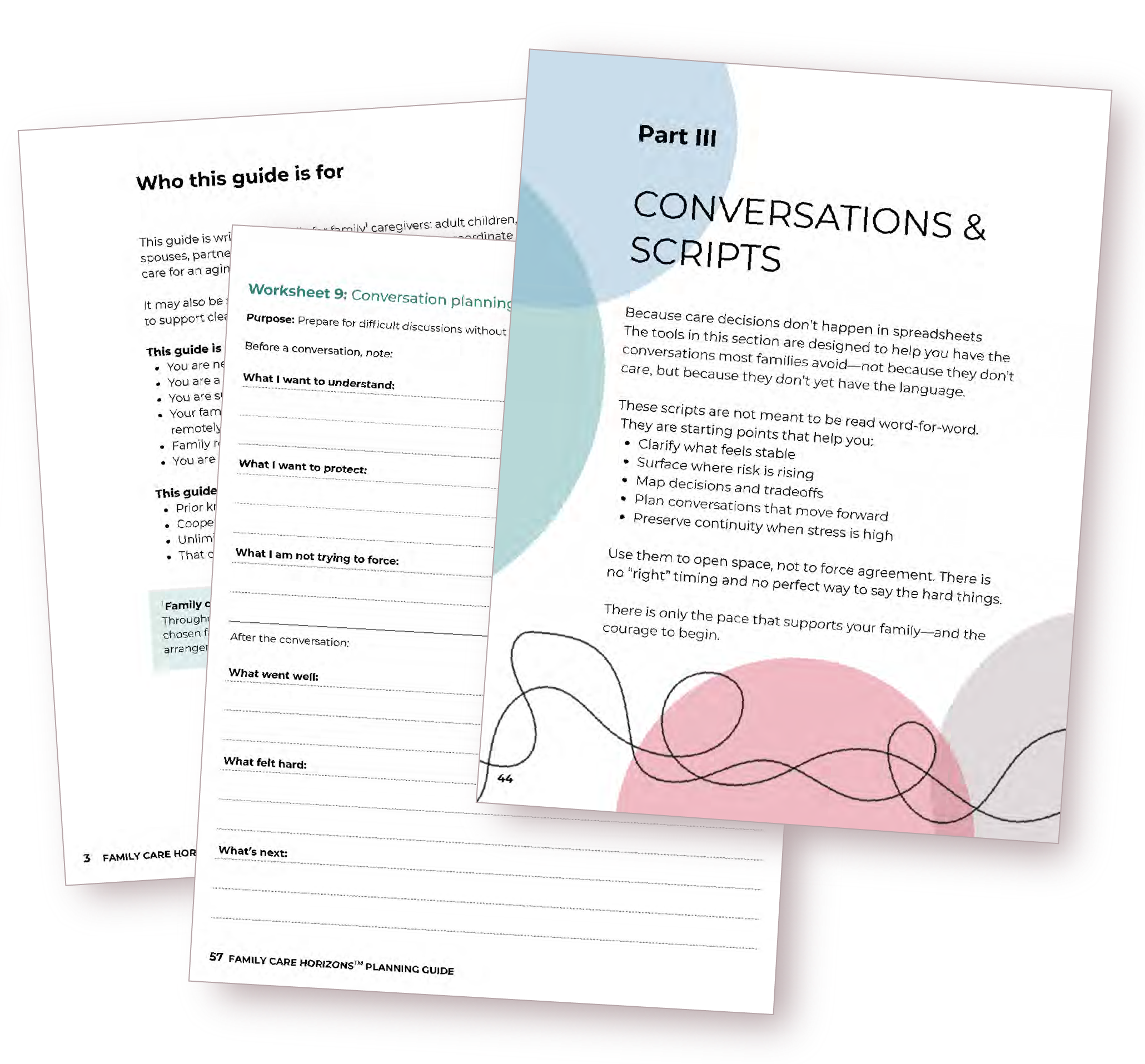
Clarify what matters most. Identify your current Care Horizon. Spot signs of instability. Map family roles and capacity. Understand budget realities and tradeoffs. Explore possible supports. Test an option before committing. Prepare for difficult conversations. Preserve important information. And explore whether your care system may need to be redesigned.
These aren't one-time exercises. Return to them as circumstances change.
Plans change. Your planning system should be able to change with them.

Part of Care Like a Leader™
Care is a system. Families are being asked to lead it.
Care Like a Leader™ helps families See the system, Lead with intention, and Design what comes next.
The Family Care Horizons™ Planning Guide helps you design what comes next by seeing the broader care landscape, understanding your options, and exploring what could work for your family.
Run care as a system. Live like a human.
Family Care Horizons™ Planning Guide
$149
73-page workbook + 11 practical worksheets
8.5 × 11 format
Explore the Care Horizons, real-world costs, resources, emerging care models, and practical tools for planning as needs change.
Understand your options. Preserve your choices. Design what comes next.


Note: When we say family, we mean anyone involved in supporting someone’s care—including parents and adult children, partners, friends, neighbors, and community or faith-based supporters. Individuals planning for their own care can also use these tools.