
The Visual Architecture of Care™
See the systems, pressures, and leadership capabilities hidden inside family care.

Family care touches nearly every part of life—health, relationships, work, finances, home, time, and the future. Yet we rarely see the whole system at once.
The Visual Architecture of Care™ makes that system visible.
These visual frameworks reveal the capabilities people develop through care, the pressures families are carrying, and the structures that shape how care works.
Together, they create a shared visual language for understanding—and leading—one of society’s most complex human systems.
Explore the collections below
What are Care Strengths™?
Care doesn't just demand leadership. It develops it.
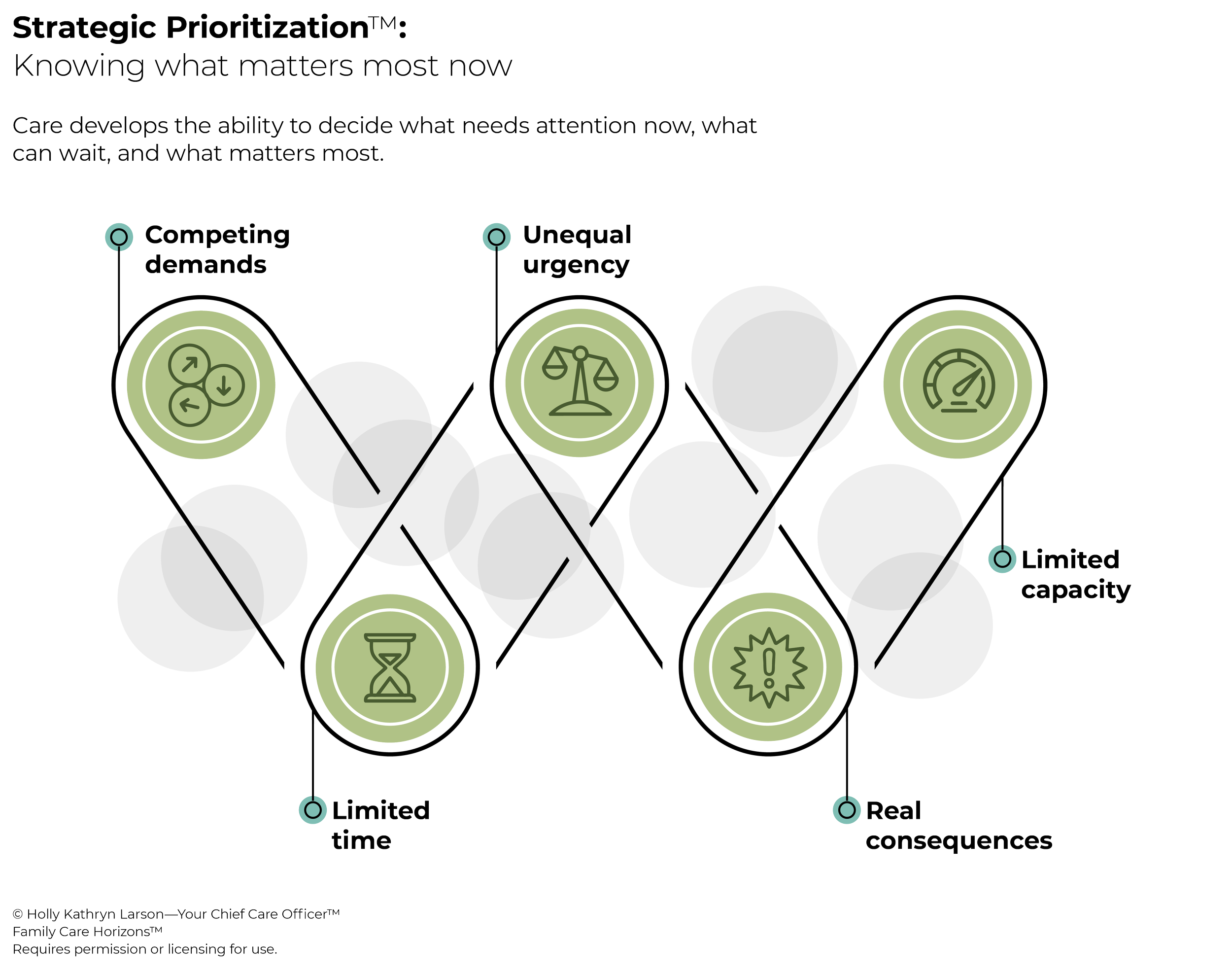
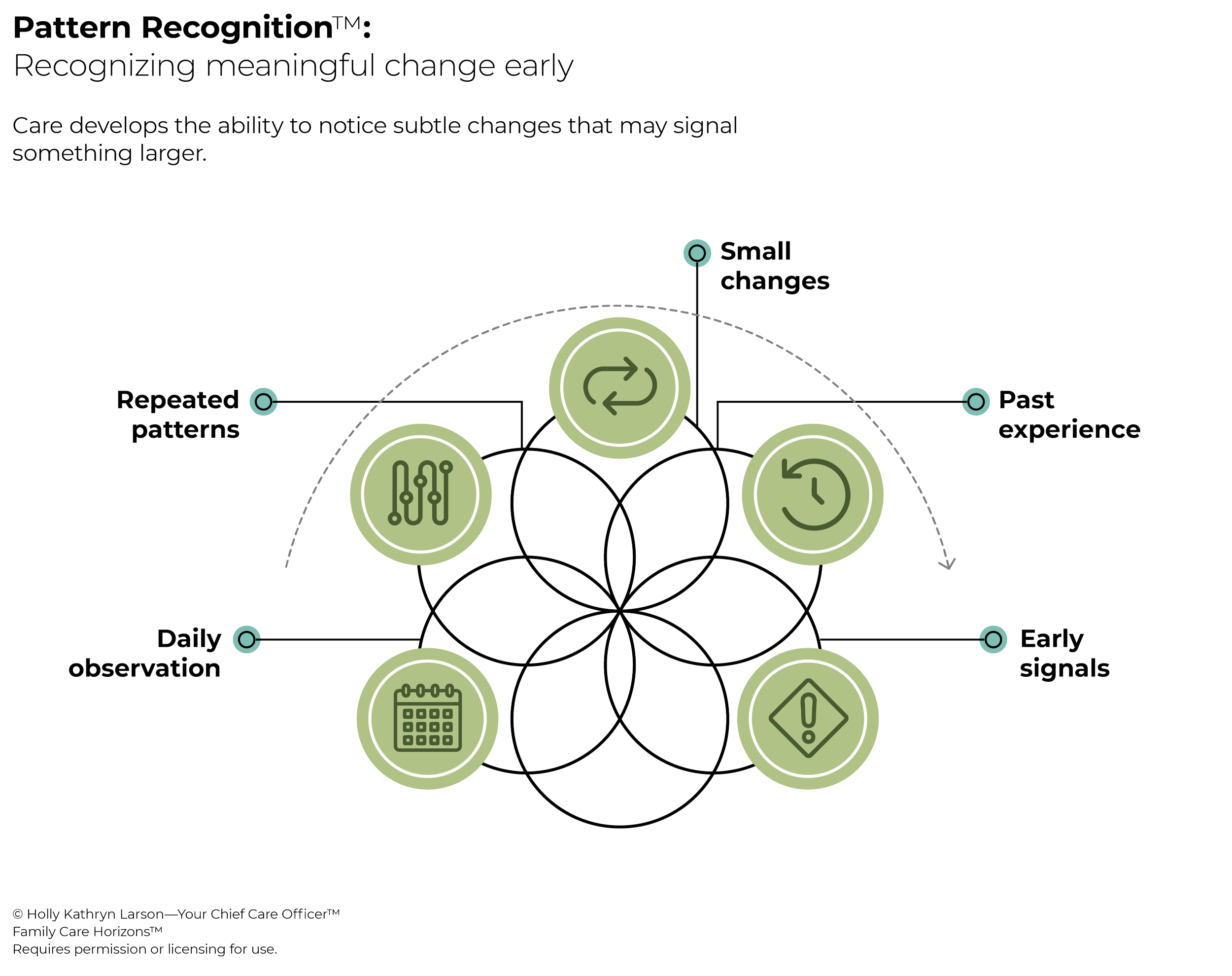
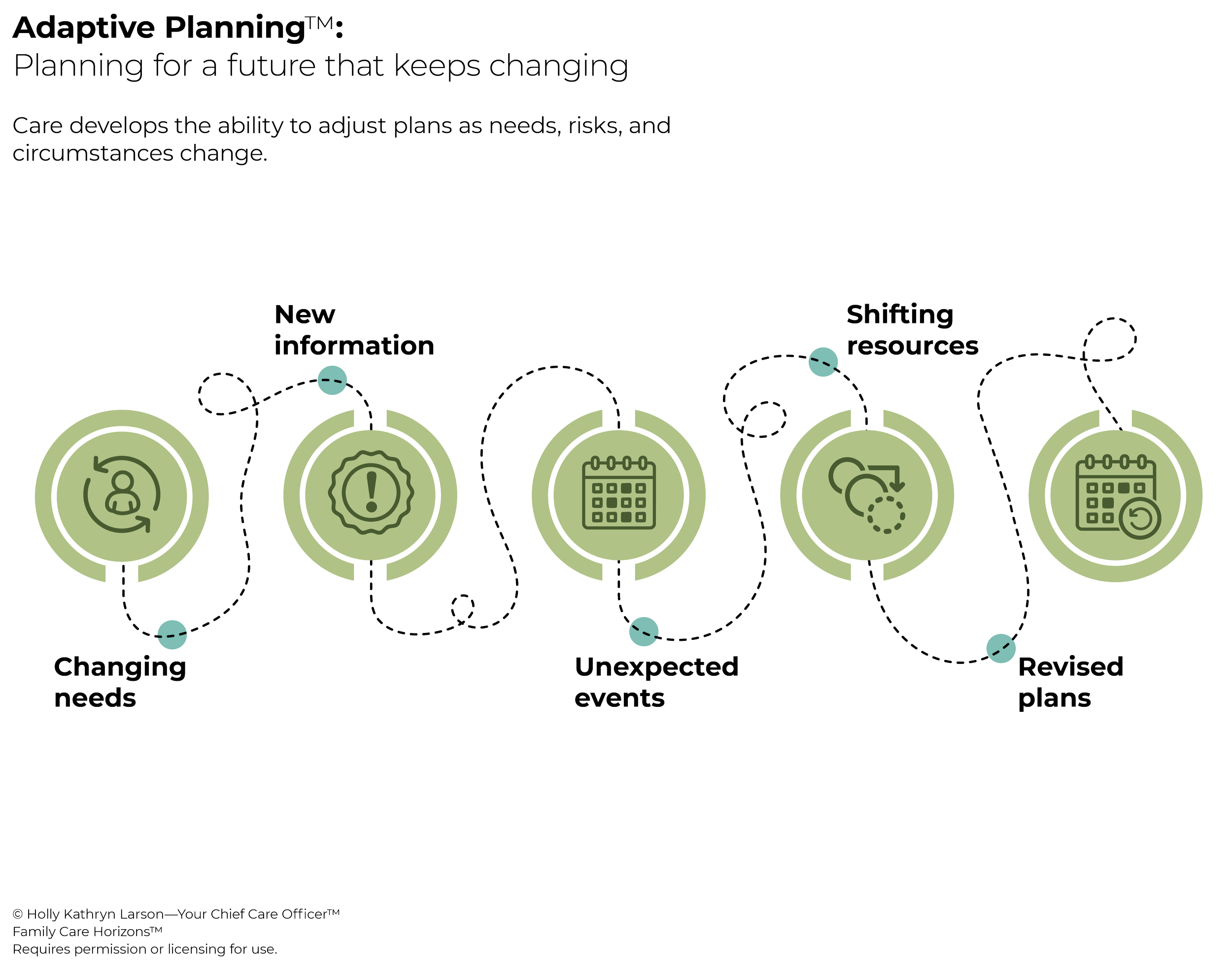
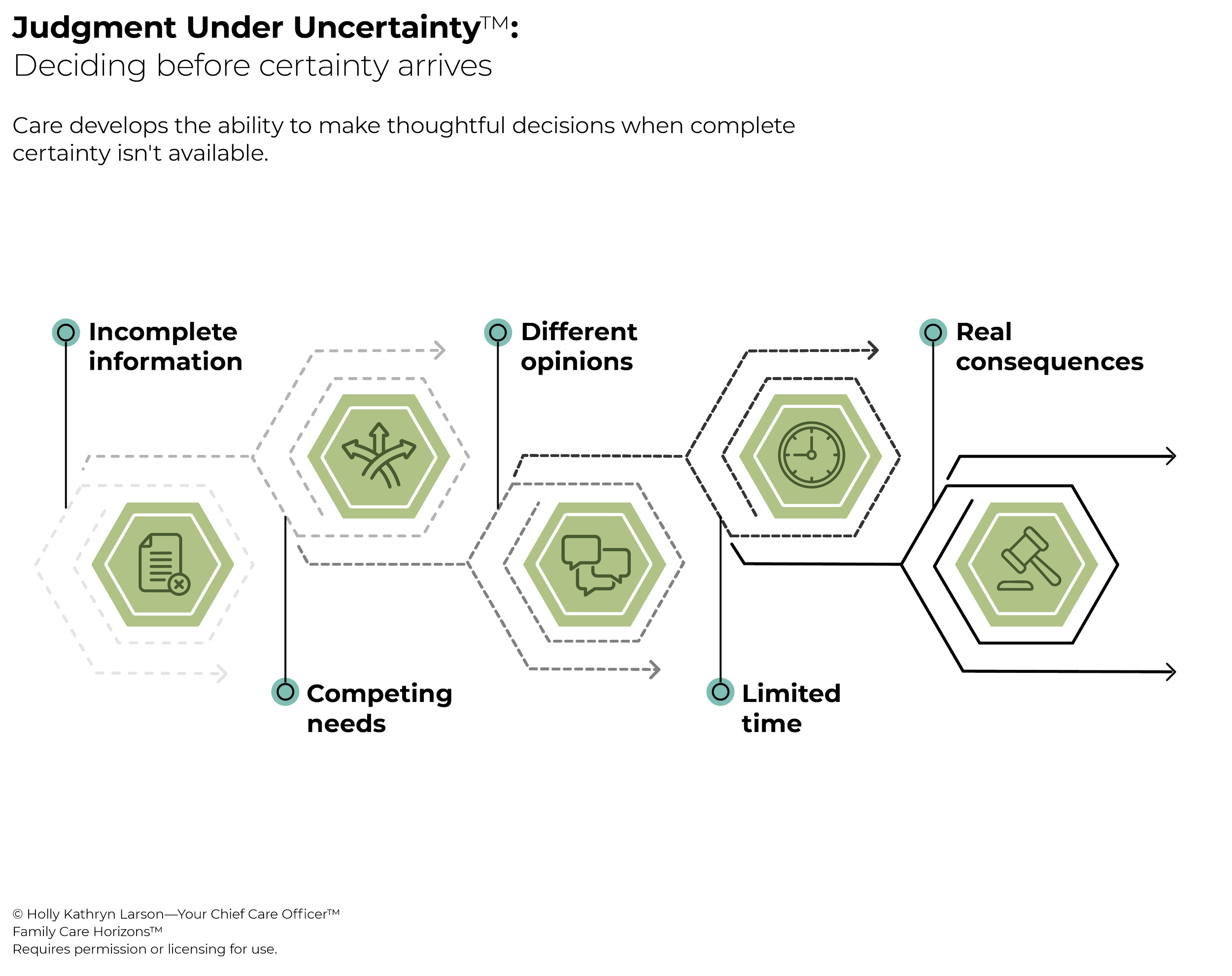
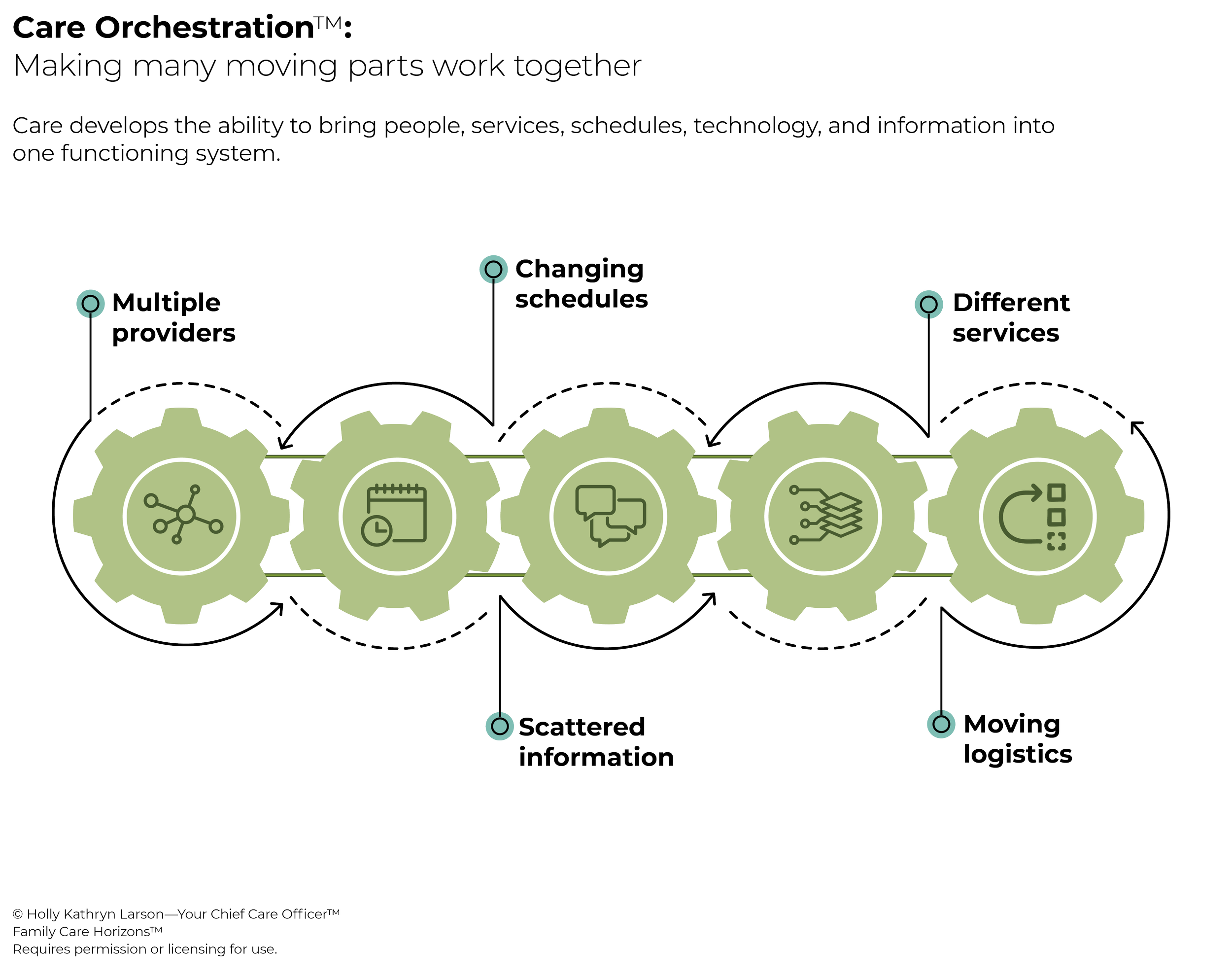
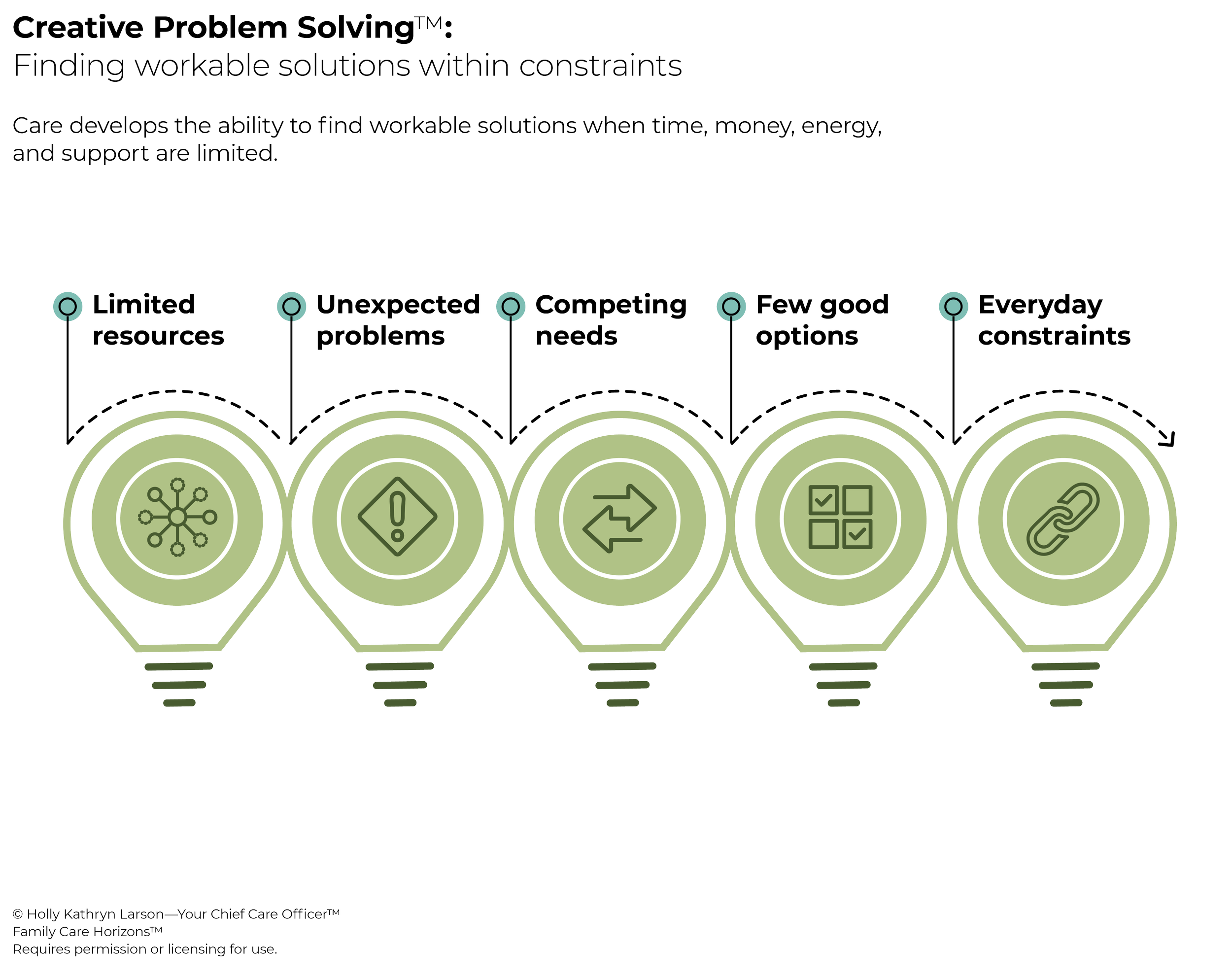
Care Strengths™ identify eight leadership and management capabilities people practice and develop through the work of care.
Family care asks people to operate in constantly changing conditions—navigating incomplete information, competing priorities, limited resources, multiple stakeholders, and decisions with real consequences.
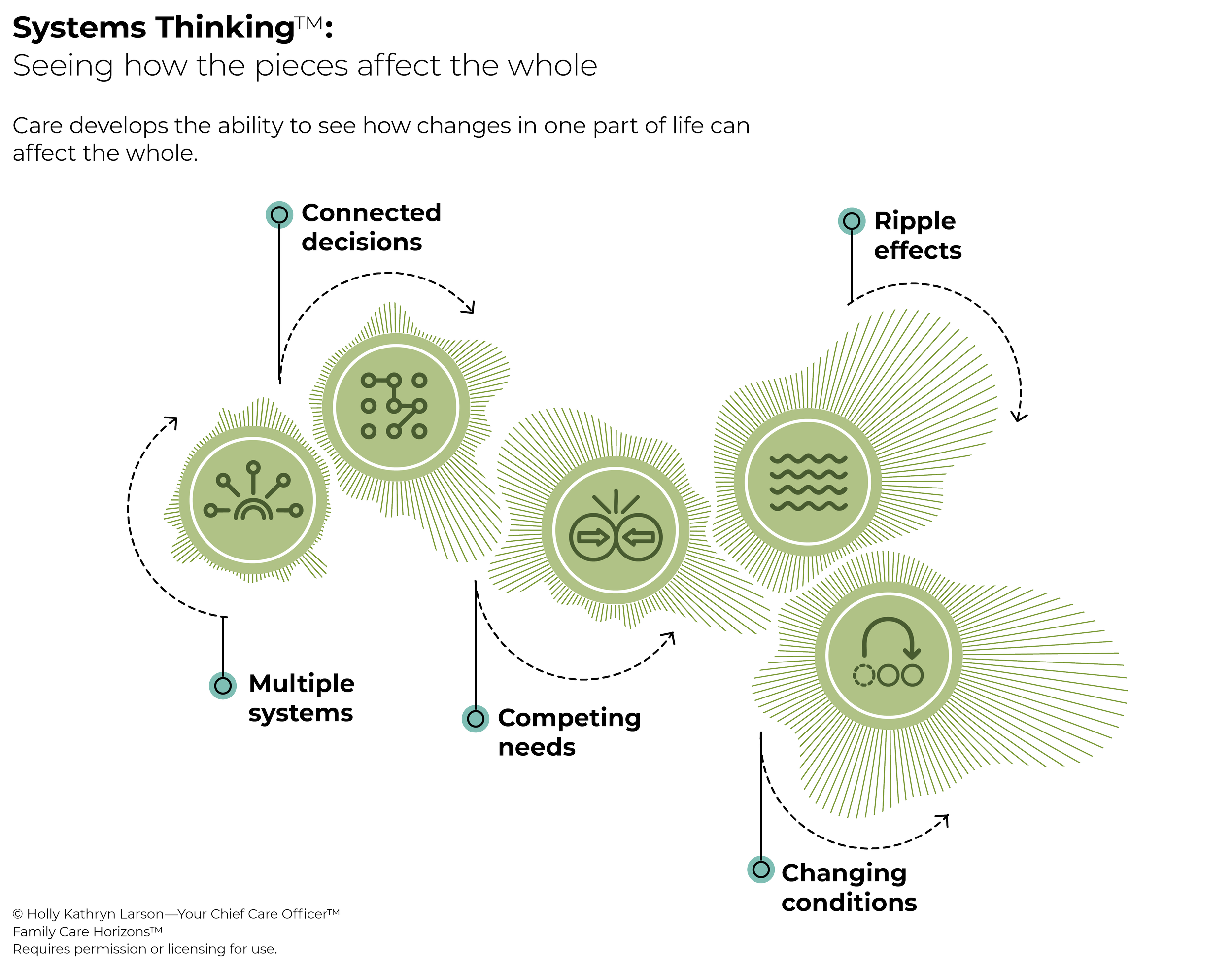
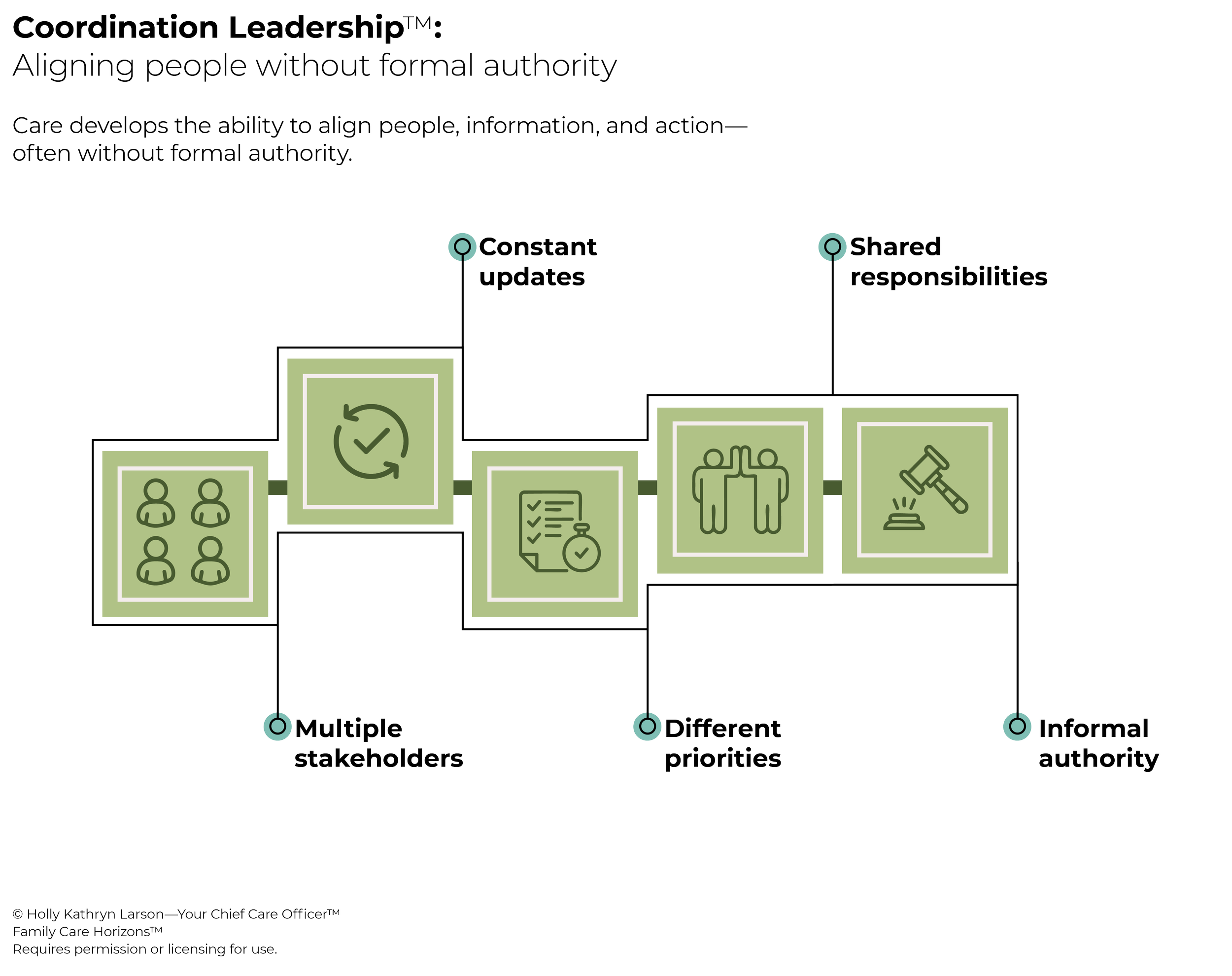
Systems thinking. Coordination. Prioritization. Pattern recognition. Adaptive planning. Judgment under uncertainty. Orchestration. Creative problem solving.
These aren't simply caregiving skills. They're leadership capabilities.
Explore eight capabilities that reveal what care can teach us about leadership.
Current Care Strengths™ collection

Why these frameworks matter
Caregiving is often described in terms of what it demands from people. These frameworks make visible what people can develop through the work of care. By naming capabilities that often go unrecognized, they help individuals and organizations:
Recognize hidden strengths
Support professional growth
Name developed capabilities
Translate care into professional language
Build confidence
Reveal leadership capacity
Connect care and work
Reframe and value caregiving experience
Whether used in coaching, leadership development, talent conversations, workshops, education, or professional development, these frameworks provide a shared language for recognizing and developing capabilities built through care.
What are Care Stacks™?
You can’t lead what you can’t see.
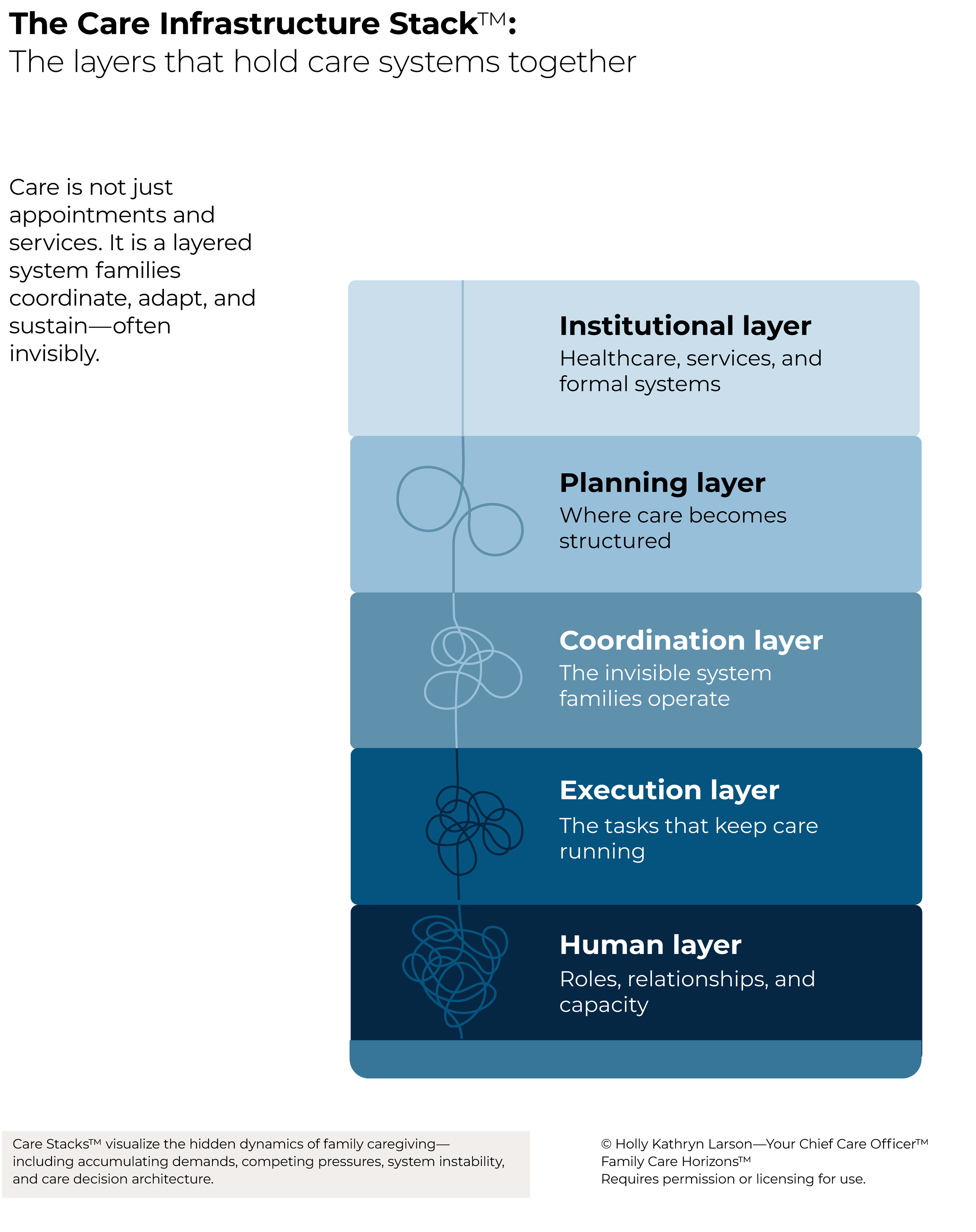
Care Stacks™ are proprietary visual frameworks that reveal the hidden forces shaping family caregiving.
Each Care Stack™ explains a different aspect of the caregiving experience. Together, they help professionals understand how care systems work, why pressure builds over time, and how families navigate change.
Individually, each framework explains one dimension of caregiving.
Together, they reveal a broader truth:
Caregiving is not a single event. It is a dynamic system under continuous pressure.
Explore the frameworks and share them with your leadership team.
Current Care Stacks™ collection
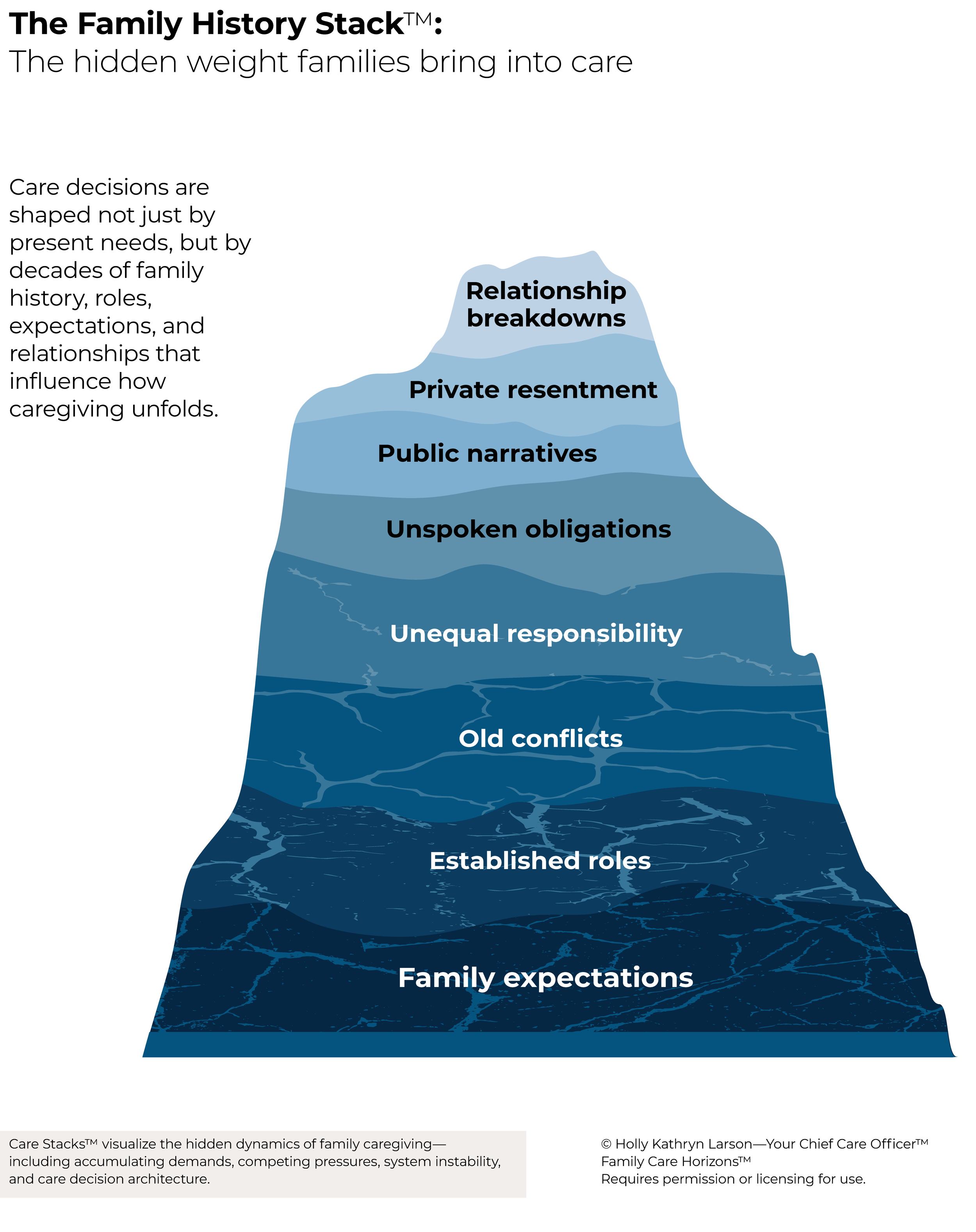
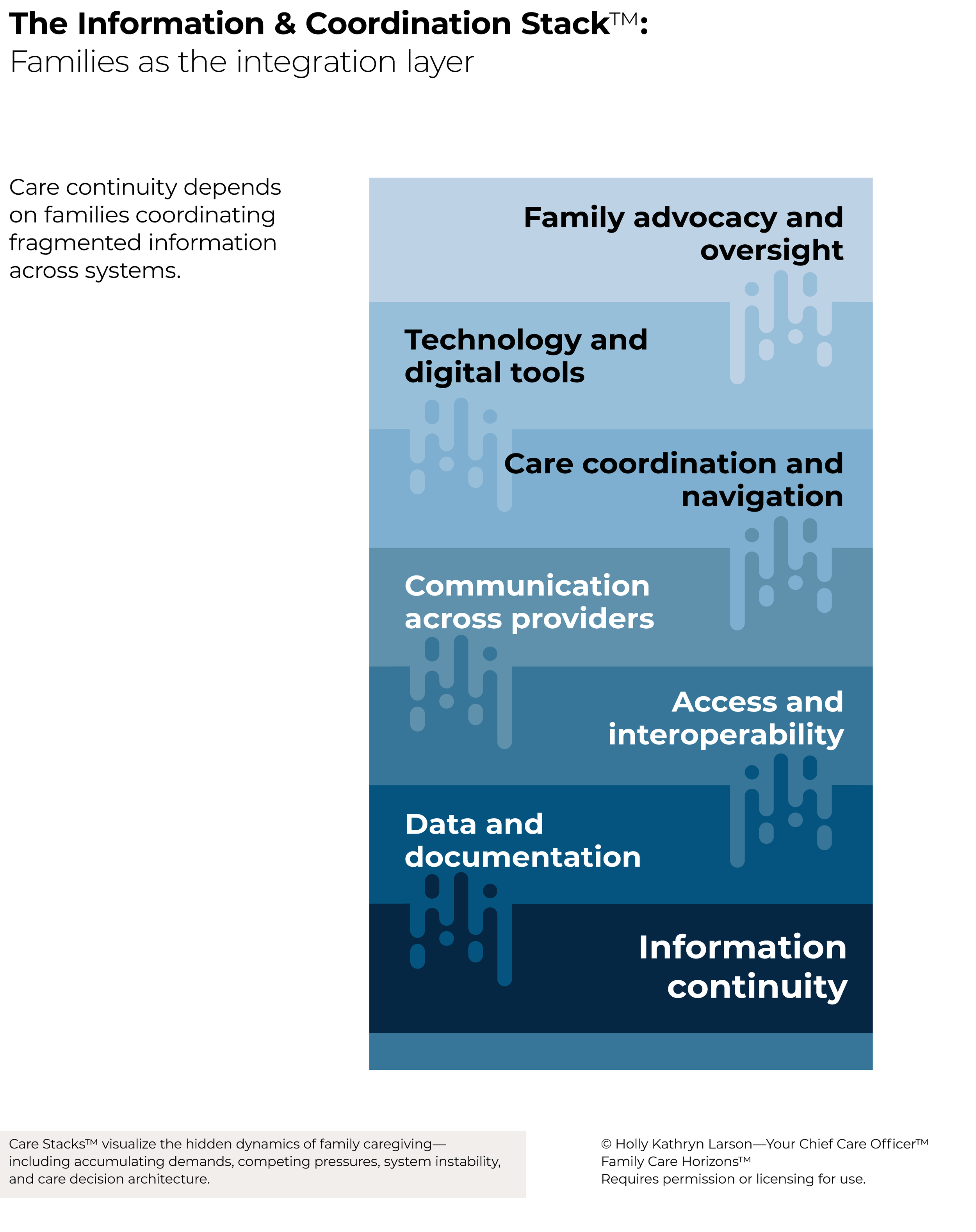
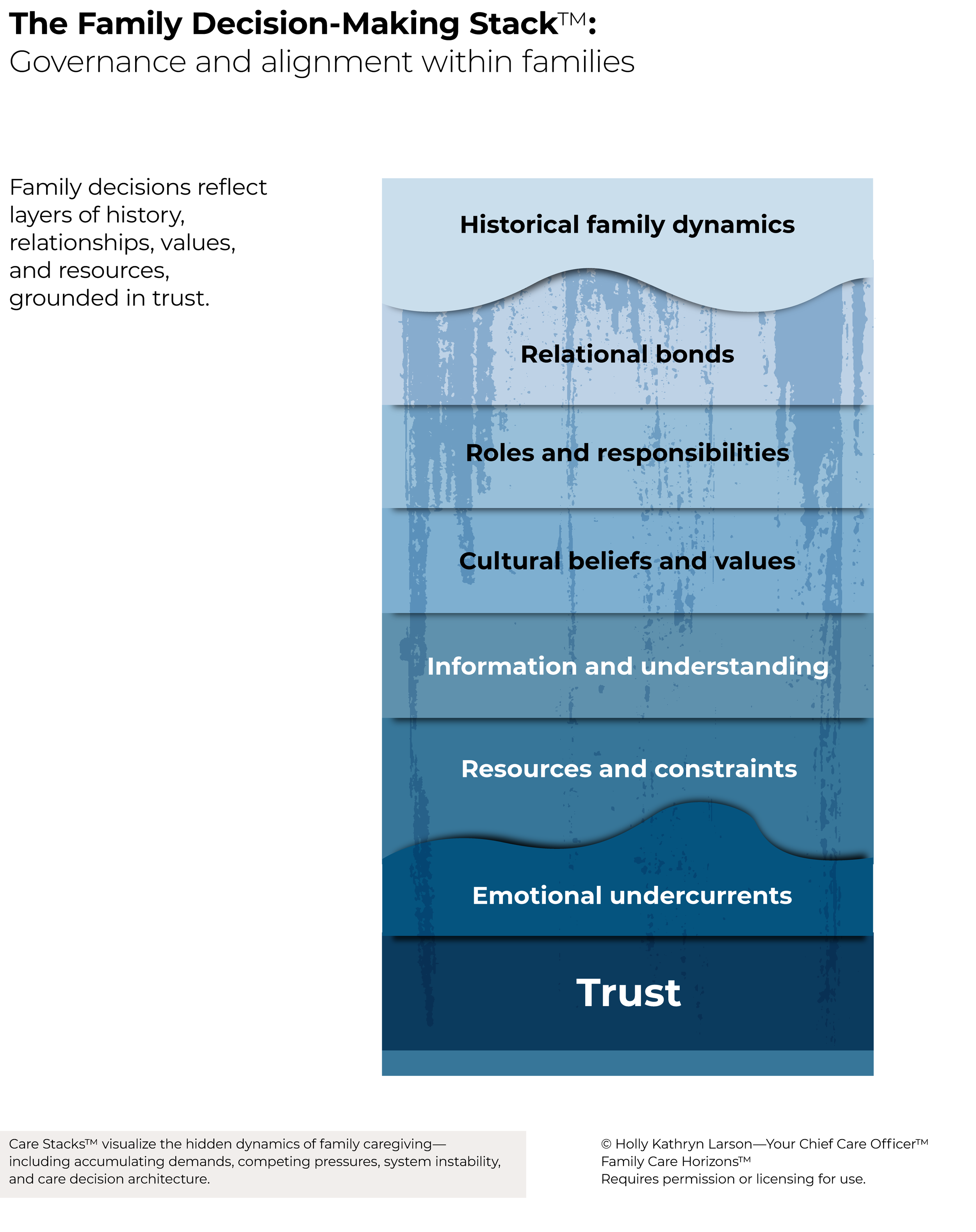
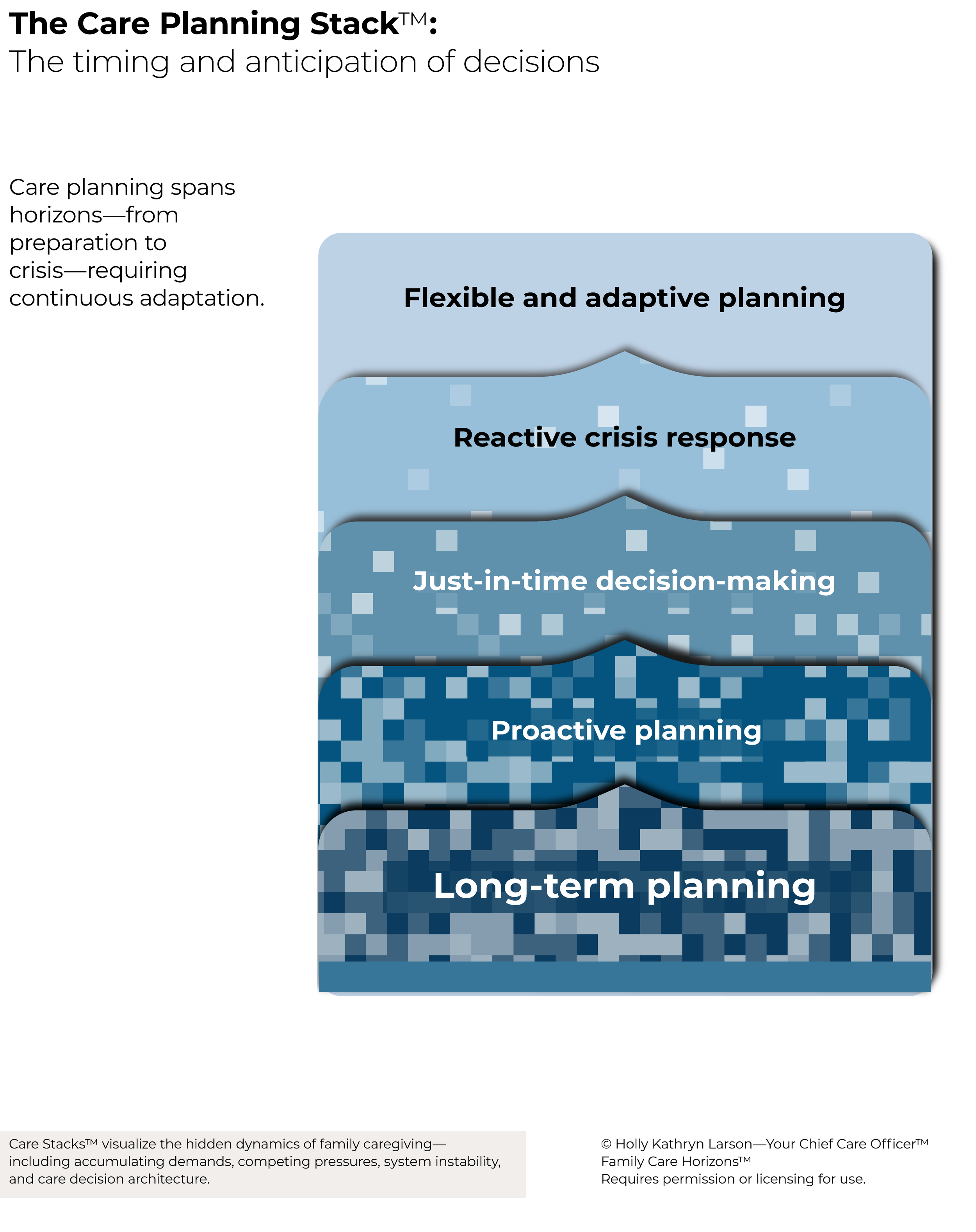
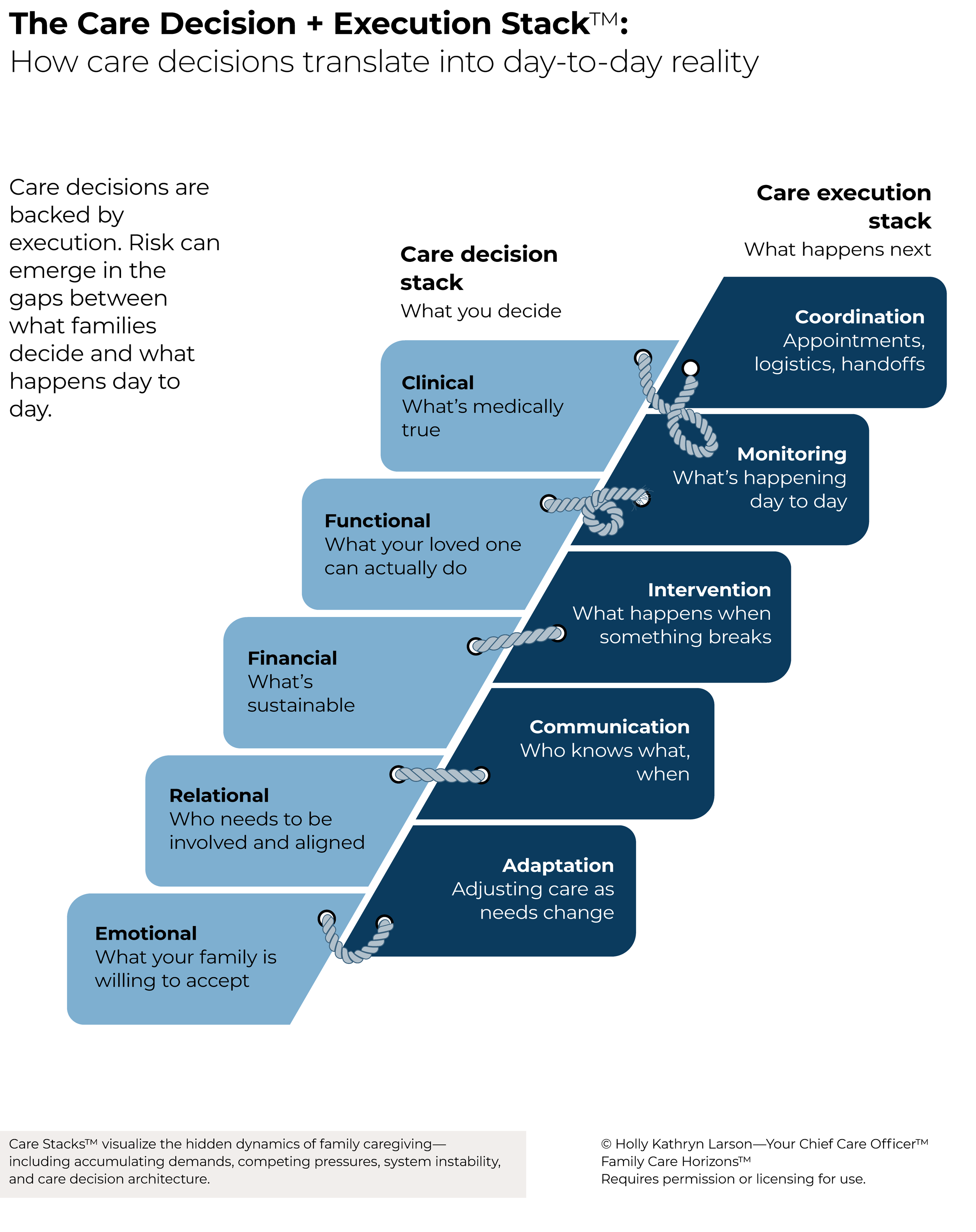
1. Understanding care
Frameworks that explain how family care systems function.
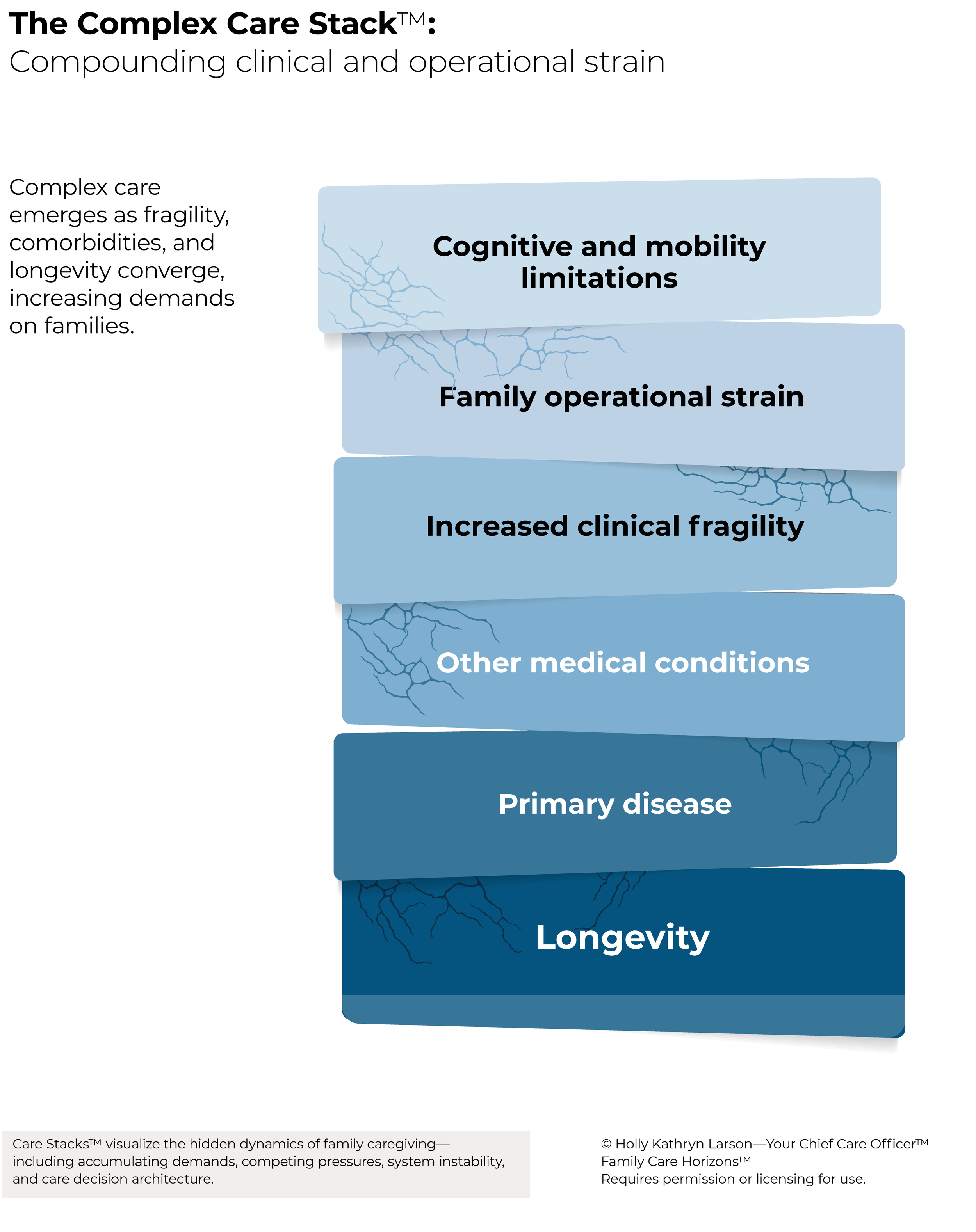
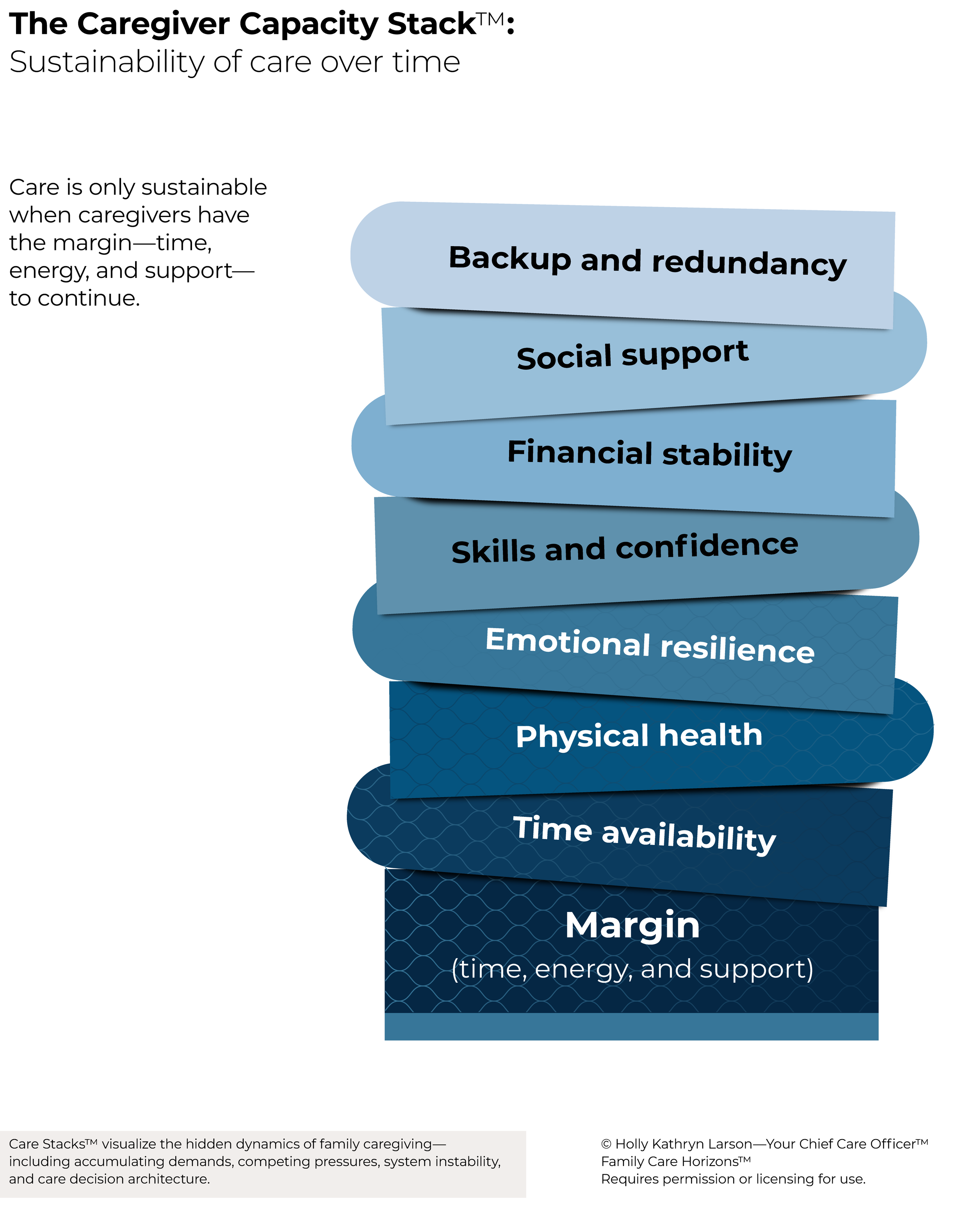
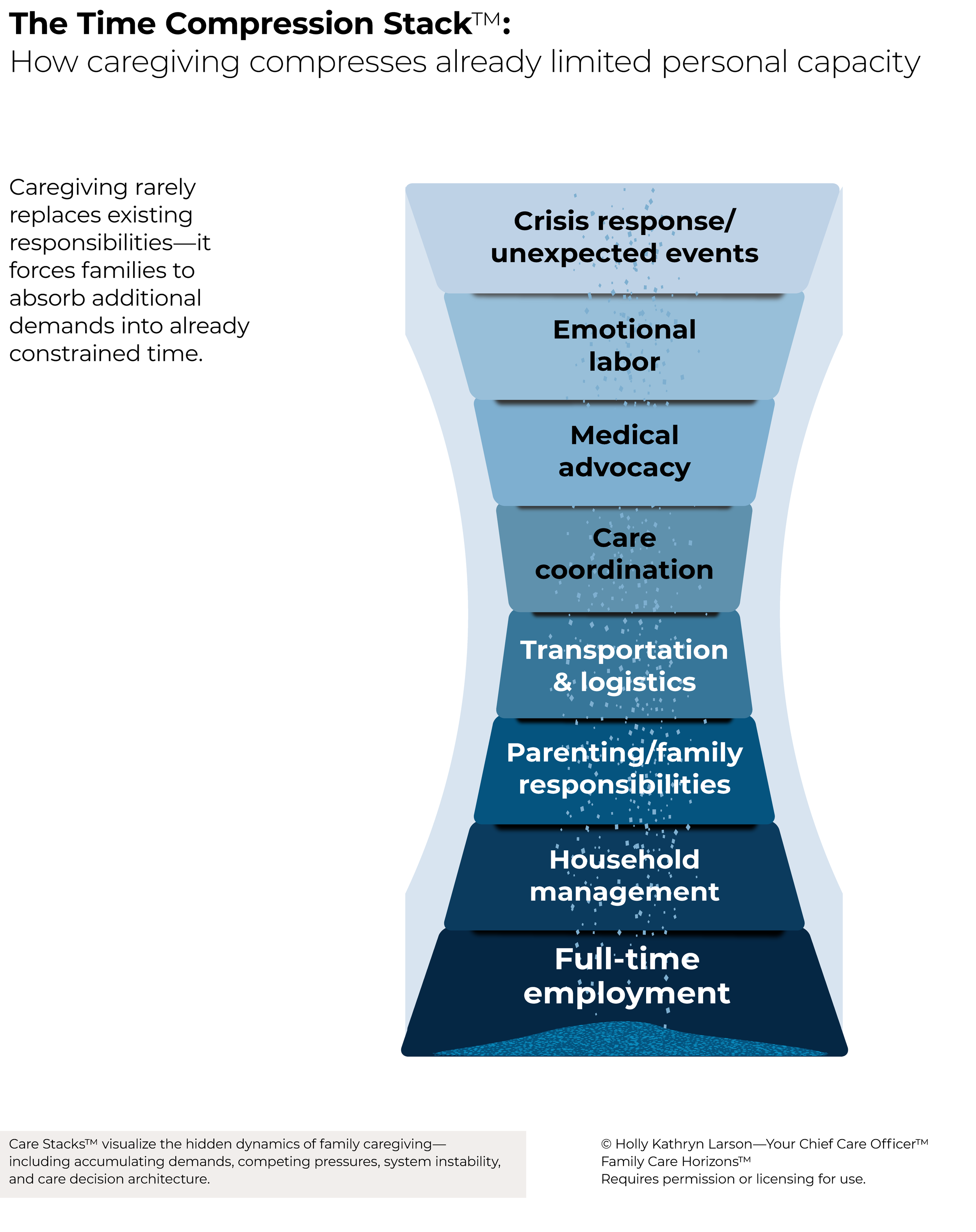
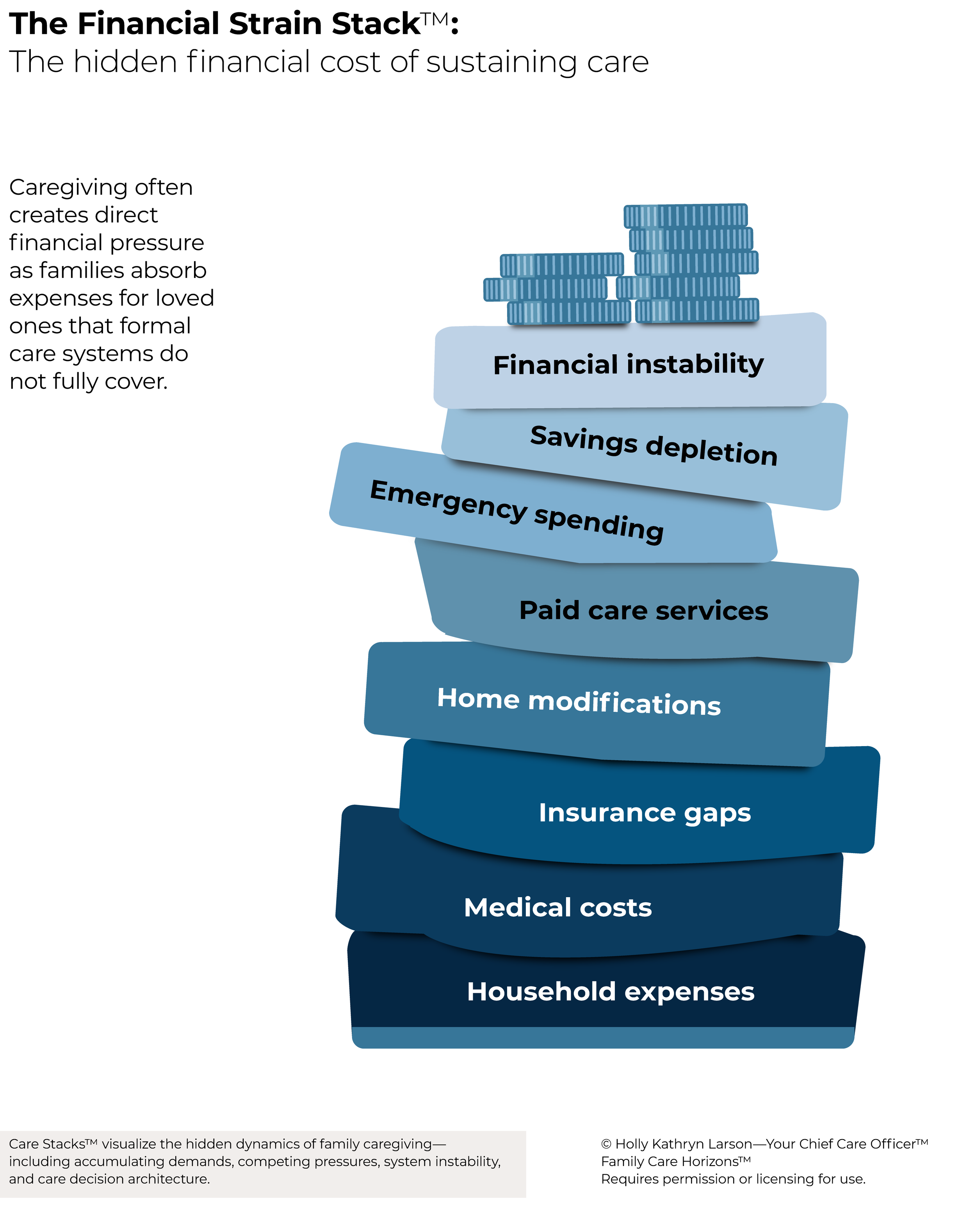
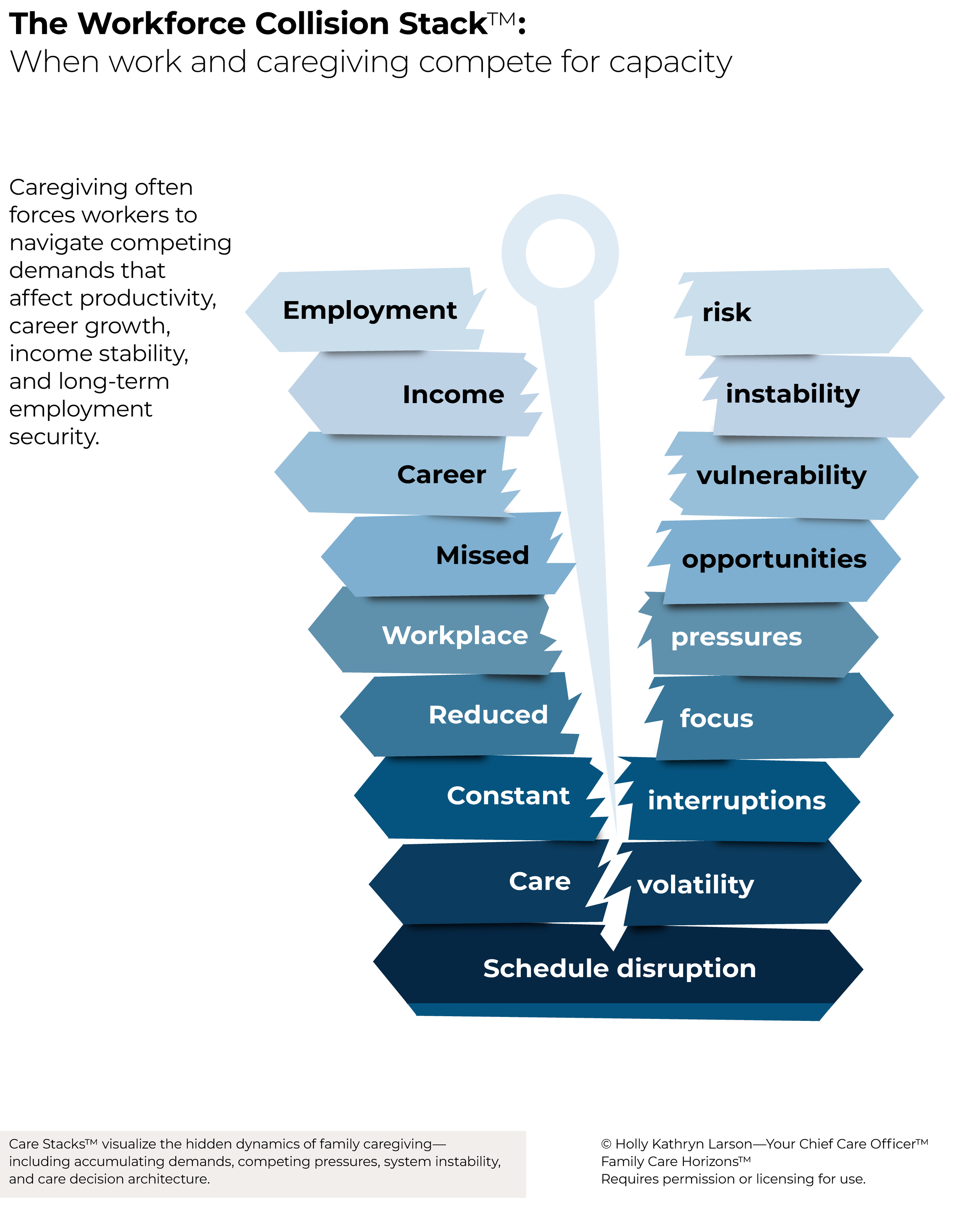
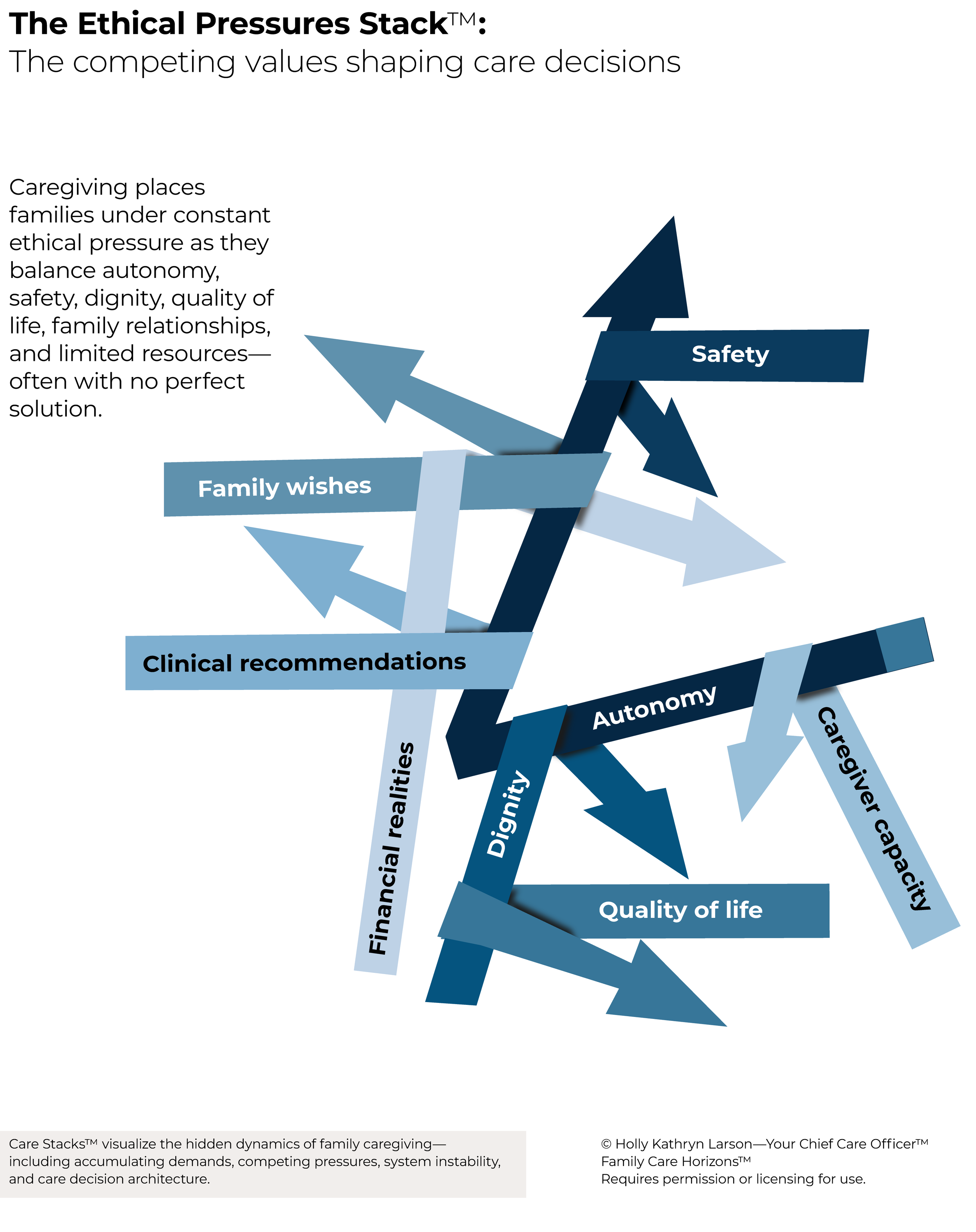
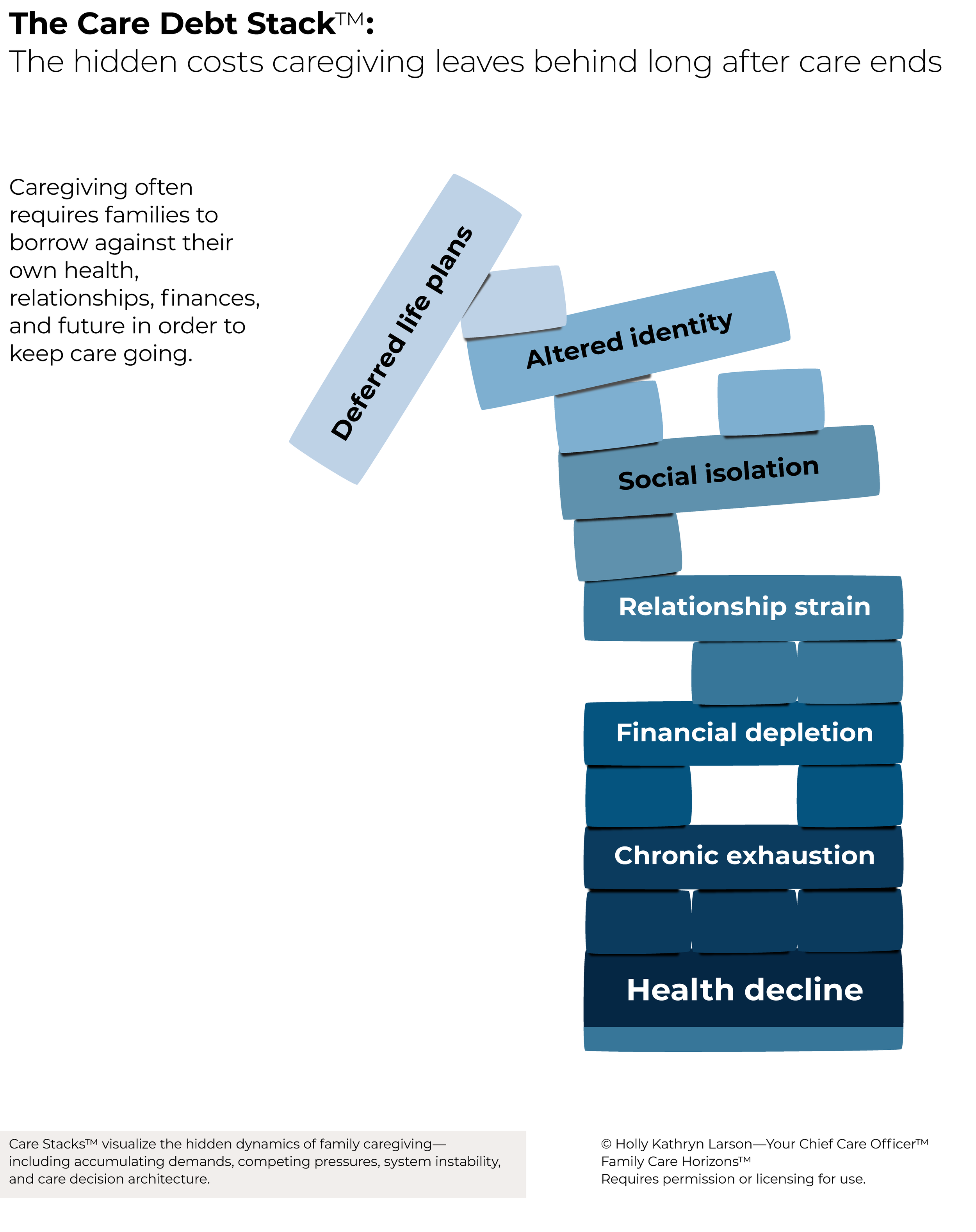
2. Caregiving pressures
Frameworks that reveal the hidden pressures families absorb over time.
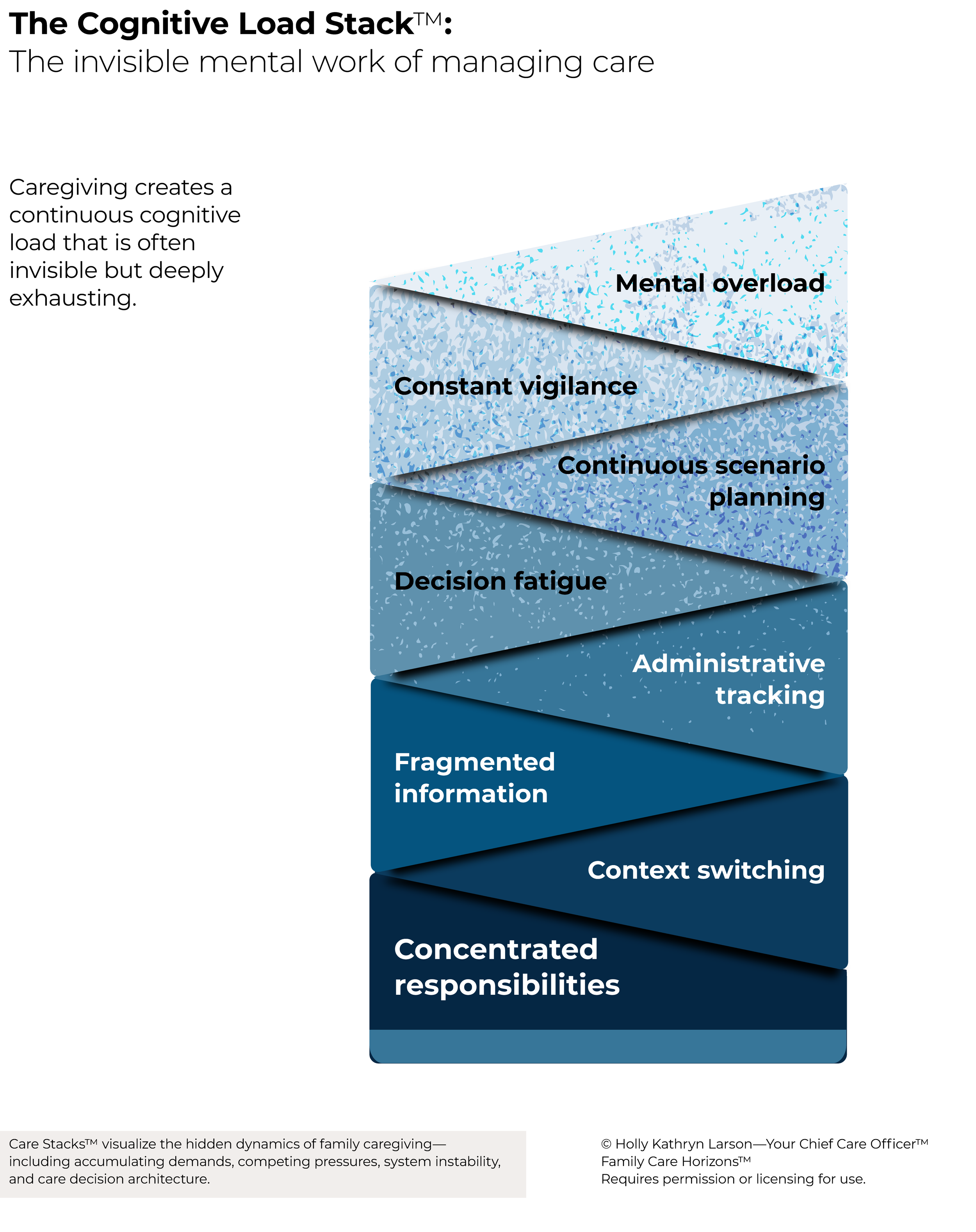
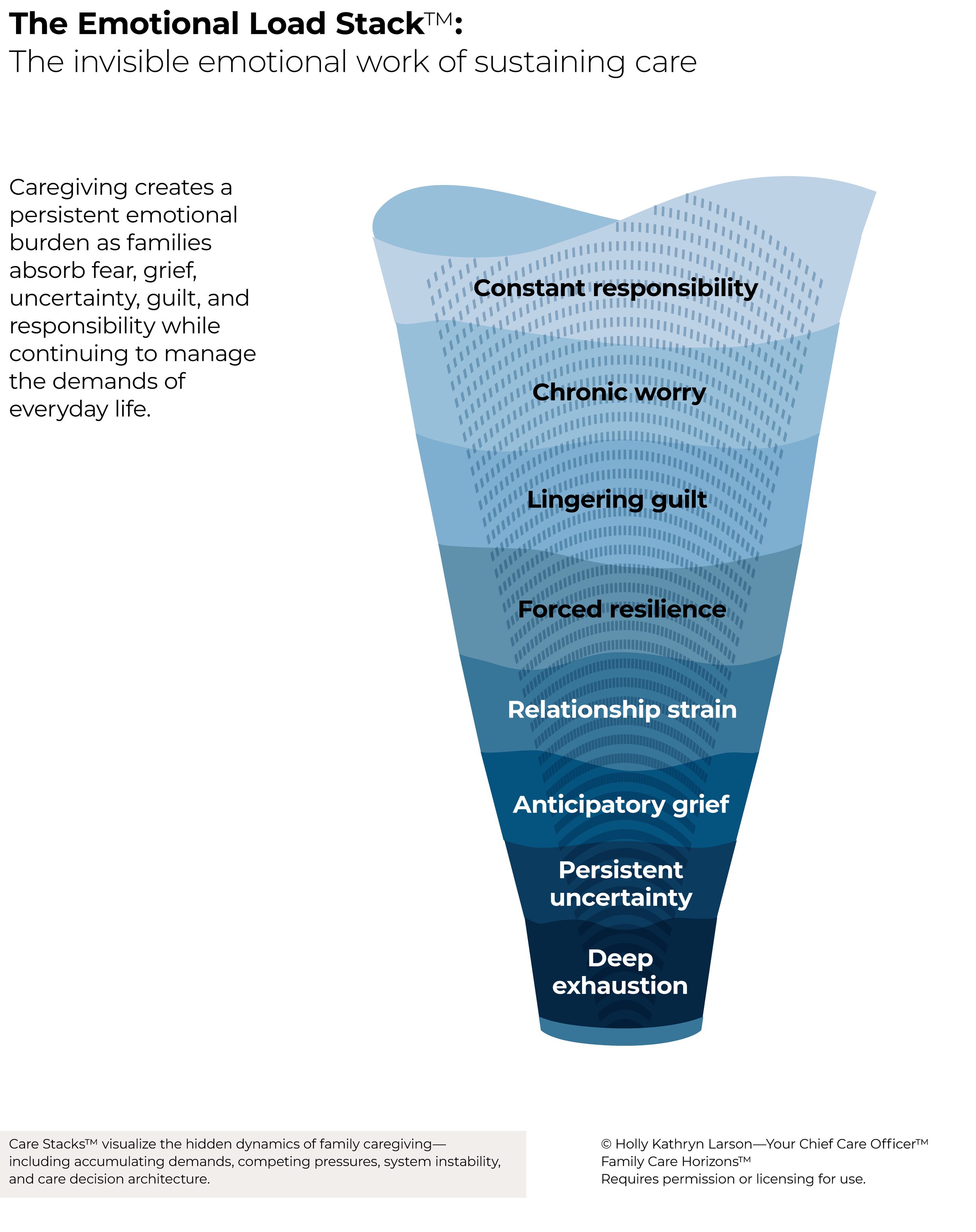
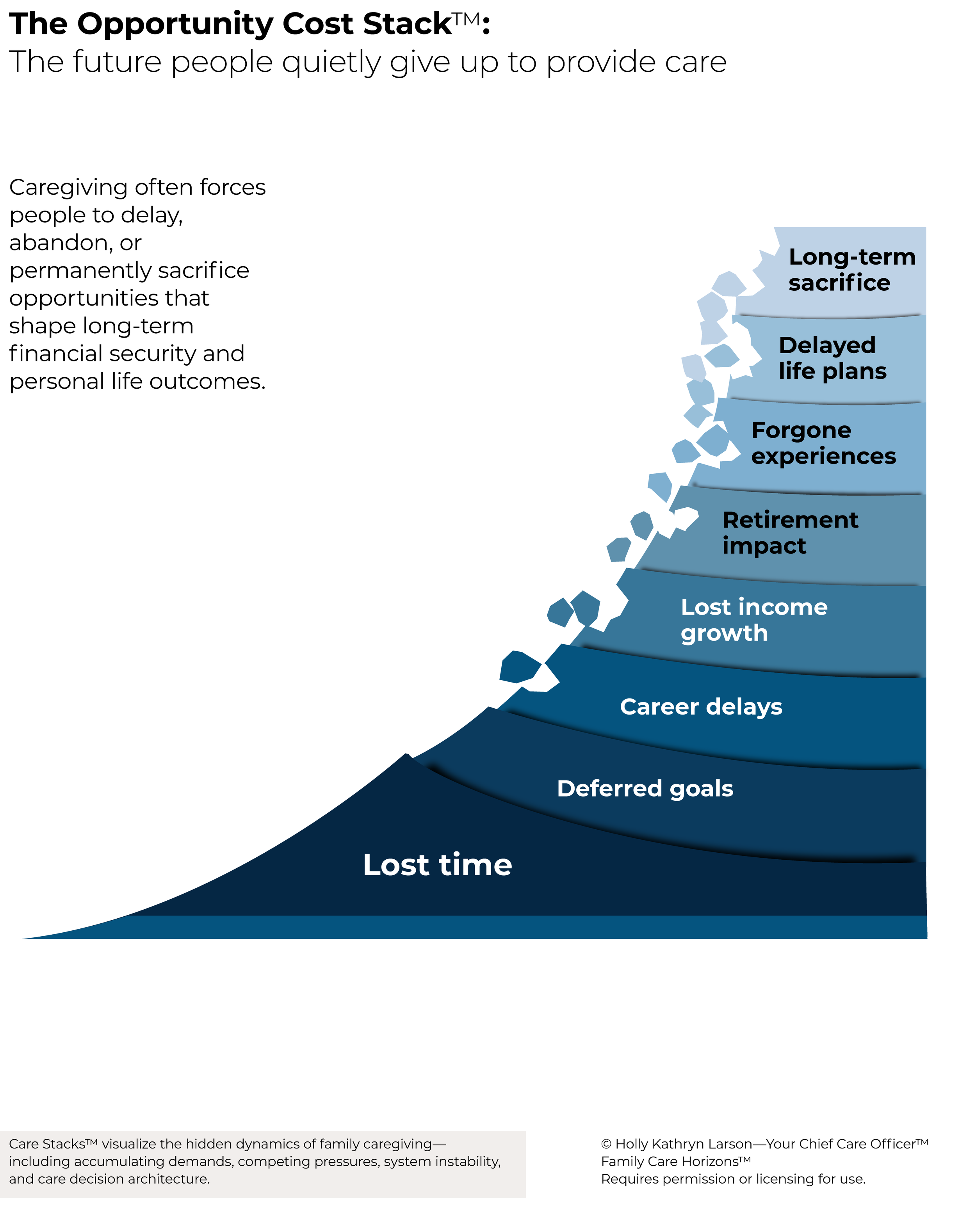
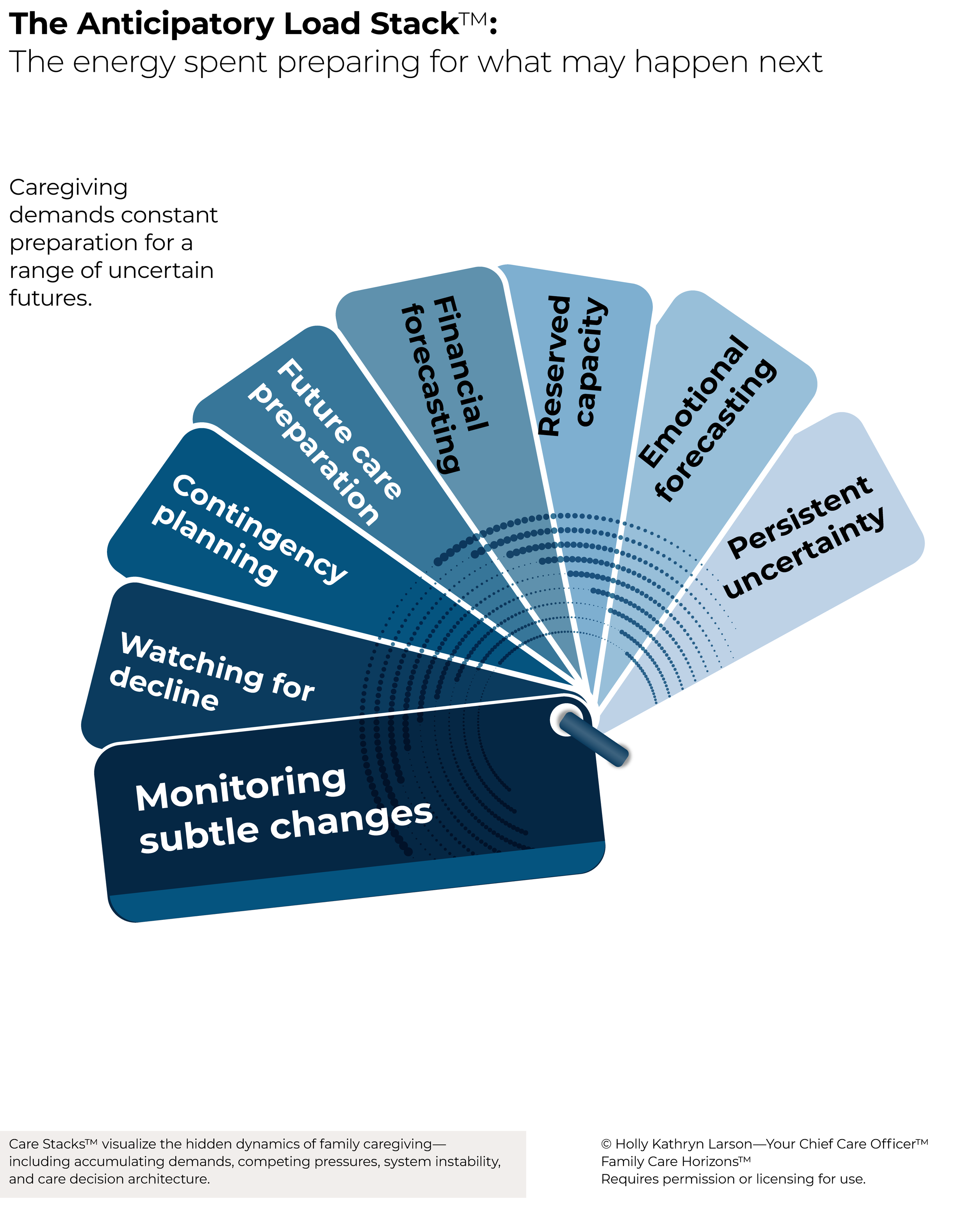
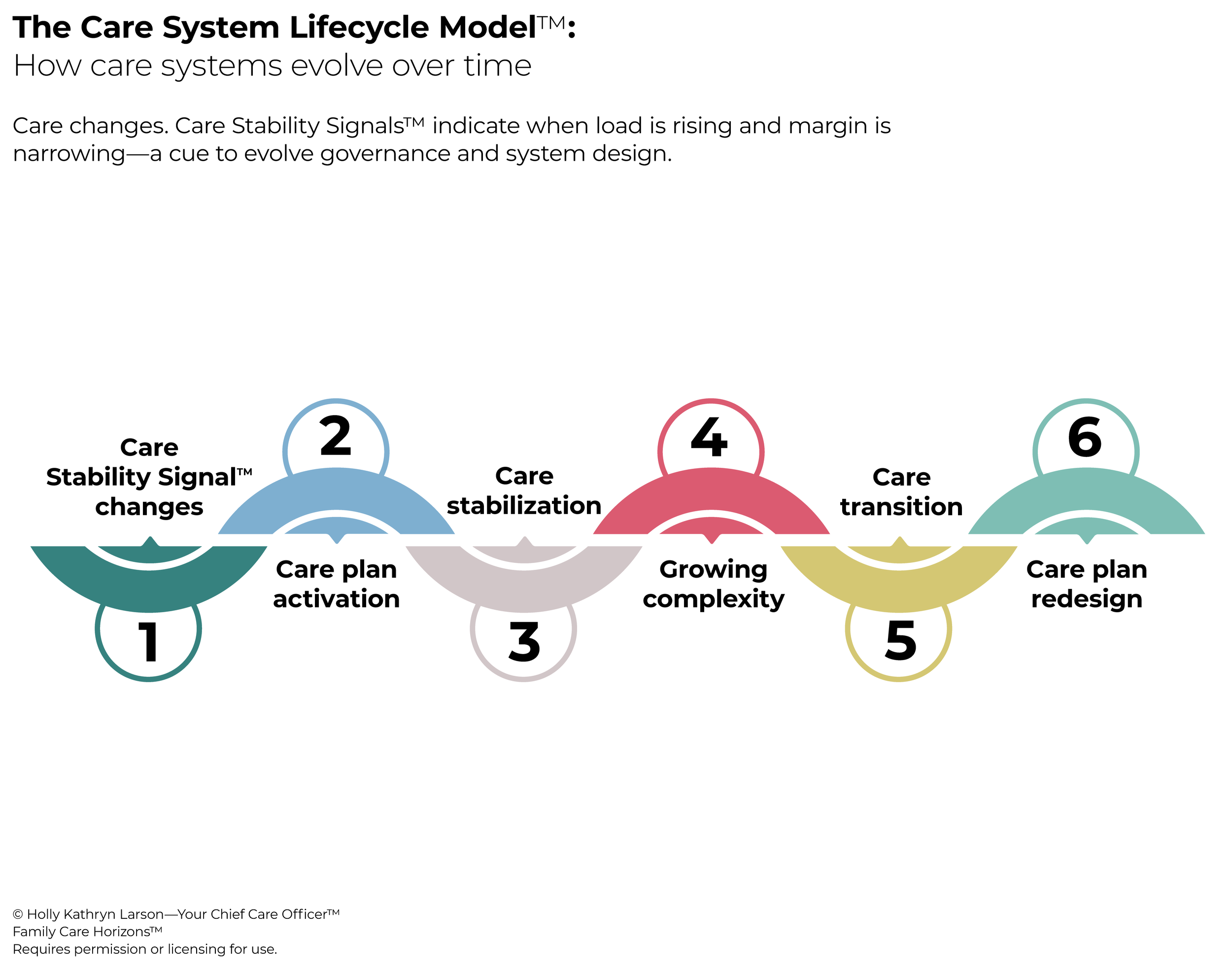
3. Navigating change
Frameworks that explain how care systems become unstable and adapt.
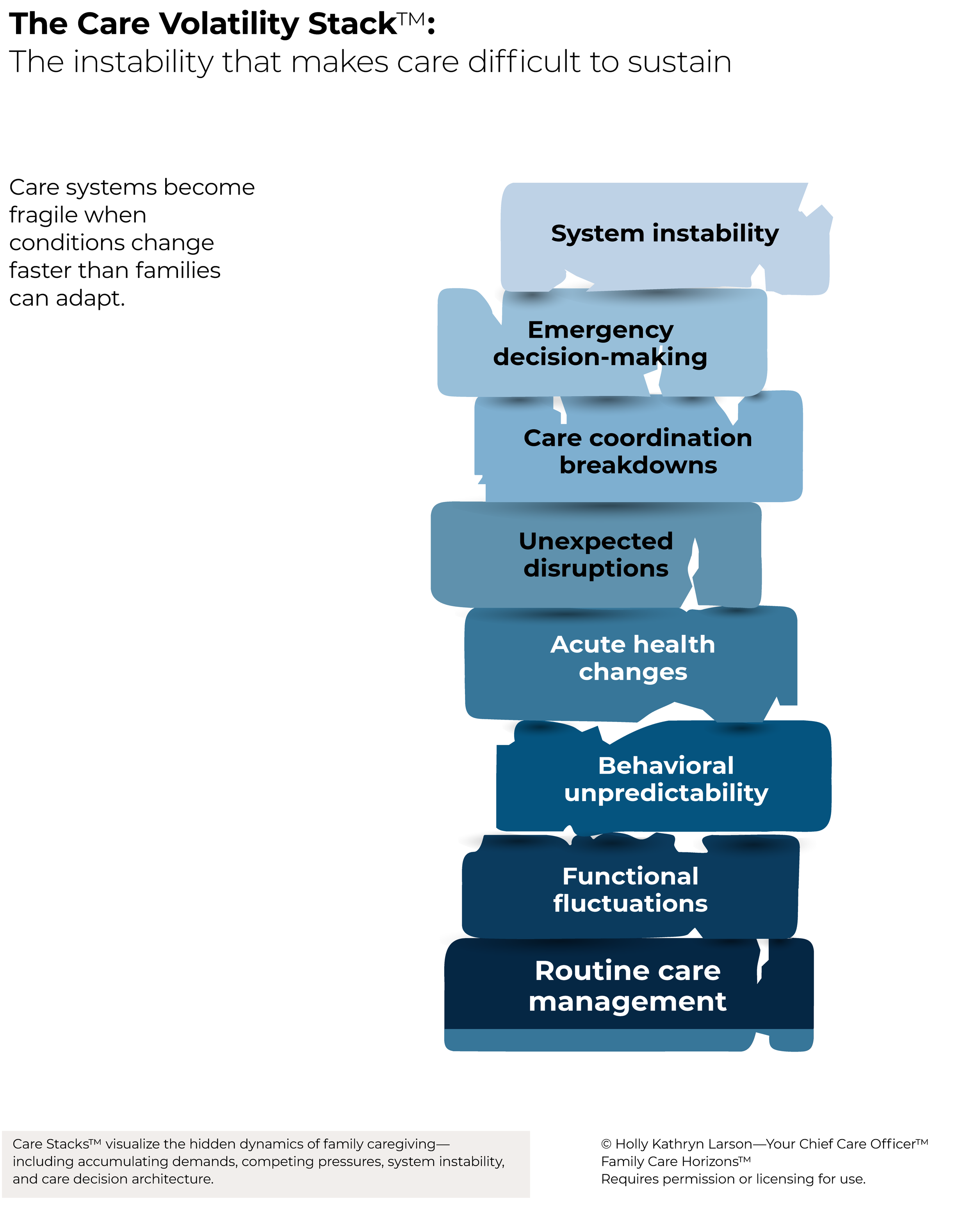
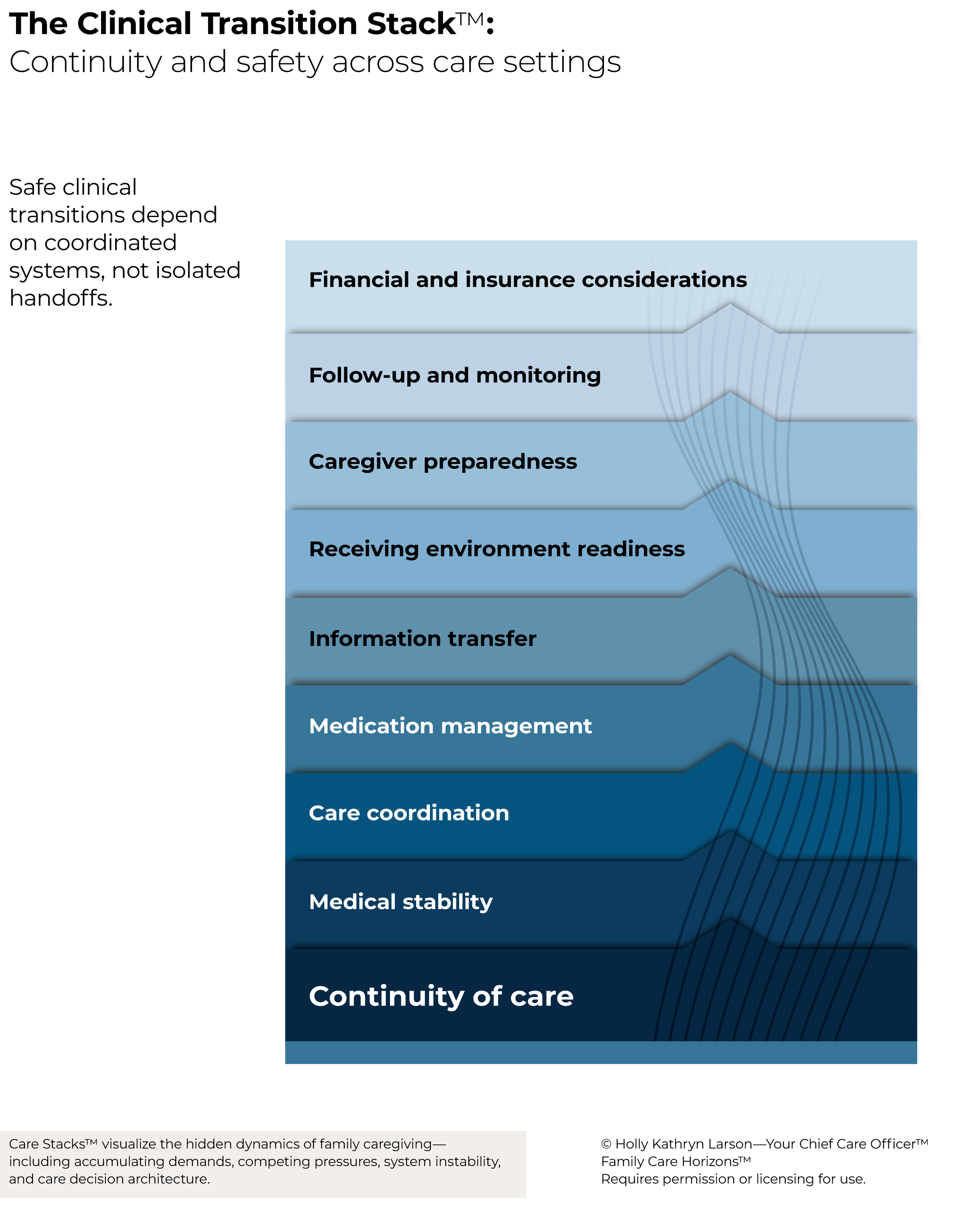
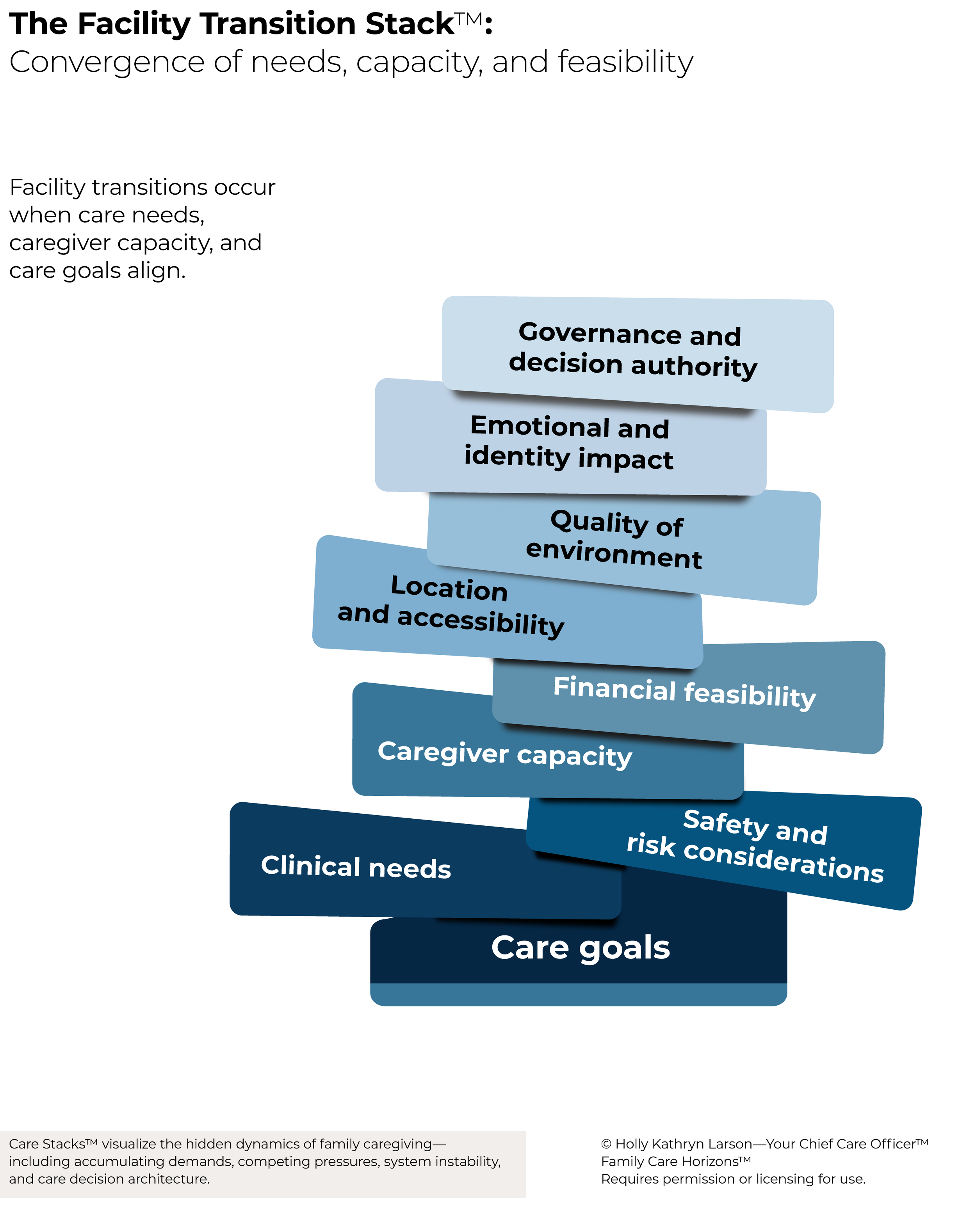
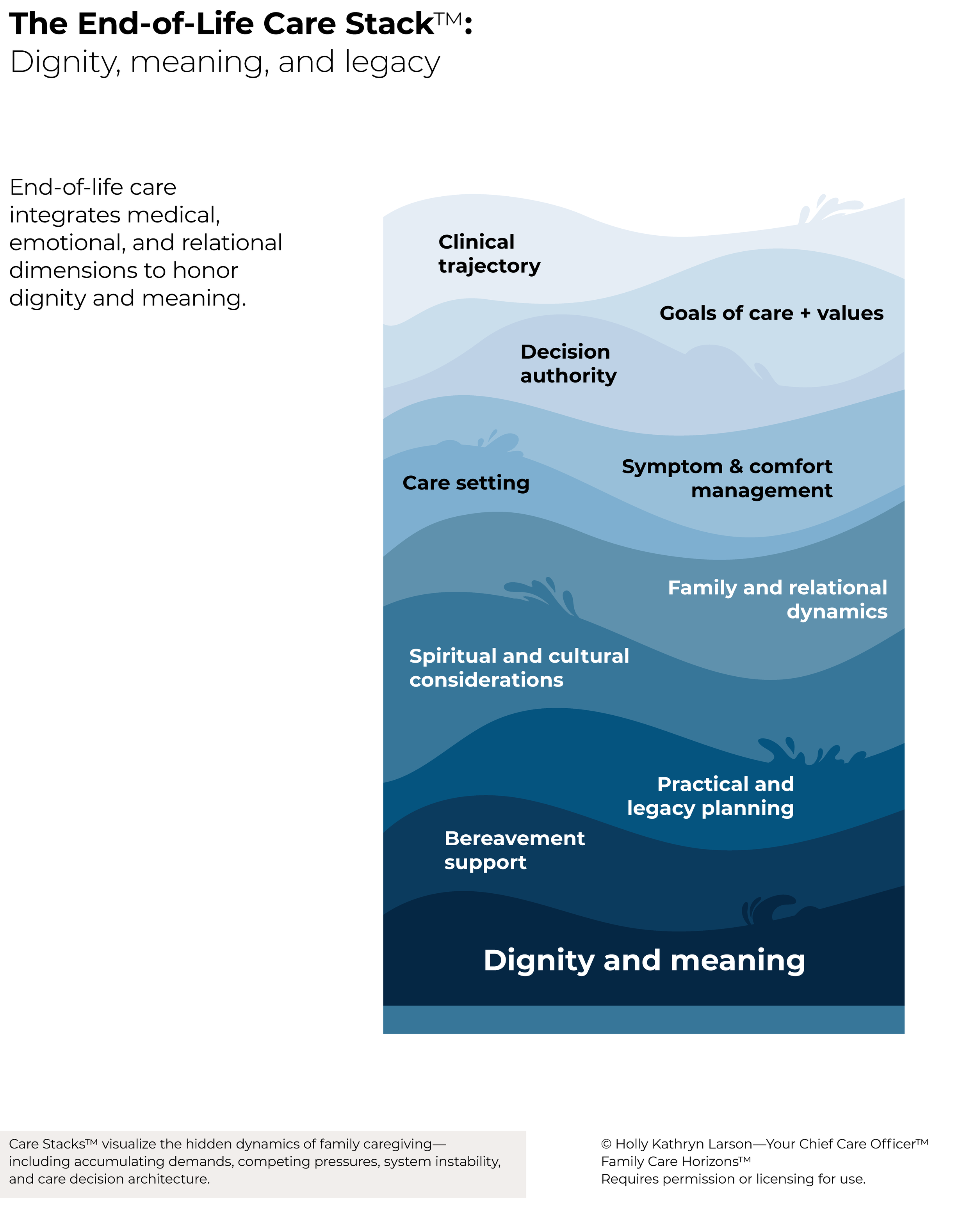
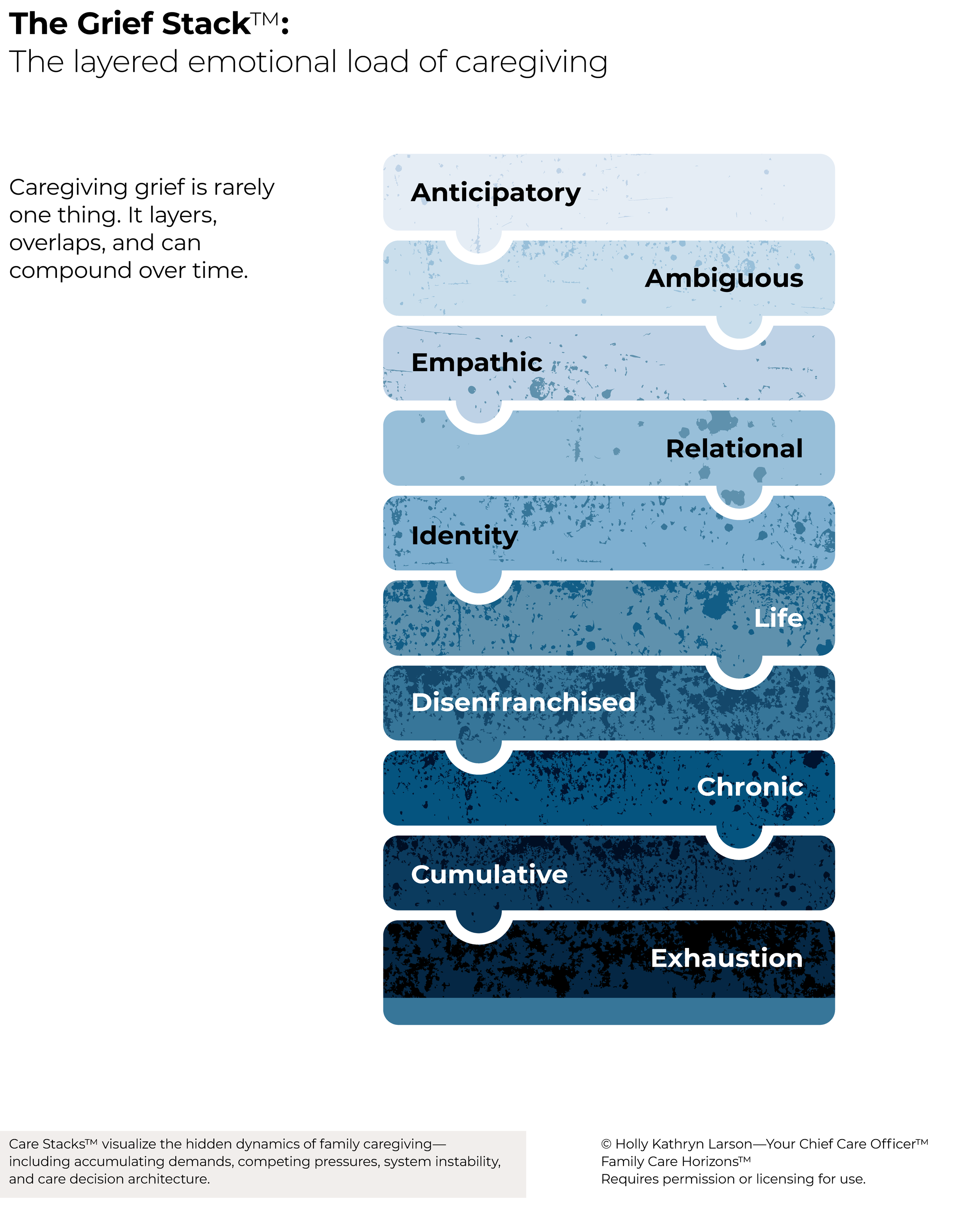
4. Becoming a caregiver
Frameworks that explain how caregiving transforms identity, roles, and relationships.
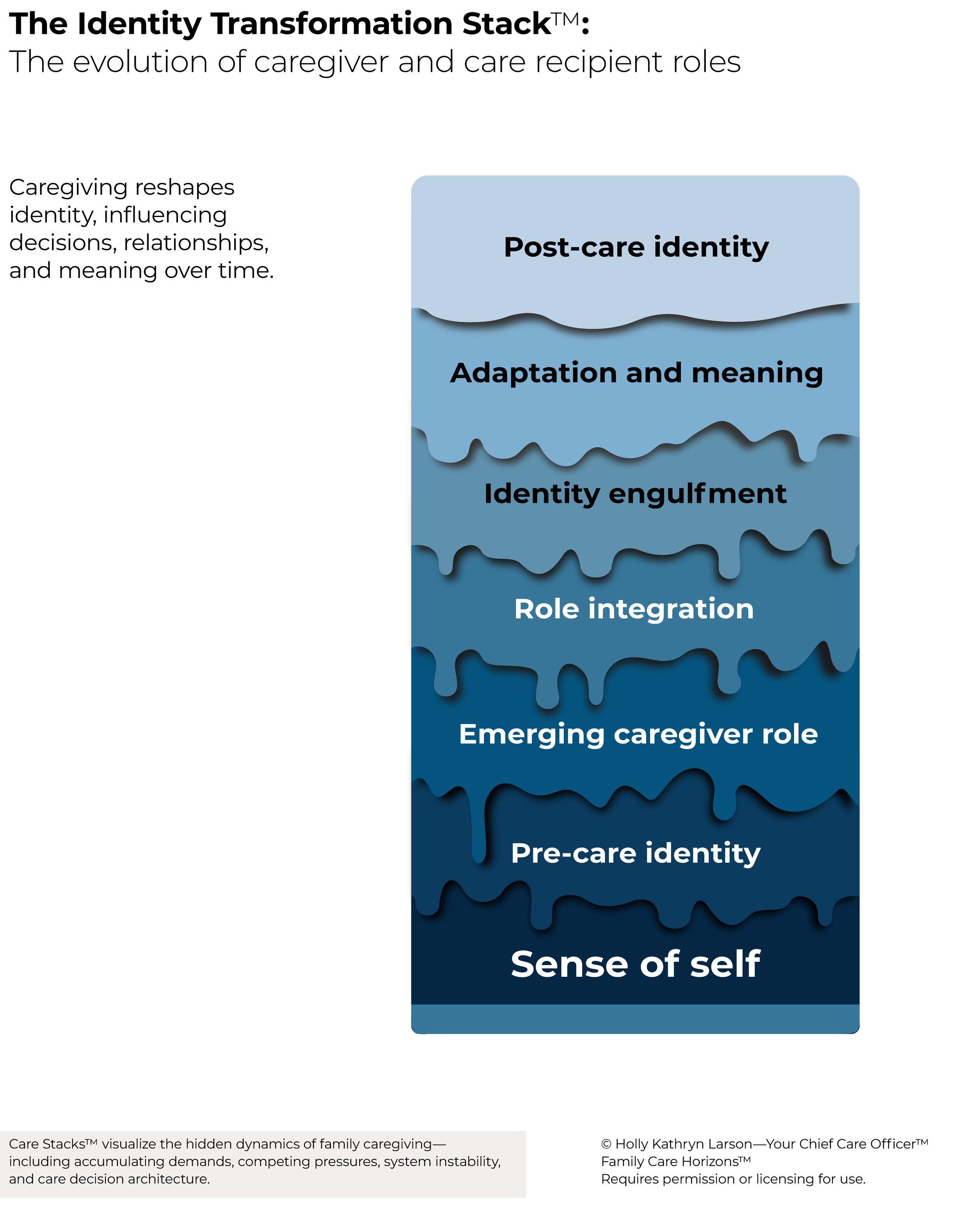
More Care Stacks™ will be forthcoming!
Why these frameworks matter
Most caregiving resources answer questions. These frameworks help people recognize patterns. By making hidden dynamics visible, they help professionals and families:
Anticipate challenges earlier
Strengthen care coordination
Improve care planning
Facilitate better conversations
Identify emerging sources of risk
Reduce decision friction
Improve communication across families and care teams
Better understand the complexity of modern caregiving
Whether used in client meetings, workshops, presentations, education, strategic planning, or thought leadership, these visual frameworks provide a shared language for understanding complex care.

What are Care Architecture™ models?
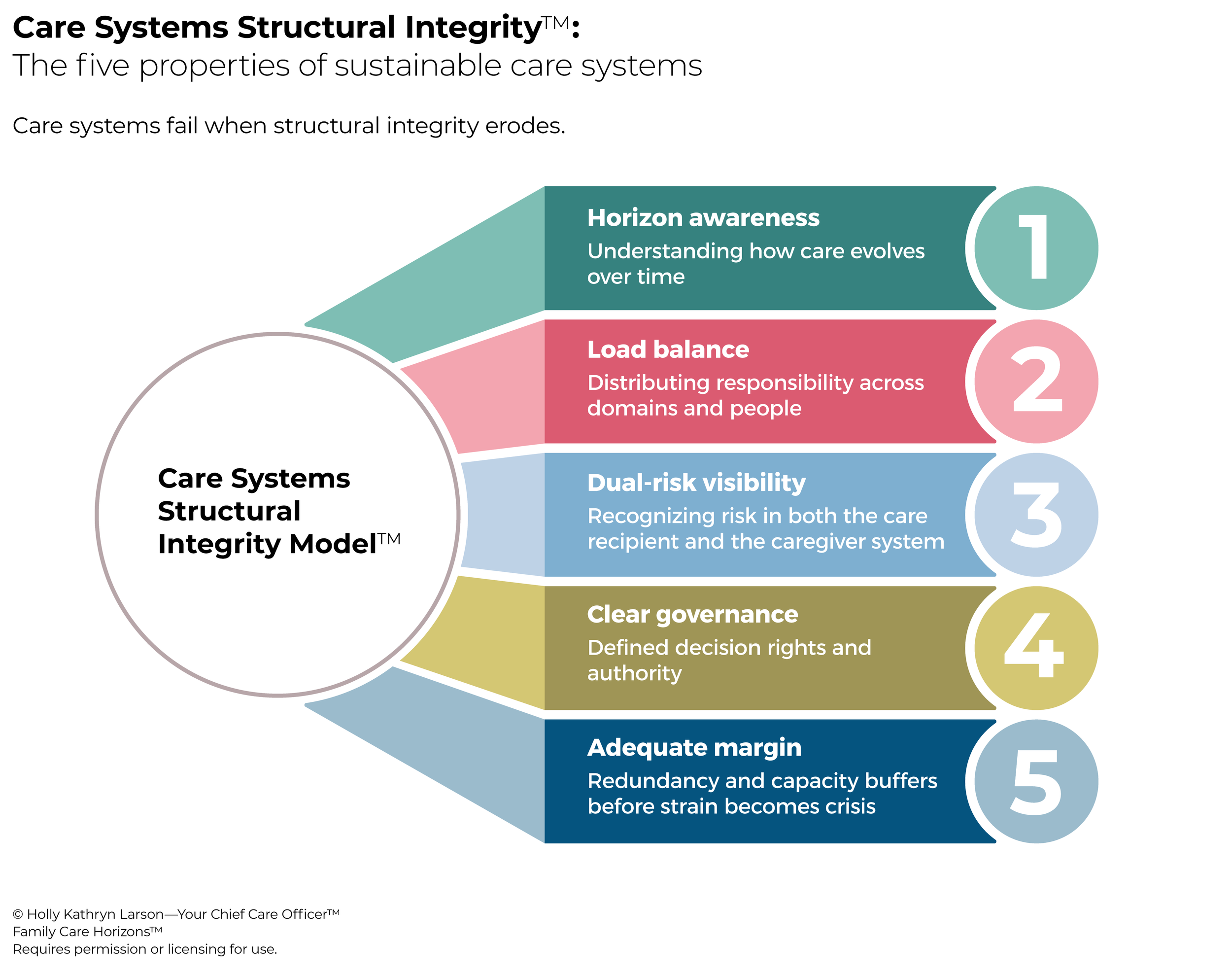
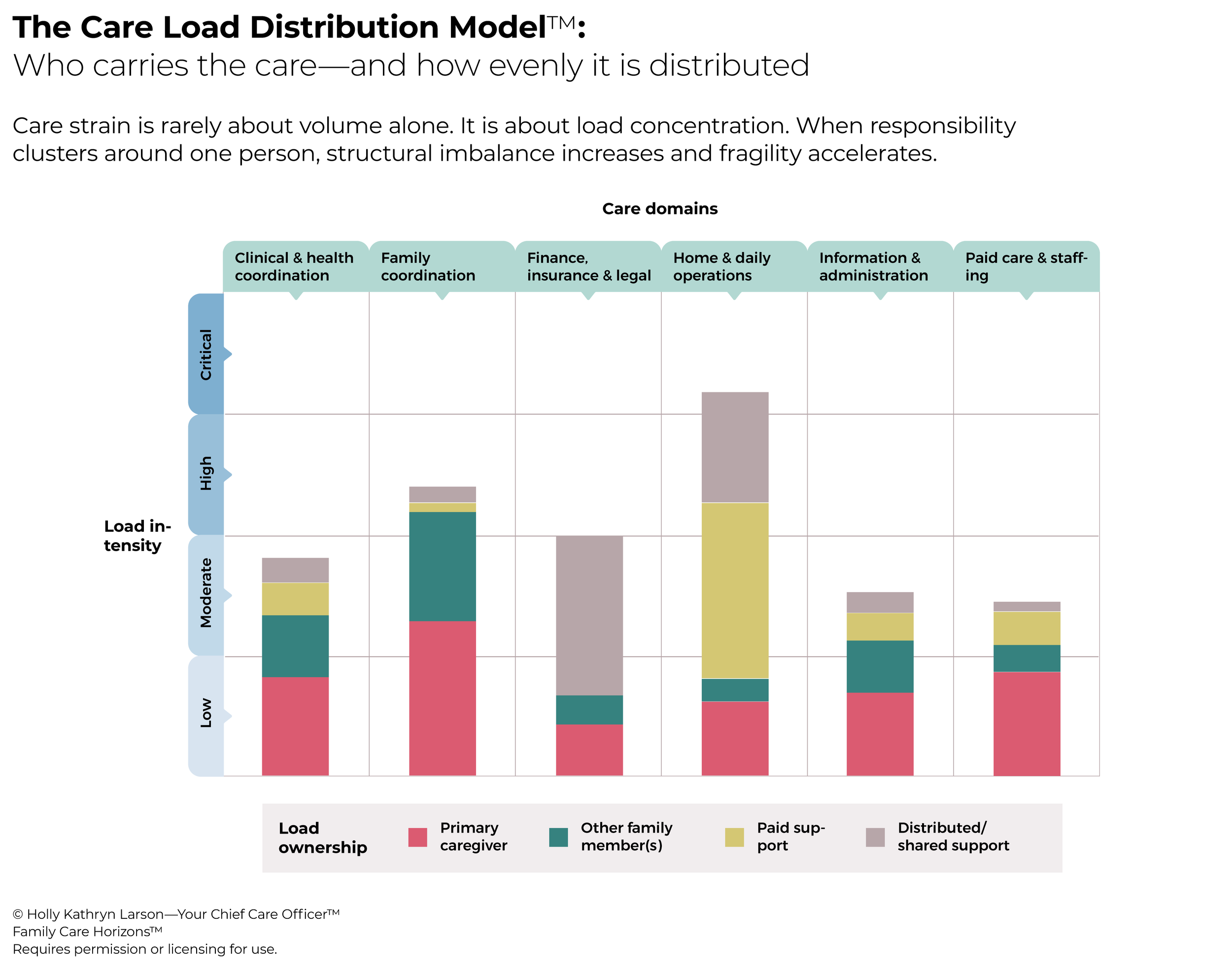
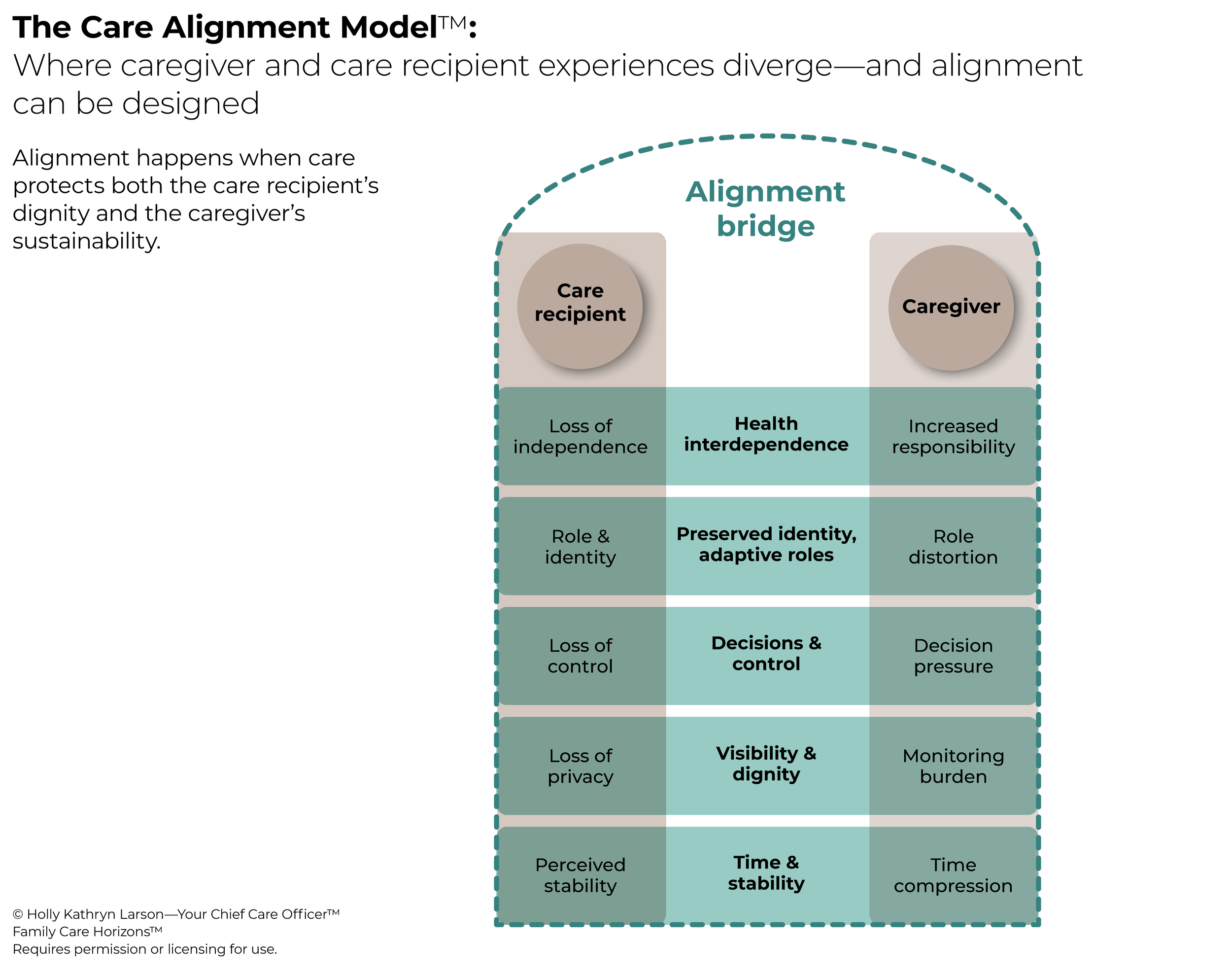
Care Architecture™ models examine the structural design of family caregiving.
While Care Stacks™ reveal hidden dynamics, Care Architecture™ moves from seeing individual dynamics to understanding the design of the system itself.
These strategic frameworks are designed for professionals seeking a systems-level understanding of modern family caregiving.
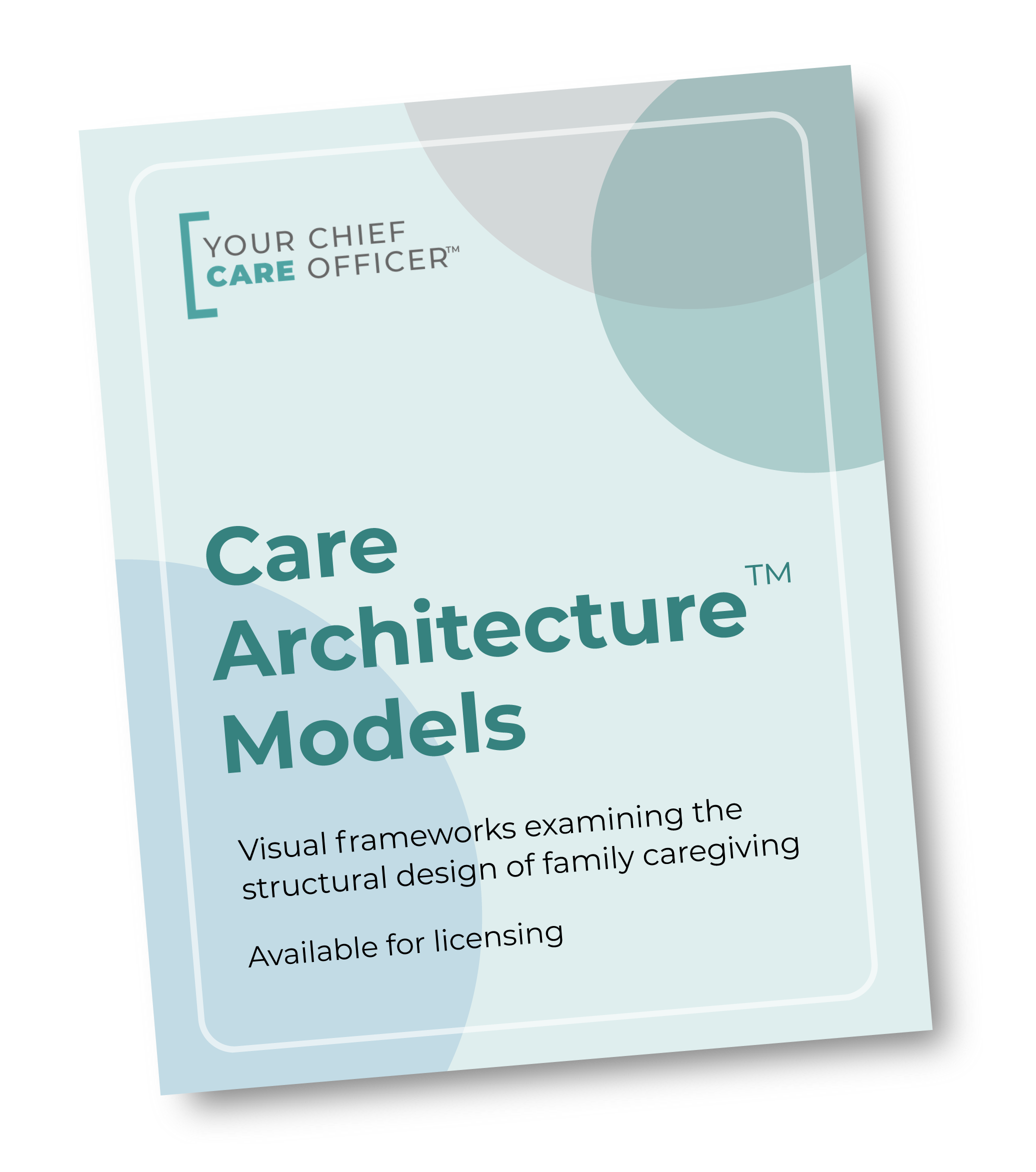
Explore the models and share them with your leadership team.
Current Care Architecture™ collection
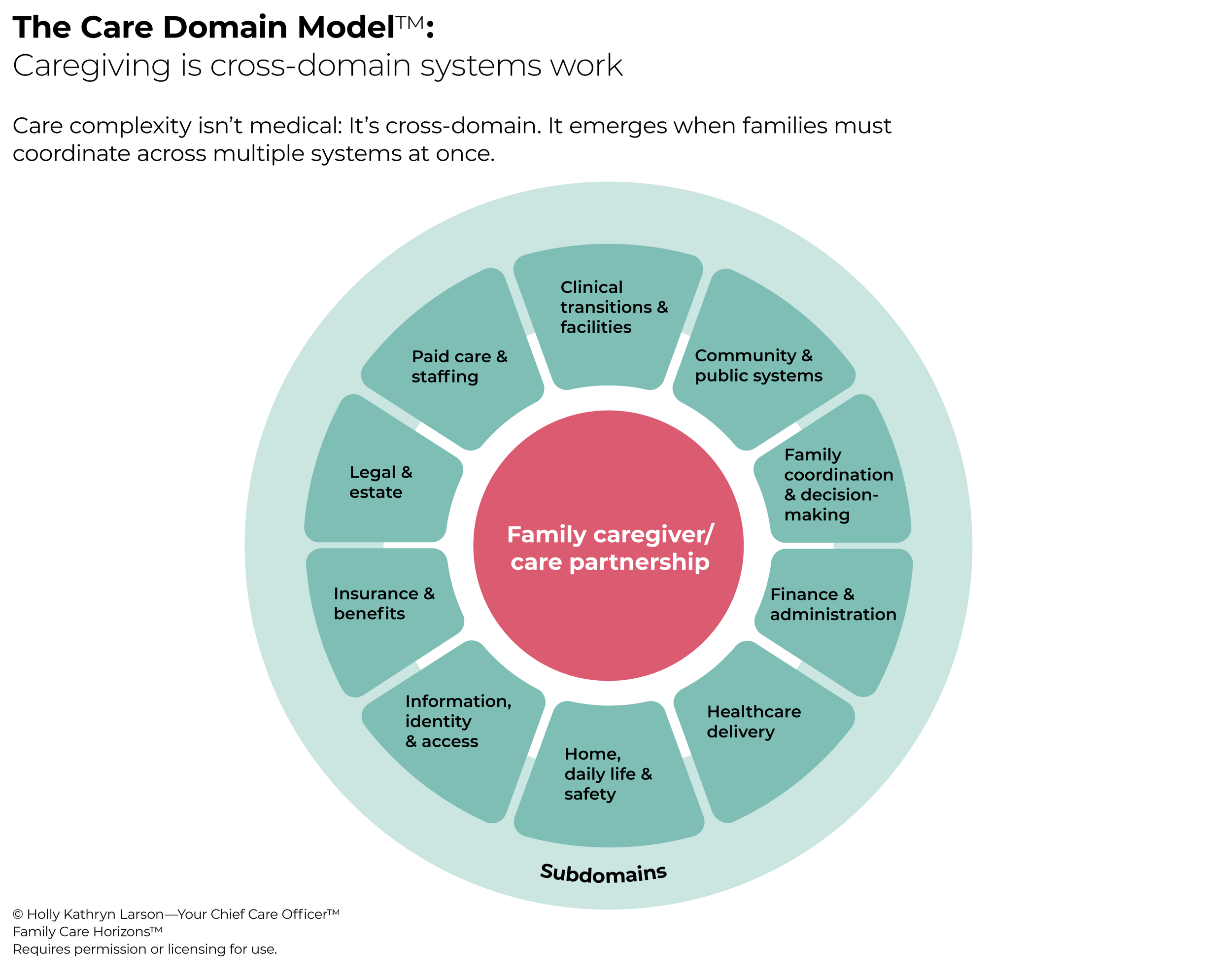
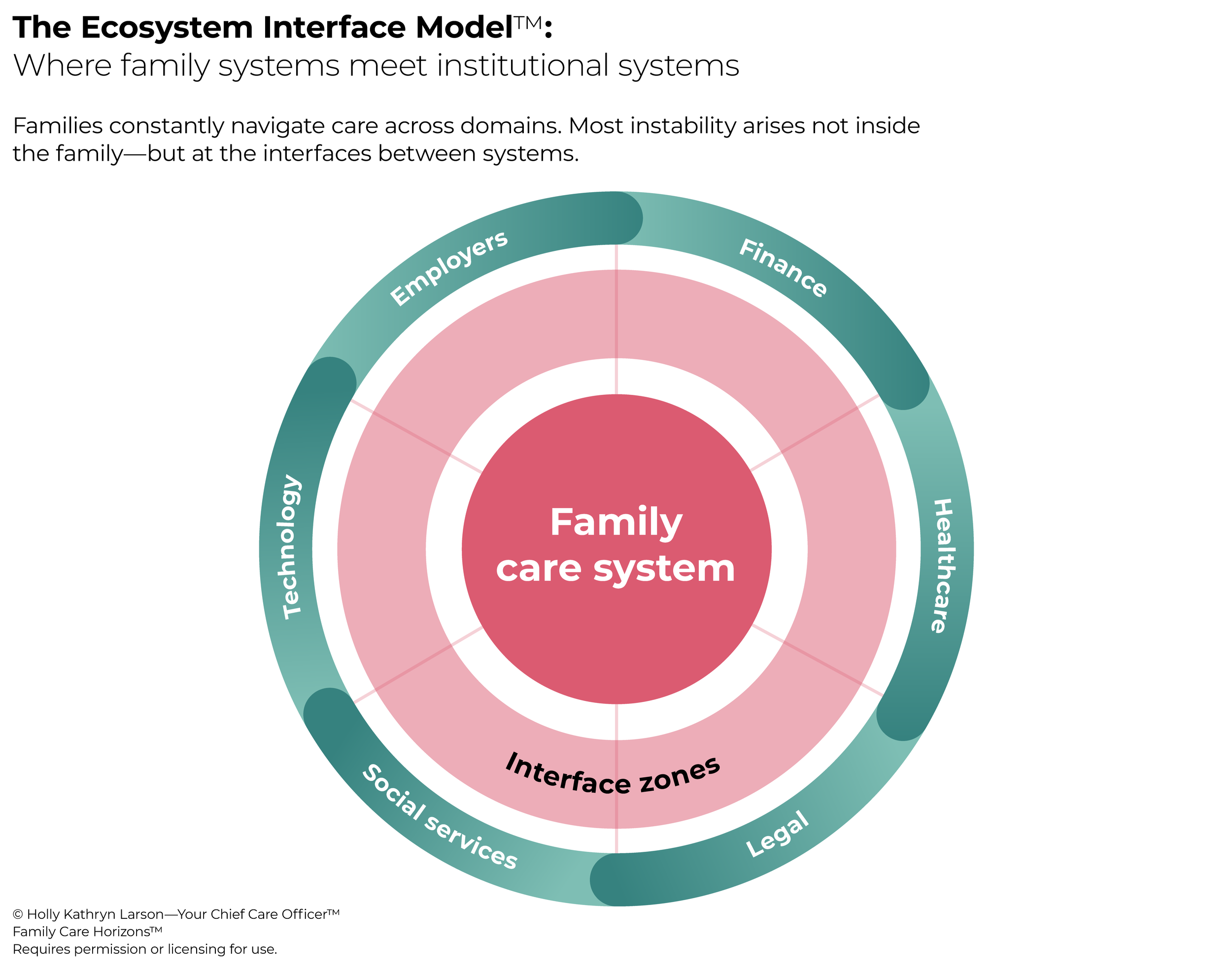
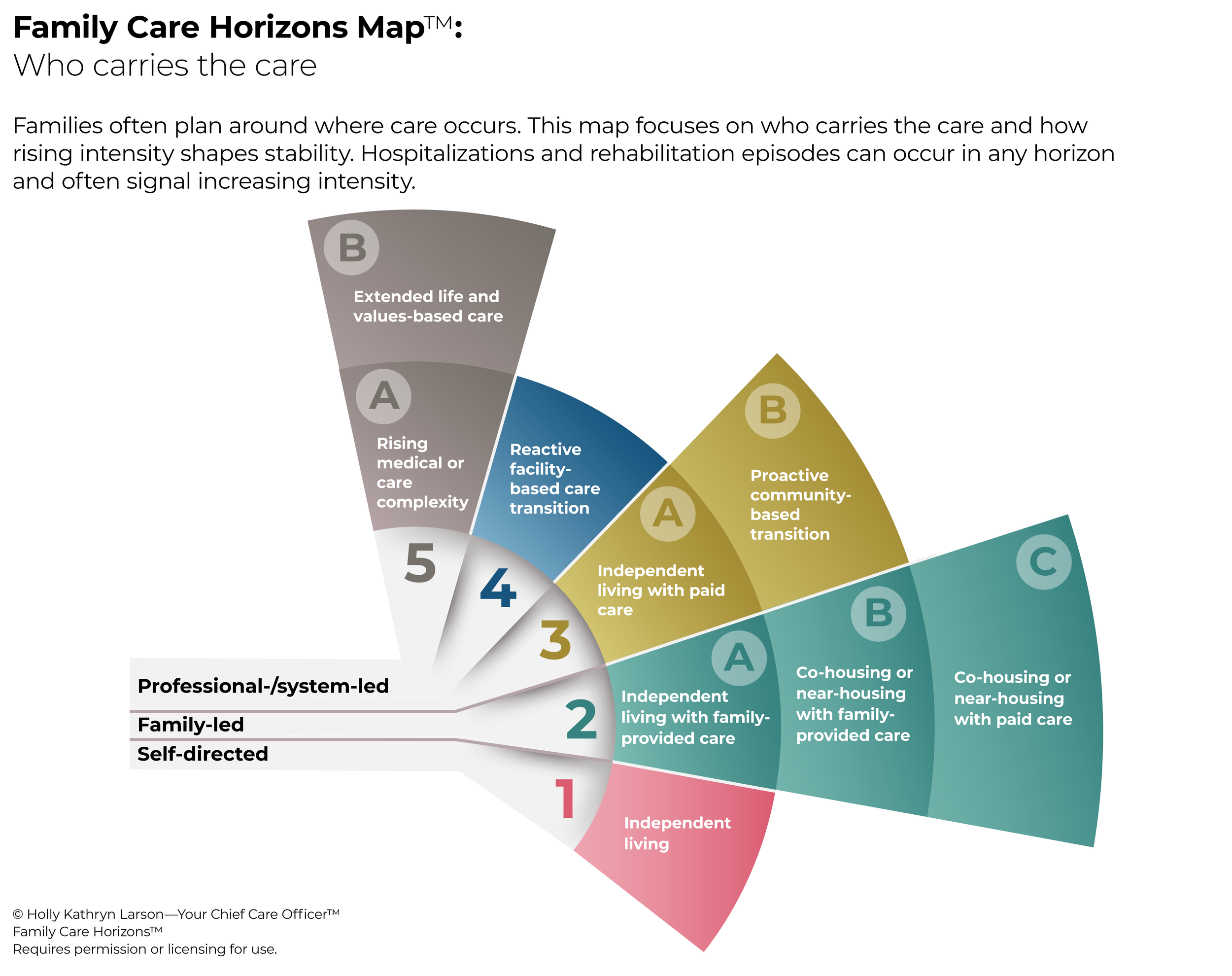
1. Care systems foundations
Frameworks that reveal the structures family care systems build upon.
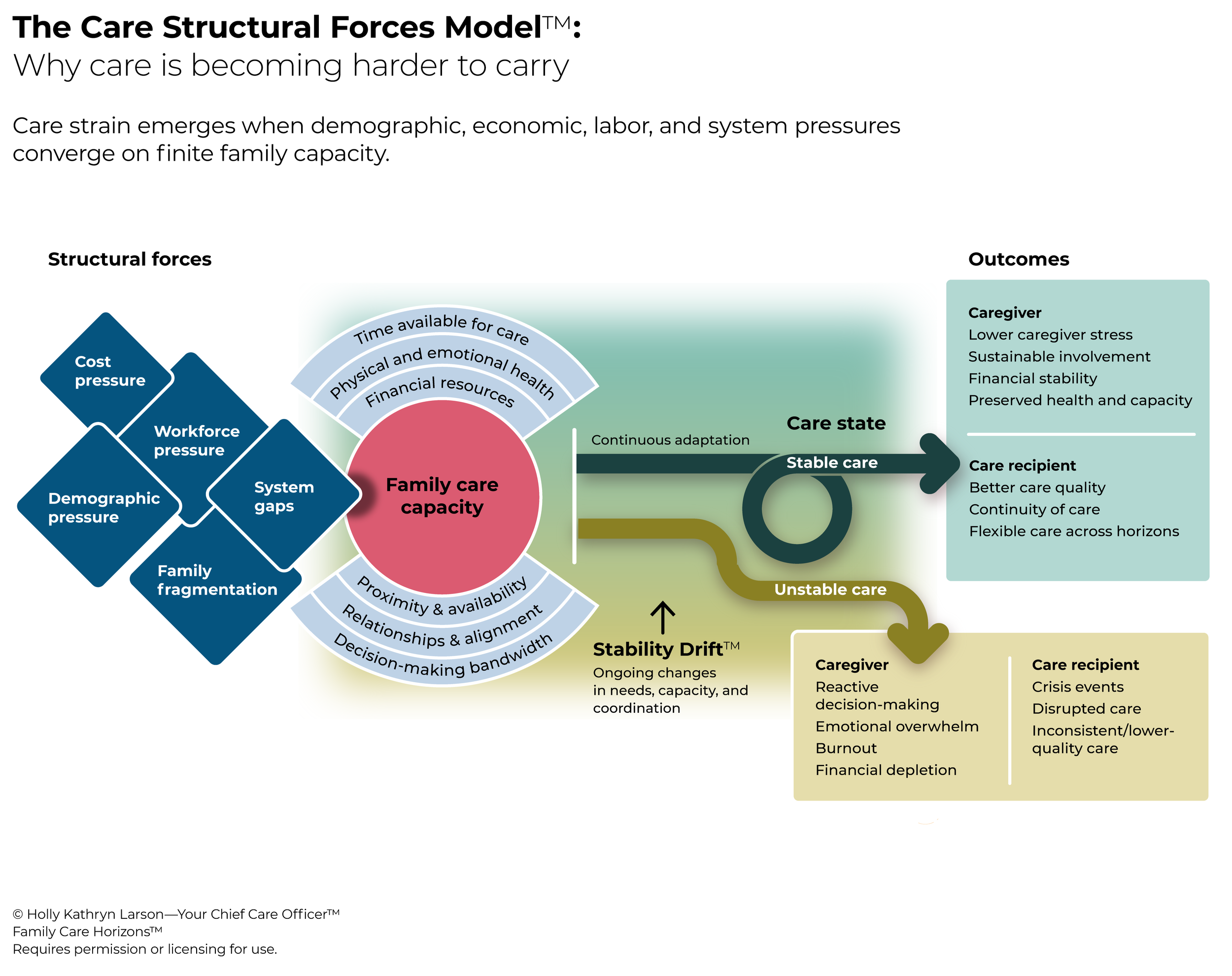
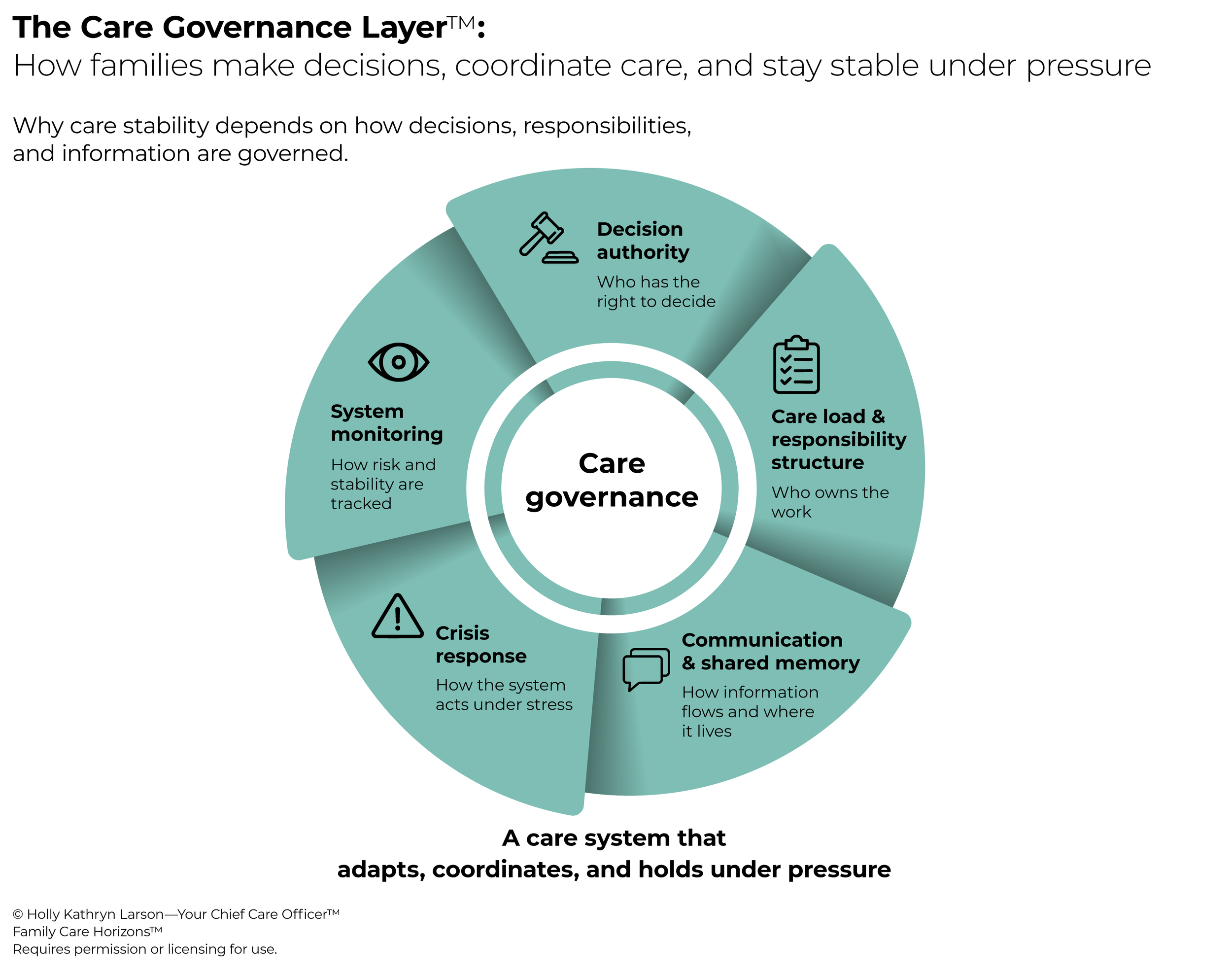
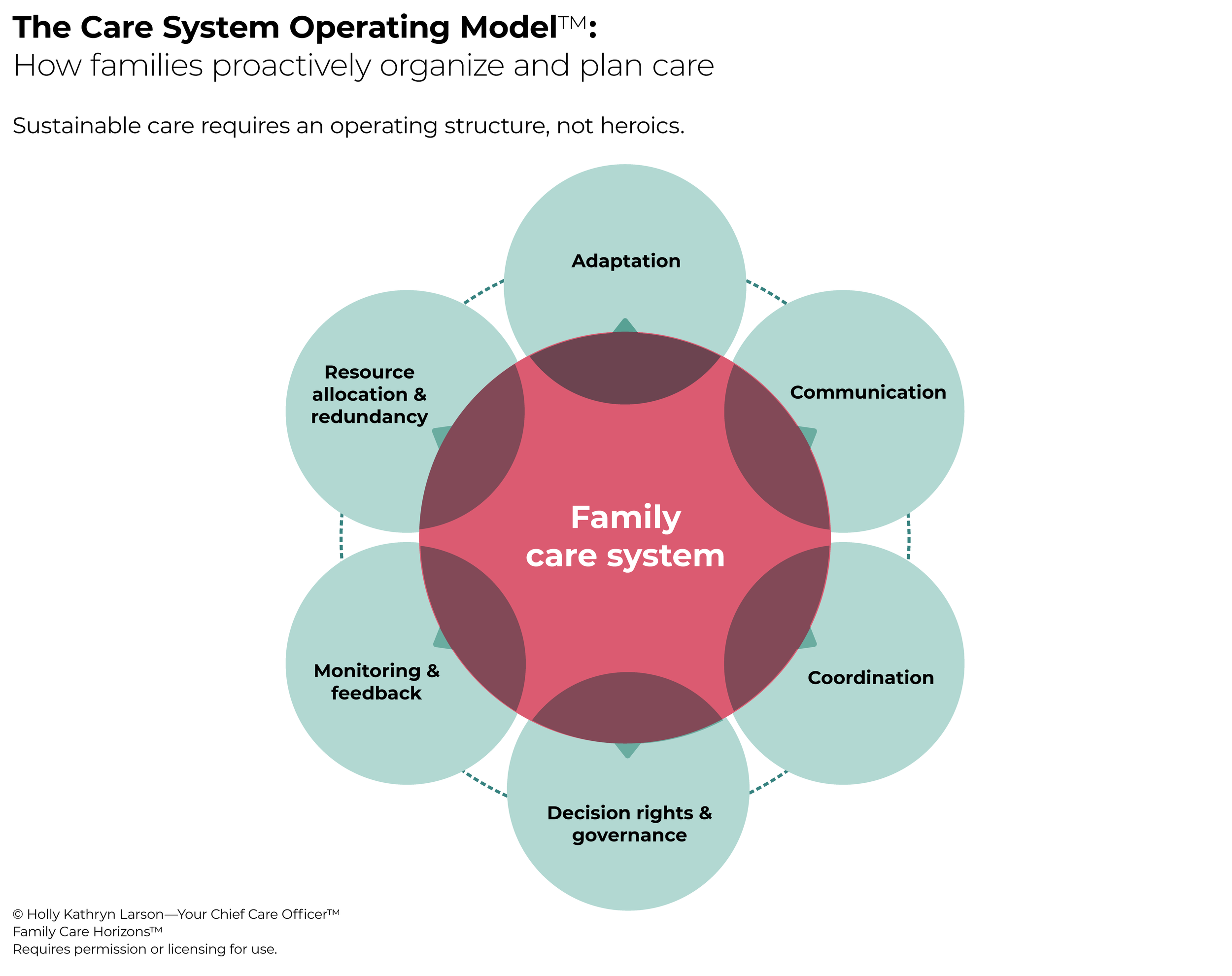
2. Governance & operations
Frameworks that explain how family care systems are organized, managed, and sustained.
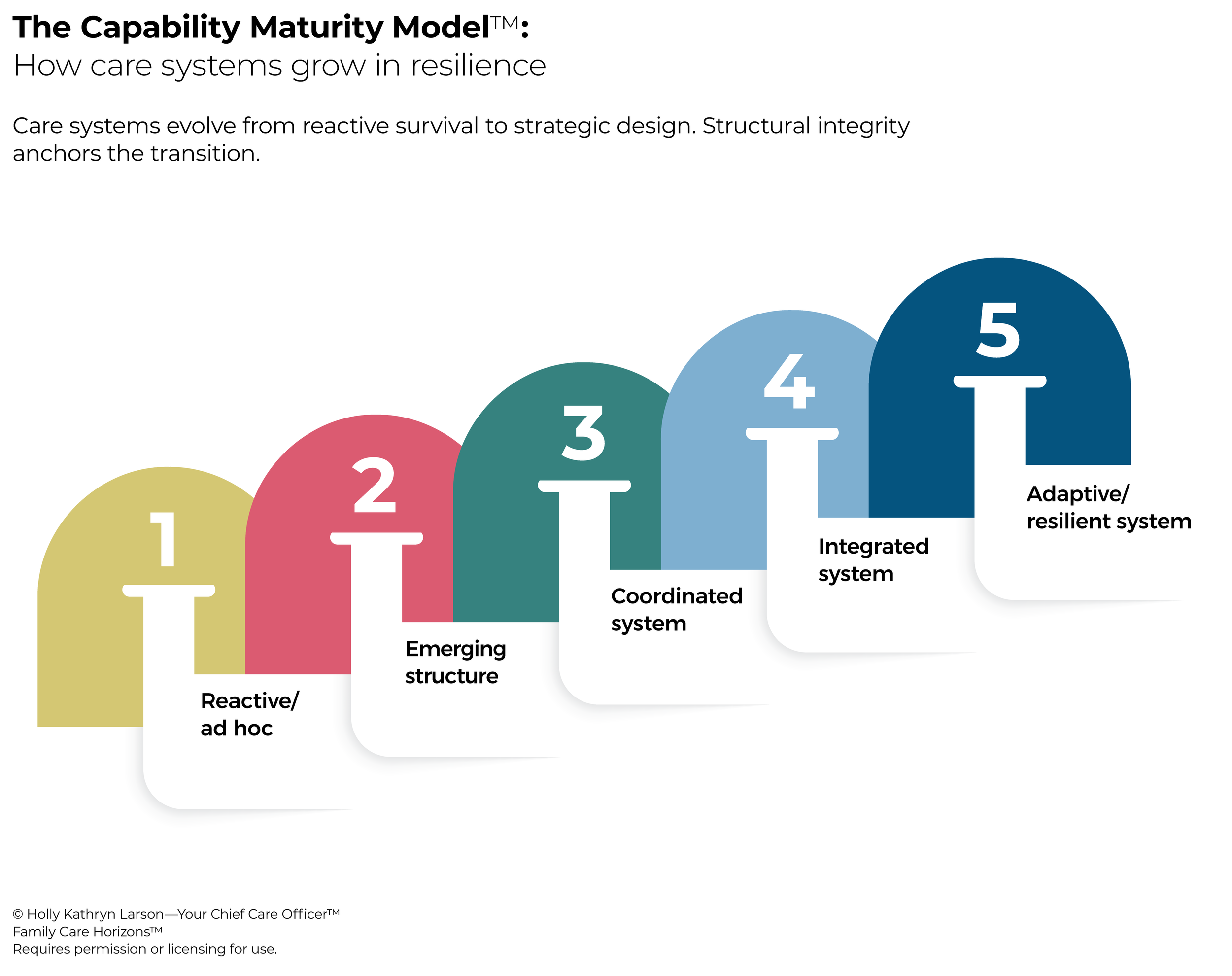
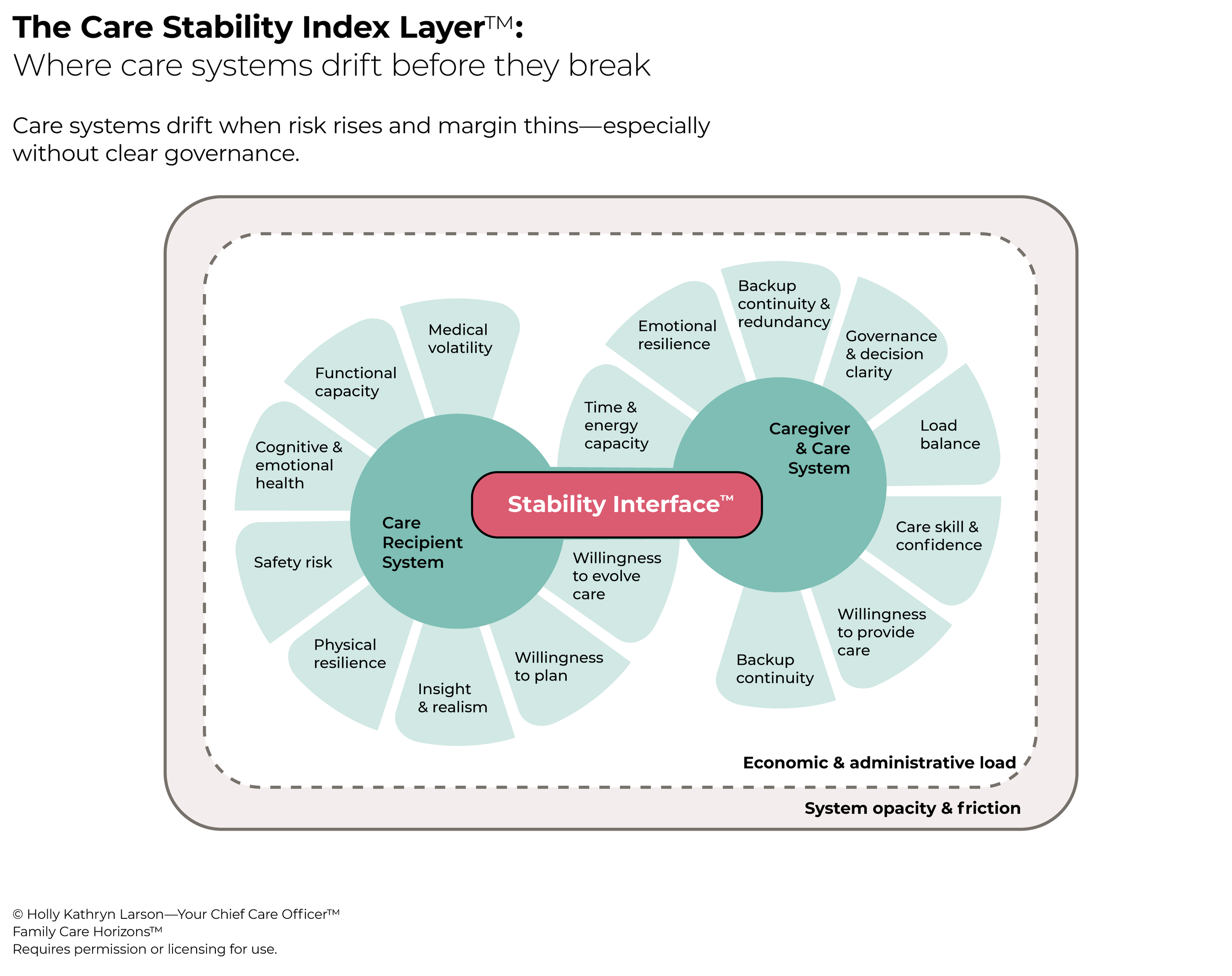
3. Stability & performance
Frameworks that show why some care systems remain resilient while others begin to fail.
Why these frameworks matter
Most caregiving resources answer questions. These frameworks help people recognize patterns. By making hidden dynamics visible, they help professionals and families:
Anticipate challenges earlier
Strengthen care coordination
Improve care planning
Facilitate better conversations
Identify emerging sources of risk
Reduce decision friction
Improve communication across families and care teams
Better understand the complexity of modern caregiving
Whether used in client meetings, workshops, presentations, education, strategic planning, or thought leadership, these visual frameworks provide a shared language for discussing complex care.
Professional licensing & pricing
Choose the collection that's right for your practice or organization.
Whether you're introducing these frameworks to clients, using them in workshops, supporting strategic planning, or incorporating them into educational programs, there's a licensing option designed to meet your needs.
When you're ready, contact us to discuss licensing. We'll answer your questions, recommend the appropriate collection, and prepare your licensed edition.

Care Strengths™ Collection
Visual frameworks for understanding the capabilities people practice and develop through the work of care.
Includes:
Complete Care Strengths™ collection (8 models)
High-resolution presentation and workshop graphics
Use cases:
Commercial professional use
Leadership, caregiver, and workforce education
Annual collection updates
Individual Professional
$295/year
Small Practice (up to 5 users)
$795/year
Enterprise
To learn more about licensing, contact Holly Larson, Your Chief Care Officer, on LinkedIn @HollyKLarson.
Care Stacks™ Collection
Reveal the hidden dynamics shaping family caregiving.
Most Popular
Includes:
Complete Care Stacks™ collection (20+ models)
High-resolution presentation and workshop graphics
Use cases:
Commercial professional use
Client meetings and care planning
Workshops and presentations
Annual collection updates
Individual Professional
$495/year
Small Practice (up to 5 users)
$1,295/year
Enterprise
To learn more about licensing, contact Holly Larson, Your Chief Care Officer, on LinkedIn @HollyKLarson.
Care Architecture™ Collection
Strategic frameworks for understanding the systems, governance, and operating principles behind modern family caregiving.
Includes:
Complete Care Architecture™ collection (14 models)
High-resolution presentation and workshop graphics
Use cases:
Commercial professional use
Strategic planning and education
Annual collection updates
Individual Professional
$395/year
Small Practice (up to 5 users)
$995/year
Enterprise
To learn more about licensing, contact Holly Larson, Your Chief Care Officer, on LinkedIn @HollyKLarson.
Visual Architecture™ Bundle
Everything in the Care Strengths™, Care Stacks™, and Care Architecture™ collections.
Best value
Includes:
42+ visual frameworks
High-resolution presentation and workshop graphics
Use cases:
Commercial professional use
Strategic planning, leadership, caregiver, and workforce education
Future models released during your active license period
Individual Professional
$895/year
Small Practice (up to 5 users)
$2,195/year
Enterprise
To learn more about licensing, contact Holly Larson, Your Chief Care Officer, on LinkedIn @HollyKLarson.
How professional licensing works
Explore the available collections and determine which best fits your practice or organization.
Contact us to discuss your licensing needs and ask any questions.
Once your license is confirmed, we'll prepare your licensed collection.
Receive your licensed visual frameworks for professional use.
Your annual license includes updates released during your active license period.
Who uses these frameworks?
The Visual Architecture of Care™ is designed for professionals supporting families through complex care decisions, including:
Care managers
Care coordinators
Care coaches
Aging life care professionals
Long-term care planning specialists
Financial advisors
Elder law attorneys
Senior living organizations
Home care providers
Hospice organizations
Healthcare systems
Employers
Researchers
Technology companies
Educators
See care differently.
Family care is easy to experience as a collection of problems: an appointment, a decision, a conflict, a crisis.
Step back, and something else becomes visible.
A system.
The Visual Architecture of Care™ gives families, professionals, and organizations a shared language for seeing the forces shaping that system—its capabilities, pressures, structures, risks, and opportunities for change.
Because you can't lead what you can't see.
See the system. Lead with intention. Design what comes next.
Ready to explore professional licensing?
Whether you're an independent professional, a growing practice, or an enterprise organization, we'd be happy to discuss the best licensing option for your needs.
Contact Holly to discuss professional licensing, enterprise licensing, or strategic partnerships.


Note: When we say family, we mean anyone involved in supporting someone’s care—including parents and adult children, partners, friends, neighbors, and community or faith-based supporters. Individuals planning for their own care can also use these tools.